Jan 13, 2026
5 Best Real-Time Voice AI Agents for Enterprise Automation
Across Indian enterprises, voice-based interactions remain central to customer service and operational workflows, particularly in BFSI, healthcare, retail, and public services. As expectations for faster, consistent responses rise, real-time voice AI agents are becoming a practical automation layer rather than an experimental add-on.
Powered by speech-to-text, natural language understanding, and real-time response engines, these systems help enterprises automate high-volume conversations while meeting multilingual and compliance requirements.
In this blog, we examine how real-time voice AI agents function in enterprise environments, their role in automating routine interactions, and the value they deliver across Indian industries. We also explore why STT agents for enterprise automation are increasingly viewed as core infrastructure for scalable, efficient operations in 2026.
Key Takeaways
Voice AI agents automate high-volume tasks, improving customer service and reducing operational costs in BFSI, retail, healthcare, and eCommerce.
Real-time multilingual support by voice AI agents enhances customer engagement.
Sales qualification and lead nurturing are streamlined by voice AI, boosting conversions for D2C brands and fintech companies.
Voice AI agents outperform traditional call centers by handling queries efficiently, ensuring personalized customer experiences at scale.
Voice AI platforms offer no-code deployment and seamless integration, enabling businesses to scale rapidly without heavy IT overhead.
What is a Voice AI Agent?
Voice AI agents are artificial intelligence systems designed to simulate human-like interactions through voice. These agents are powered by technologies like Automatic Speech Recognition (ASR), Natural Language Processing (NLP), and Text-to-Speech (TTS) synthesis. They can understand spoken language, interpret context, and generate appropriate voice responses.
In the Indian market, voice AI agents are particularly useful for sectors like BFSI, eCommerce, healthcare, and retail, where customer interactions often involve repetitive tasks, high volumes of queries, and multilingual support. By deploying real-time voice AI agents, enterprises can scale customer service while ensuring consistent and accurate responses across multiple touchpoints.
Also Read: What is Net Promoter Score (NPS) and How to Use It
Now, let’s explore how SaaS helpdesks can use these agents to streamline their customer support operations.
How SaaS Helpdesks Benefit from Voice AI Agents
SaaS helpdesks are an integral part of the customer support system for many businesses. With voice AI agents, these helpdesks can be improved to provide faster, more accurate, and cost-effective support.
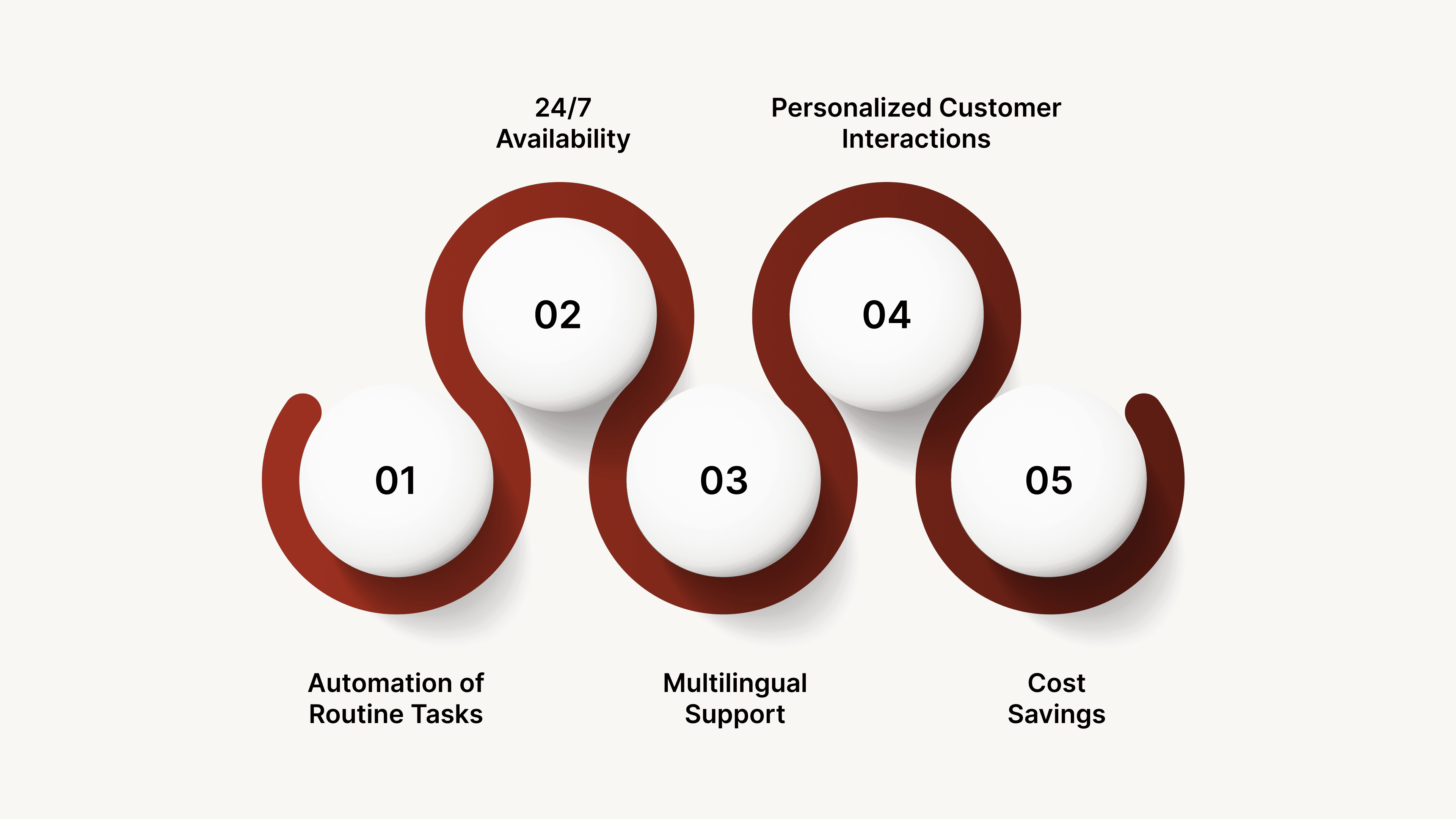
Automation of Routine Tasks: Voice AI agents can handle simple queries like password resets, ticket generation, or software setup instructions, freeing up human agents for complex cases.
24/7 Availability: AI-powered voice agents can operate around the clock, offering continuous customer support, reducing waiting times, and improving user experience.
Multilingual Support: Voice AI agents equipped with multilingual capabilities can handle queries in multiple regional languages, improving accessibility.
Personalized Customer Interactions: Voice AI agents can store and access previous customer data to offer personalized responses and solutions, enhancing overall satisfaction.
Cost Savings: By automating routine customer interactions, SaaS companies can significantly reduce operational costs, increase scalability, and optimize resources.
These benefits make voice AI agents an essential part of modern SaaS helpdesk solutions, improving efficiency and enhancing customer experience.
Also Read: What is Natural Language Understanding (NLU)?
Now that we understand the importance of voice AI in SaaS, let’s explore the different types of voice AI agents available.
7 Types of AI Voice Agents for Enterprise Automation
There are various types of AI voice agents, each suited for different enterprise needs. Here are the key types of voice agents that are changing customer service and automation:
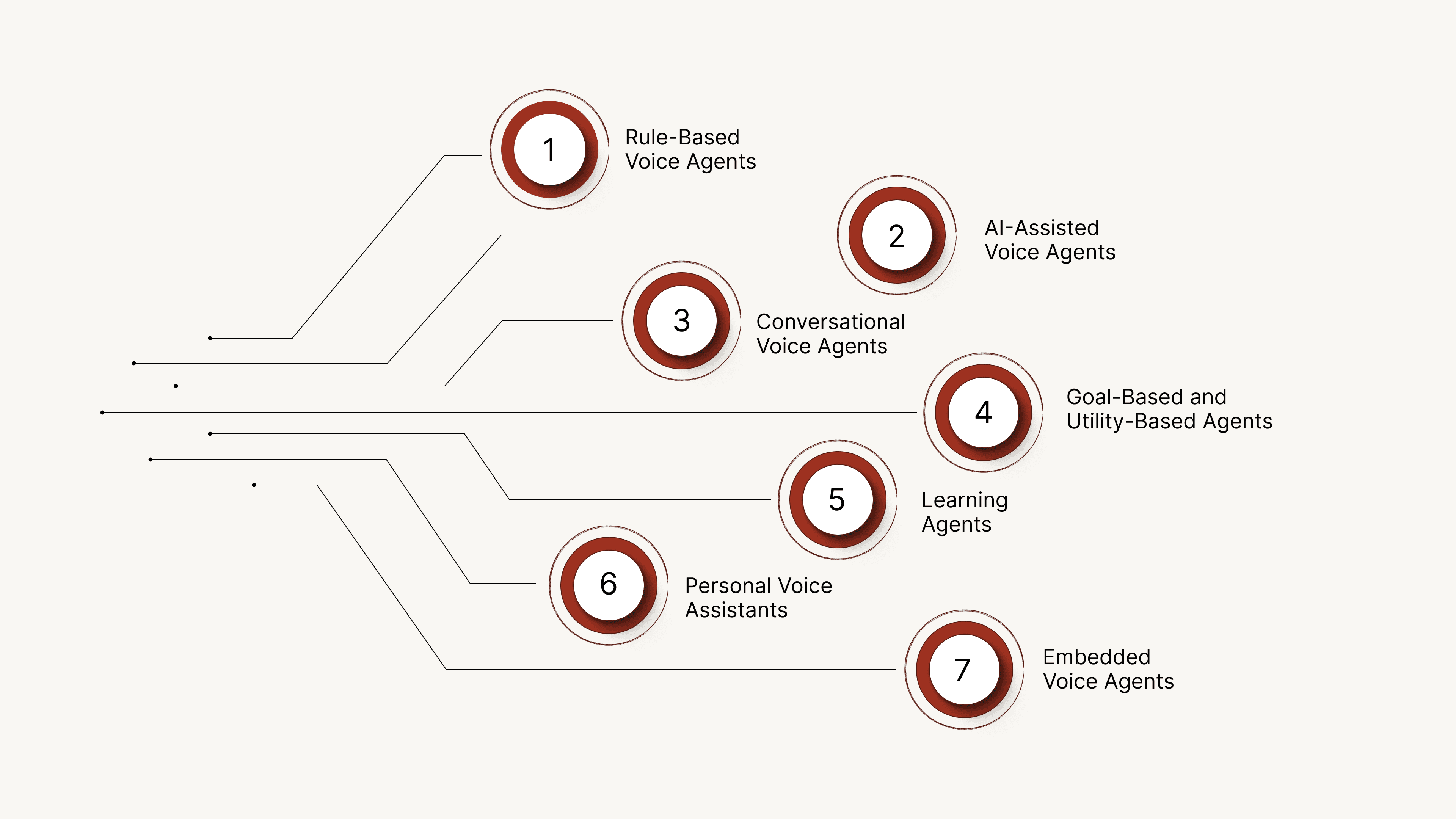
1. Rule-Based Voice Agents
These agents follow predefined rules to process customer queries. They work well for tasks with clear, straightforward instructions.
Example: A basic voice agent answering FAQs like "What time does the store close?"
Core Technology: Natural Language Understanding (NLU) for interpreting simple queries.
Optimal Applications: Common in industries like retail and eCommerce for handling basic customer queries like order tracking and product details.
2. AI-Assisted Voice Agents
These agents combine rule-based systems with machine learning, learning from past interactions to improve accuracy over time.
Example: A voice agent assisting customers with troubleshooting or resolving common issues.
Core Technology: Machine Learning (ML) and NLP.
Optimal Applications: Useful for sectors like BFSI and SaaS, where data insights and customer issues change constantly.
3. Conversational Voice Agents
These agents are capable of understanding context, intent, and natural conversations, enabling a more human-like interaction.
Example: A virtual agent that helps customers make financial transactions or book appointments.
Core Technology: Deep Learning (DL) and Contextual NLP.
Optimal Applications: Great for BFSI, healthcare, and eCommerce, where personalized service is required for complex tasks.
4. Goal-Based and Utility-Based Agents
These agents are designed to achieve specific goals, like making a sale or booking an appointment, and often follow a structured process.
Example: A sales assistant guiding customers through the purchasing process.
Core Technology: Intent Recognition and Task Automation.
Optimal Applications: Perfect for D2C brands and retail, where transactions need to be guided step-by-step.
Also Read: How Voice Bots Are Reshaping Outpatient Appointment Scheduling
5. Learning Agents
These agents continuously learn from new data, improving their performance over time without requiring human intervention.
Example: A customer support agent learning how to handle new issues based on customer feedback.
Core Technology: Reinforcement Learning (RL) and NLP.
Optimal Applications: Suitable for SaaS, healthcare, and eCommerce, where new queries and challenges are continuously emerging.
6. Personal Voice Assistants
Personal assistants are designed to help users manage their daily tasks, such as setting reminders, sending messages, or managing calendars.
Example: A voice assistant in a mobile app that helps users schedule appointments.
Core Technology: Speech Recognition and Natural Language Understanding.
Optimal Applications: Ideal for consumer brands, eCommerce, and healthcare, where personalized, day-to-day assistance is needed.
7. Embedded Voice Agents
Embedded agents are integrated into other platforms and devices, such as mobile apps, websites, or IoT systems.
Example: A voice agent integrated into a smart home device or a mobile app for customer inquiries.
Core Technology: Voice Recognition and Embedded Systems Integration.
Optimal Applications: Used widely in retail, eCommerce, and consumer electronics.
Also Read: Call Center Agent Strategies: 10 Proven Ways to Scale CX
Now that we know about the different types of AI voice agents, let’s break down how these agents work in real-time.
How AI Voice Agents Work
AI voice agents work by combining multiple technologies to understand, process, and respond to voice-based queries. Here’s a step-by-step breakdown of how these agents operate:
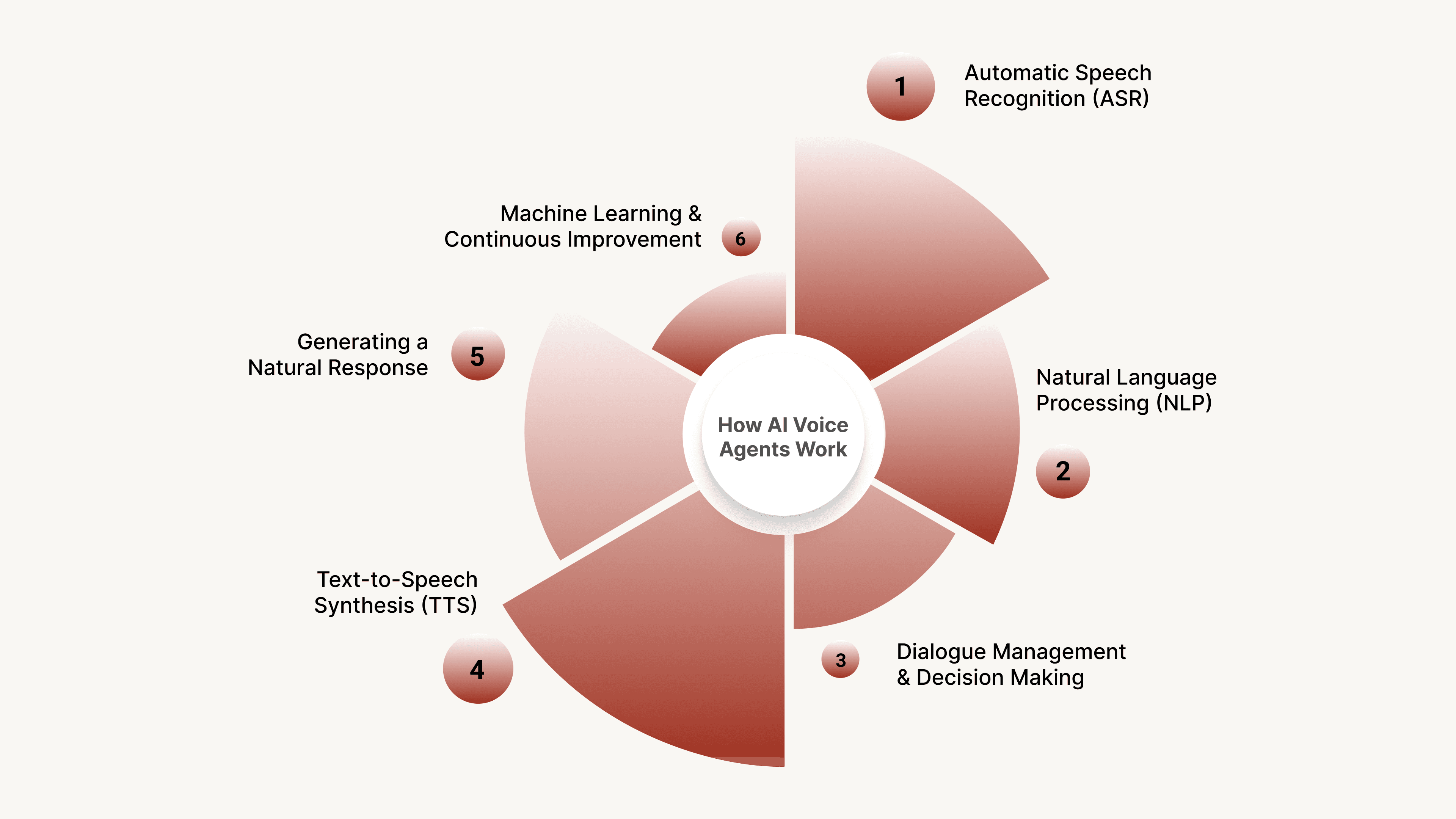
1. Automatic Speech Recognition (ASR)
ASR converts the spoken language into text, enabling the voice agent to understand the user’s query. This is the first crucial step in the voice interaction process.
2. Natural Language Processing (NLP)
NLP helps the agent understand the meaning behind the words spoken. It breaks down the sentence structure, identifies keywords, and determines intent, allowing the system to respond intelligently.
3. Dialogue Management & Decision Making
The agent uses dialogue management to decide how to respond based on the context of the conversation. It chooses the appropriate response by analyzing the user's request and previous interactions.
4. Text-to-Speech Synthesis (TTS)
Once the response is generated, TTS synthesis converts the text response back into spoken language, enabling the voice agent to communicate with the user in a natural-sounding way.
5. Generating a Natural Response
At this point, the agent uses NLP and machine learning to ensure that the response feels natural and conversational, providing a smooth, human-like interaction.
6. Machine Learning & Continuous Improvement
AI voice agents use machine learning to continually improve their understanding and response accuracy based on interactions with users, ensuring that the platform becomes more efficient over time.
Also Read: Understanding AI Virtual Assistants: Benefits, Use Cases, and How They Help Enterprises Scale
Now that we understand how AI voice agents work, let's explore the top platforms improving enterprise workflows in 2026.
Top 5 AI Voice Agents Impacting Enterprise Workflows in 2026
Below is a comparison of the top AI voice agents that are changing enterprise workflows in 2026, focusing on their unique features and advantages.
AI Voice Agent | Language Strength | Ideal Use Case | Key Advantage |
CubeRoot | Multilingual, 24/7 support | BFSI, Retail, eCommerce | Scalable, AI-powered automation at scale |
Tabbly.io | 50+ global languages | Lead qualification, recruitment | Fast voice agent deployment |
PlayHT | Global TTS with voice realism | IVR, voice apps, product onboarding | Human-like speech generation |
Cognigy | Deep NLU, 100+ languages | Contact center optimization | Intelligent routing, first-call resolution |
VoiceGenie | 13+ Indian languages, 100+ global languages | Mid-funnel sales, lead follow-up | Voice-driven lead qualification |
Let’s take a closer look at the key features of each voicebot platform that’s driving changes in enterprise workflows.
1. CubeRoot
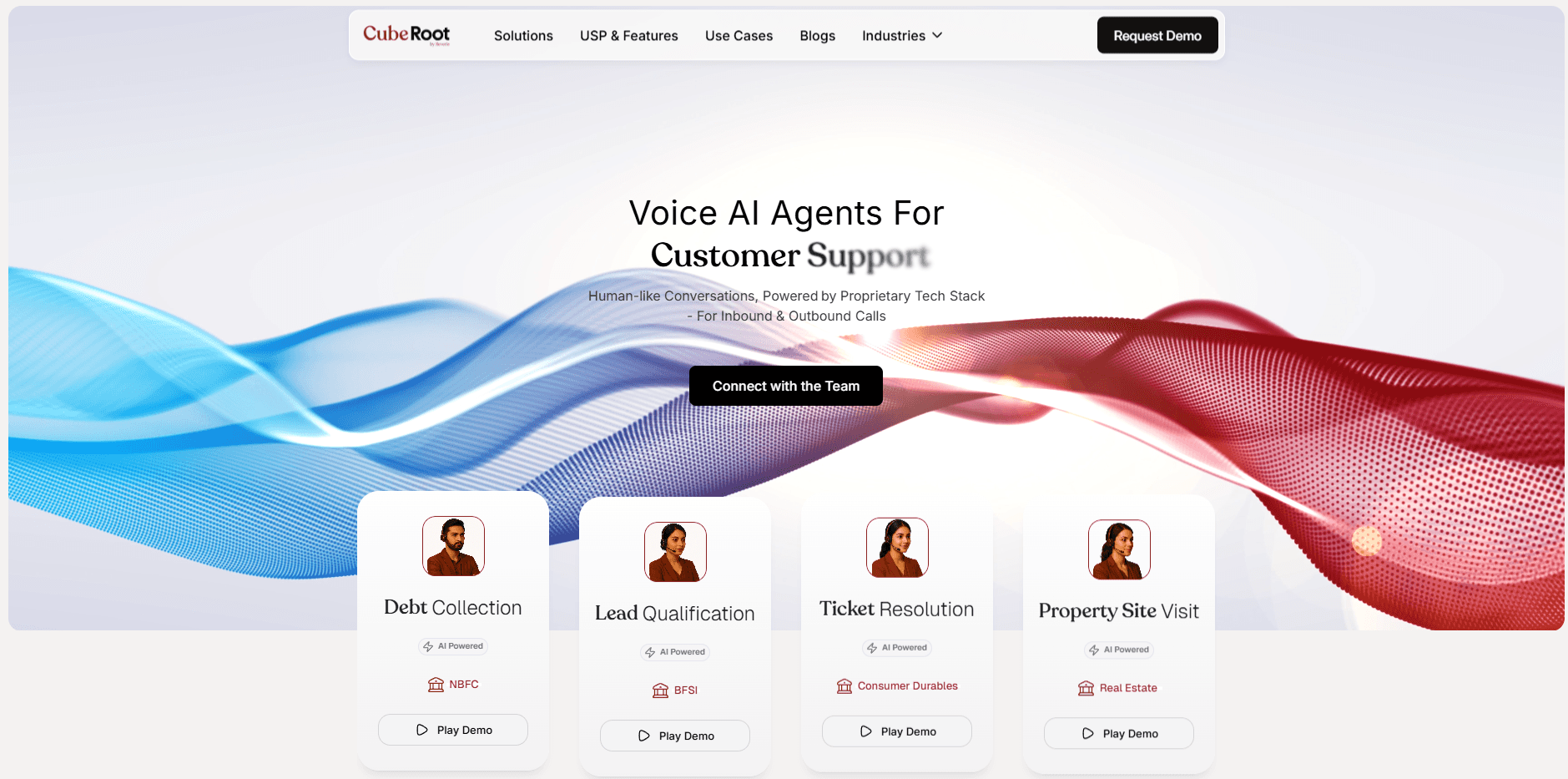
CubeRoot is an enterprise-grade voice AI platform based in India, specifically built to scale customer interaction automation for sectors like BFSI, eCommerce, healthcare, and SaaS. The platform allows businesses to deploy intelligent, multilingual voice agents that engage customers naturally in both inbound and outbound interactions, offering a human-like experience at scale.
Key Features:
Voice AI Agent Platform: Replaces traditional call centers with intelligent, multilingual voice agents. This feature is particularly beneficial for BFSI and eCommerce sectors, handling routine tasks like balance inquiries, loan status updates, order tracking, and returns.
Outbound & Collections Automation: Ideal for NBFCs, insurers, and lenders, CubeRoot automates pre-due and post-due payment reminders, improving recovery rates and compliance.
Order & Returns Automation: For high-volume eCommerce platforms, CubeRoot handles order updates and return processing during seasonal surges, streamlining operations without additional headcount.
Lead Qualification & Sales Funnel Automation: Helps D2C brands and fintech companies qualify leads automatically, routing them to the right agents for follow-ups.
Voice Feedback & Post-Sale Experience: Improves NPS and CSAT collection rates through voice-first outreach, enhancing post-purchase engagement.
Why Choose CubeRoot?
CubeRoot ensures secure, auditable conversations that meet strict compliance standards for BFSI and healthcare. With industry-specific workflows for sectors like eCommerce and BFSI, CubeRoot enables fast deployment. The platform also features seamless escalation to human agents for complex cases and offers no-code deployment for quick integration with existing systems, reducing IT dependency.
2. Tabbly.io
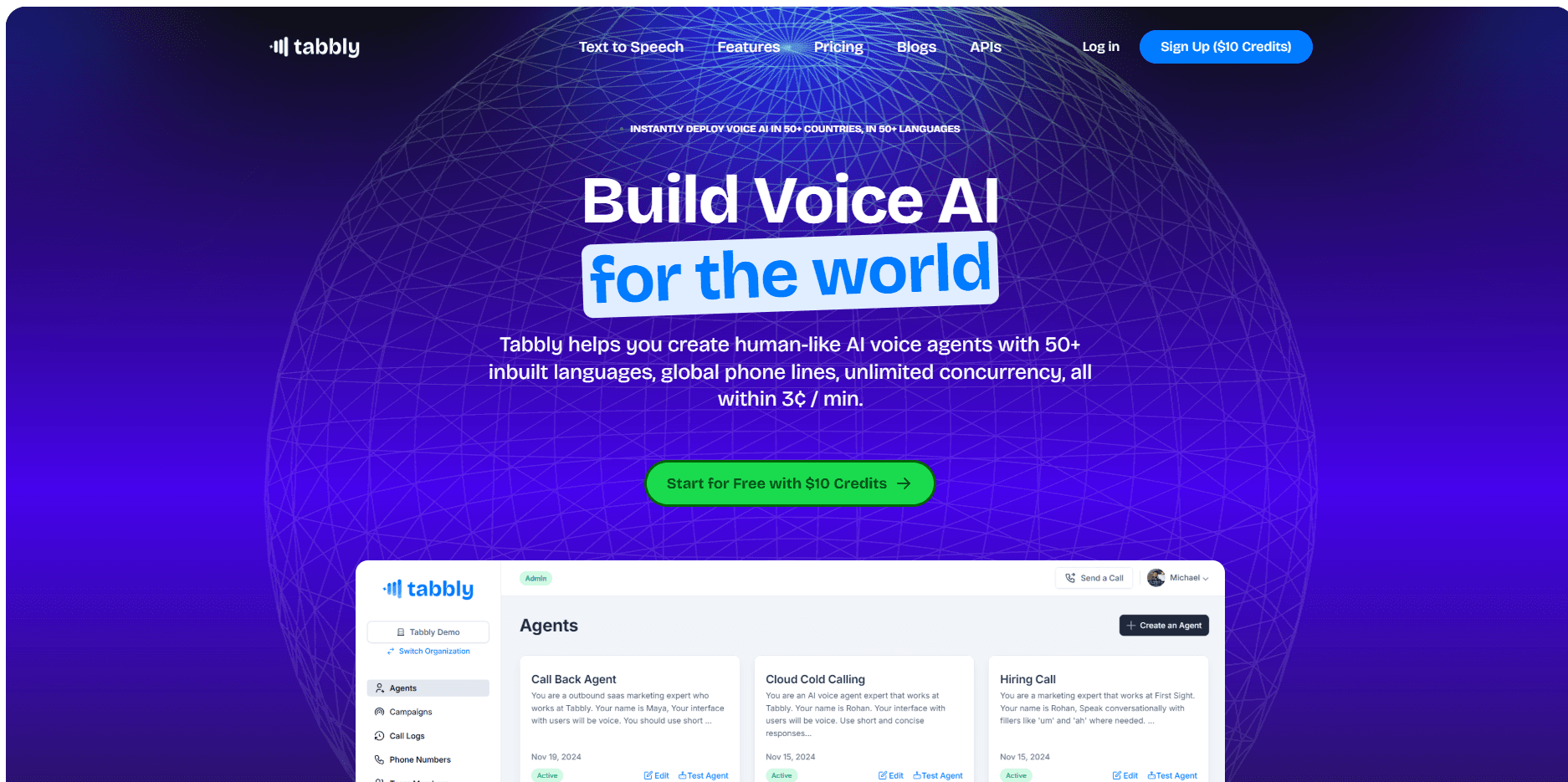
Tabbly.io is a builder-first platform focused on helping businesses deploy human-like AI voice agents quickly and efficiently. This platform is geared toward enterprises that need fast agent deployment for customer support, HR functions, sales qualification, and appointment scheduling.
Key Features:
Instant Deployment: Enables rapid creation and deployment of AI voice agents with minimal setup.
Lead Qualification: Captures and qualifies prospects automatically, syncing with CRM tools for smooth sales processes.
Support Ticket Deflection: Handles FAQs and reduces support costs by deflecting routine inquiries from human agents.
Why Choose Tabbly.io?
Tabbly.io’s rapid deployment and lead qualification features are particularly useful for D2C brands and eCommerce companies looking to automate initial customer interactions and streamline sales processes.
3. PlayHT
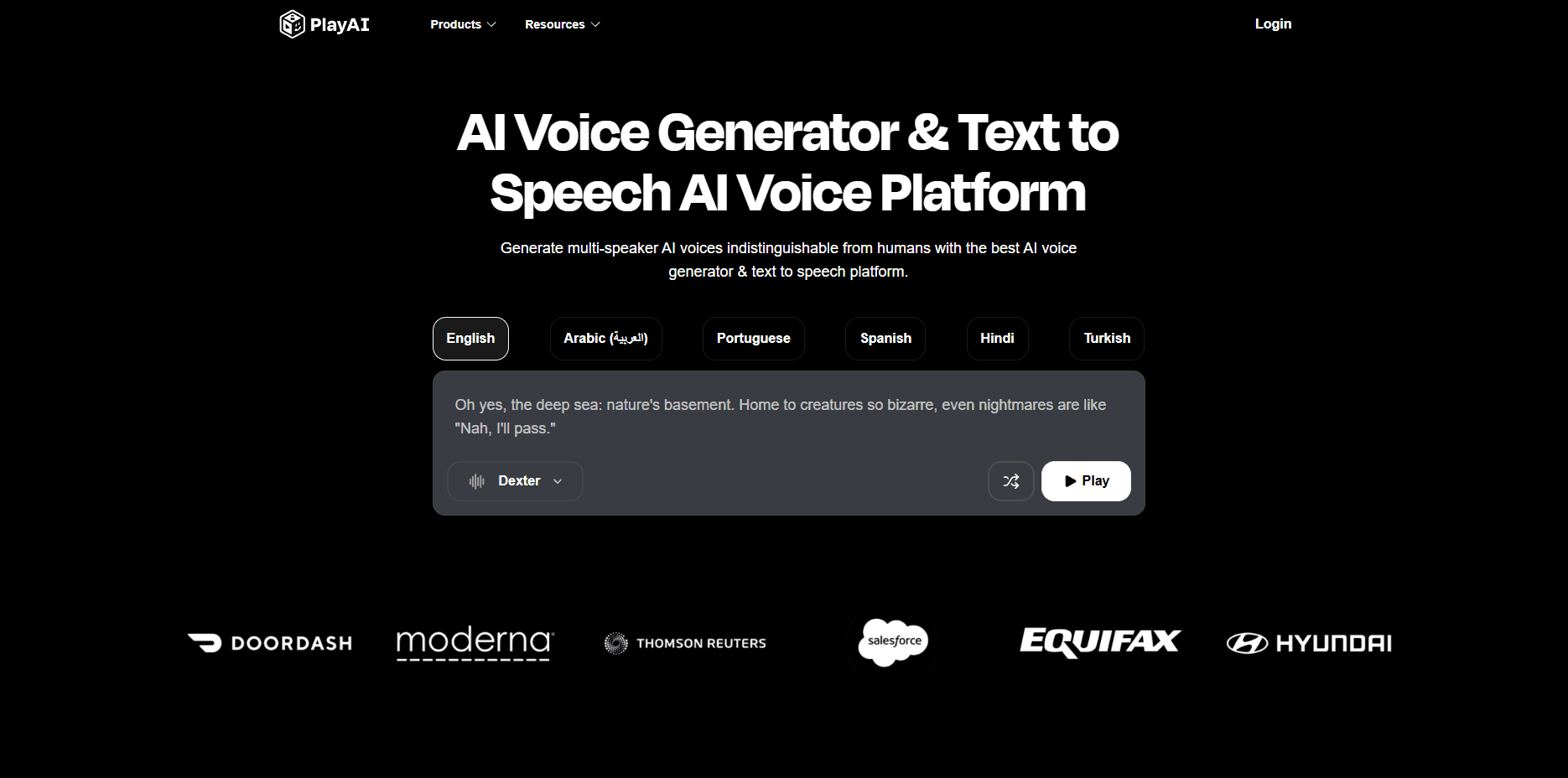
PlayHT specializes in ultra-realistic neural text-to-speech (NTTS) that creates lifelike voices with human-like nuances such as intonation, rhythm, and emotional inflection. PlayHT is built for enterprises seeking expressive voice automation for use in IVR systems, training modules, support systems, and product onboarding.
Key Features:
Neural Text-to-Speech: Offers ultra-realistic voice synthesis with emotional and tonal inflections.
Custom Emotional Voice Variants: Choose voices that convey various emotions, enhancing user interaction based on sentiment.
Voice Packs for Specific Use Cases: Provides tailored voice bundles for IVRs, onboarding, and training.
Why Choose PlayHT?
PlayHT’s ability to generate expressive voice synthesis makes it perfect for eCommerce platforms looking to create a more engaging, human-like experience in onboarding or support interactions.
4. Cognigy
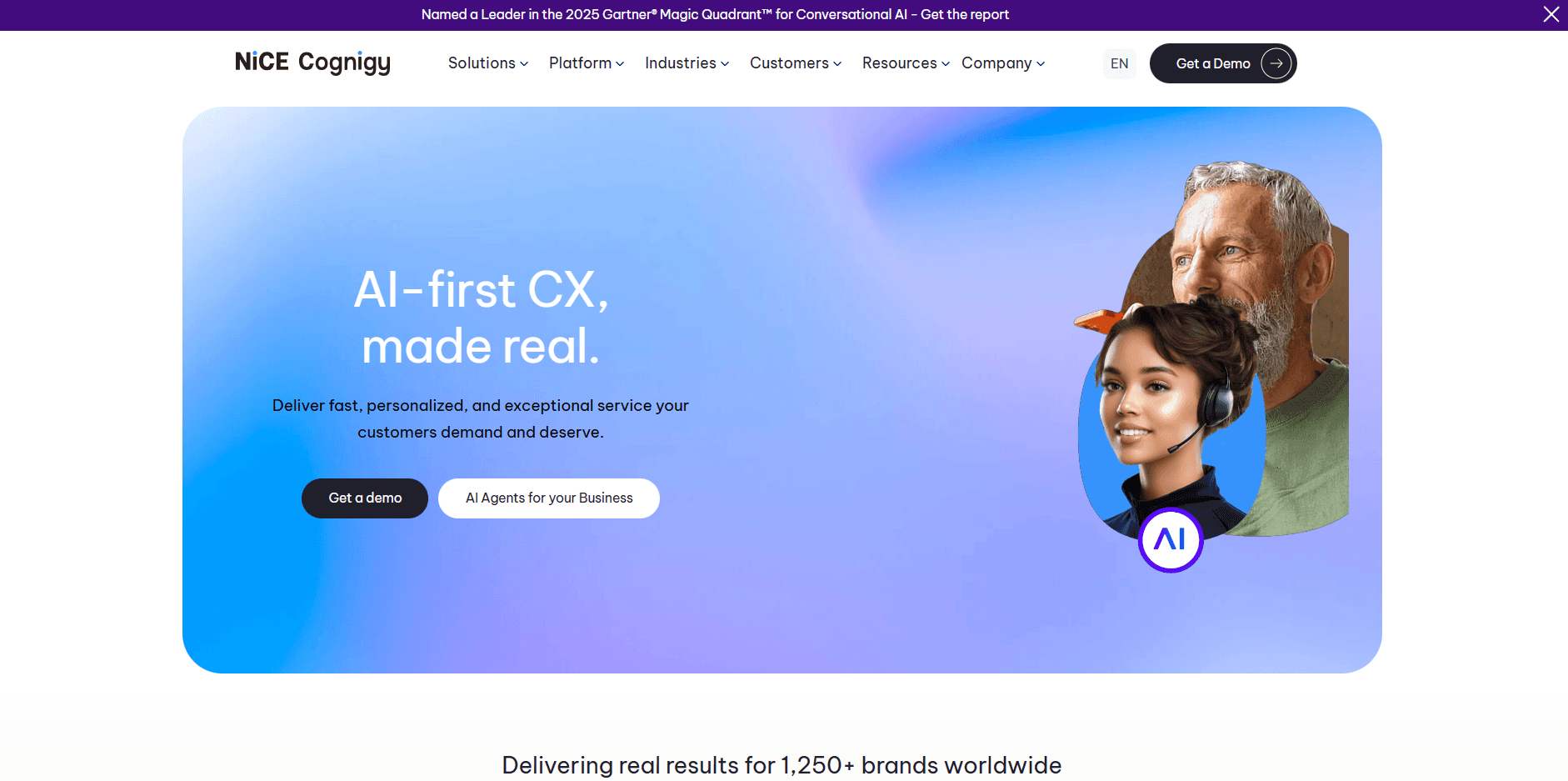
Cognigy offers advanced Voice AI agents designed to enhance contact center performance by replacing rigid IVR systems with dynamic voice automation that understands, routes, and resolves customer queries with conversational intelligence.
Key Features:
Conversational Intelligence: Offers advanced AI voice agents that understand intent and resolve queries naturally.
First-Call Resolution: Automates high-frequency queries, reducing repeat calls and wait times.
Contact Center Optimization: Integrates seamlessly with call center systems, improving efficiency and reducing operational load.
Why Choose Cognigy?
Cognigy is particularly useful for contact centers in industries like BFSI and telecom, where improving first-call resolution and optimizing call routing are key to customer satisfaction.
5. VoiceGenie

VoiceGenie focuses on automating sales and lead qualification through proactive AI-powered outbound and inbound calls. It helps sales teams qualify leads and nurture them throughout the funnel with minimal human intervention.
Key Features:
Automated Lead Qualification: Uses AI voice agents to assess buyer readiness and suitability, streamlining lead qualification for sales teams.
Voice-Driven Lead Nurturing: Maintains consistent, personalized communication throughout the buyer journey, ensuring leads are nurtured without overwhelming live agents.
Scalable Campaign Handling: Handles high-frequency outbound engagement without sacrificing personalization, allowing sales teams to focus on high-priority leads.
Why Choose VoiceGenie?
VoiceGenie is ideal for sales teams in industries like D2C and real estate, where proactive lead qualification and nurturing can significantly impact sales performance.
Also Read: What Is Voice AI and How Can It Transform Customer Engagement?
Now that we’ve explored the top voicebot platforms, let's move on to understanding the key elements that make a great enterprise conversational AI voice agent platform.
What Makes a Great Enterprise Conversational AI Voice Agent Platform?
Choosing the right AI voice agent platform for enterprise automation involves considering various factors that affect scalability, flexibility, and performance. Here are key features to look for:
Multilingual Support: Ensures that the platform can engage with customers in multiple languages, crucial for India’s diverse market.
Seamless Integration: The platform should integrate smoothly with your existing systems (CRM, ERP, telephony, etc.), minimizing the need for extensive IT intervention.
AI-driven Insights & Analytics: Provides real-time data on customer interactions, helping businesses refine strategies and improve customer experience.
Compliance & Security: Especially for BFSI and healthcare, ensuring that the platform adheres to industry regulations and offers secure data handling.
Scalability: The platform should be able to scale effortlessly to handle high volumes of customer interactions during peak times or seasonal surges.
Also Read: How Voice Assistants Enhance Delivery Updates for Businesses?
A great enterprise conversational AI voice agent platform should seamlessly integrate with existing systems, scale with business needs, and deliver personalized, efficient customer interactions.
Conclusion
Real-time voice AI agents are redefining enterprise automation in India by improving response times, reducing operational costs, and enabling consistent service at scale. As utilization grows, the effectiveness of an STT agent for enterprise automation depends on integration, multilingual accuracy, and governance.
Level-up your enterprise with CubeRoot’s Voice AI Agent Platform, designed for seamless multilingual support and industry-specific workflows. Automate customer interactions across BFSI, eCommerce, and healthcare, reducing operational costs while ensuring compliance.
Book a demo with CubeRoot today to discover how we can enhance your enterprise automation and customer engagement.
FAQs
1. How can real-time voice AI agents improve customer service in BFSI?
Real-time voice AI agents automate routine tasks like balance inquiries and loan status updates, reducing wait times and improving customer experience in BFSI.
2. What industries benefit most from voice AI agents?
BFSI, eCommerce, healthcare, and retail industries benefit from automating customer interactions, reducing operational costs, and improving scalability for high-volume tasks.
3. Can voice AI agents handle multiple languages?
Yes, platforms like CubeRoot and Haptik support multilingual capabilities, allowing businesses to engage customers across India’s diverse linguistic markets seamlessly.
4. How do voice AI agents impact sales and lead qualification?
Voice AI agents automatically qualify leads, route them to the right sales teams, and nurture them through the sales funnel, boosting conversion rates for D2C brands.
5. What makes voice AI agents better than traditional call centers?
Voice AI agents handle high volumes of customer queries 24/7, offering consistent, personalized service and reducing operational costs compared to traditional call centers.