Jan 14, 2026
Voice AI Technology Trends in 2026: Innovations and Future
Across India, enterprises and healthcare organizations are under intense pressure to manage massive customer and patient interactions while keeping experiences personal, responsive, and cost-effective. Contact centers are getting harder to scale, agent costs are rising, and traditional chatbots fail when customers expect natural, human-like
Healthcare leaders face similar pressure. Patient communication workloads keep increasing, multilingual accessibility is still a barrier, and staff burnout is real. Hospitals and digital health platforms want voice-driven automation that handles reminders, follow-ups, triage support, and patient engagement while staying secure, compliant, and trusted.
This is why 2026 is a defining year for Voice AI in India. The next wave of innovation is not about “chatbots that talk”—it’s about intelligent, multilingual, compliant, and proactive voice systems that operate at enterprise scale and deliver outcomes.
Quick Glance
Voice AI is evolving into enterprise-grade infrastructure in India, moving from basic speech recognition to intelligent, multilingual, emotionally aware conversational systems that deliver real business outcomes.
Key 2026 trends include conversational intelligence, predictive analytics, multimodal engagement, deep enterprise integration, and responsible AI governance, ensuring secure, scalable, and impactful deployments.
Voice AI is becoming a strategic engine, automating workflows, enhancing personalization, supporting accessibility across Indian languages, and transforming operations across BFSI, Healthcare, eCommerce, SaaS, logistics, and telecom.
CubeRoot stands out as a future-ready platform, offering contextual intelligence, predictive insight layers, multimodal continuity, and enterprise-grade compliance to help Indian organizations scale securely and confidently.
Why Voice AI Technology Trends Matter in 2025–2026
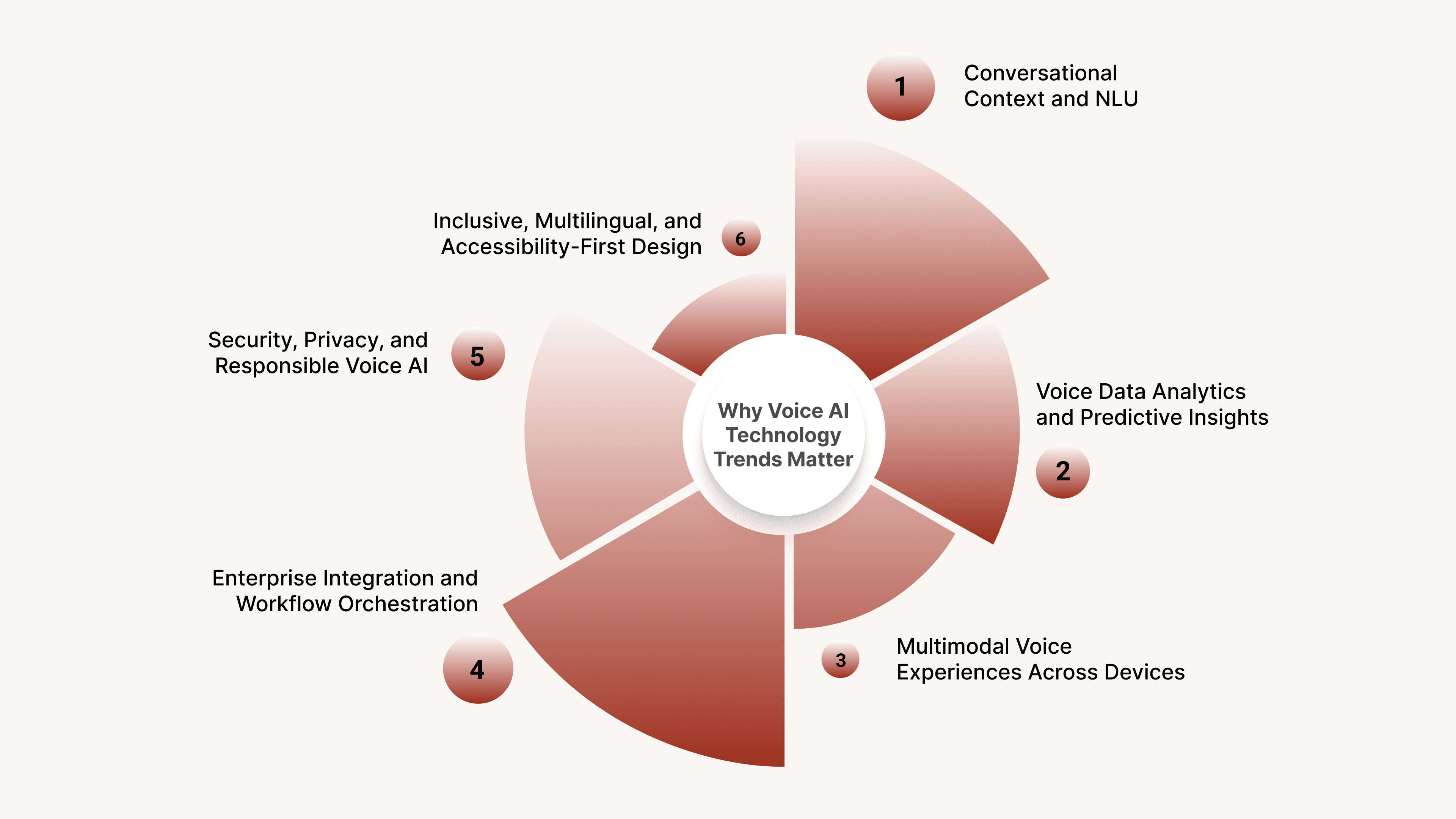
India’s digital economy is accelerating faster than ever, and enterprises are no longer viewing voice AI as an experiment; it has become a strategic pillar for scale, cost reduction, multilingual accessibility, and consistent customer experience. Leading Indian sectors such as BFSI, Healthcare, eCommerce, SaaS, Telecom, and Logistics are moving toward voice-driven automation to handle millions of daily interactions without compromising personalization or trust.
Voice AI has evolved from basic speech recognition tools to context-aware, emotionally intelligent, multilingual conversational systems that can understand tone, interpret intent, execute workflows, and learn continuously from interactions. This shift matters because organizations now want AI systems that do more than “talk”—they must automate processes, improve outcomes, and operate with enterprise-grade security and governance.
As decision-makers prepare for 2026, Voice AI is emerging as a mission-critical technology that drives engagement, operational efficiency, and competitive advantage.
With this strategic shift underway, it is important to understand how voice AI has matured from simple recognition technology into highly capable, enterprise-ready intelligent interaction platforms.
Trend 1: Conversational Context and Natural Language Understanding
Voice AI is shifting from “voice command tools” to systems that truly understand human conversation. Modern platforms no longer respond only to keywords. Instead, they interpret context, history, tone, and intent—similar to how a trained human agent listens, processes, and responds.
Today’s leading voice AI models use advanced NLP, large language models, and contextual memory to follow natural speech patterns, handle interruptions, recall previous interactions, and sustain meaningful dialogue. This evolution matters because it transforms voice AI from a utility tool into a strategic engagement layer for enterprises.
Speech Recognition to Conversational Intelligence
Modern systems can recognize conversational flow, previous interactions, and user intent, allowing them to:
Understand why the user is speaking, not just what they said
Maintain continuity across sessions instead of “resetting” every time
Deliver precise guidance, not template answers
This creates human-like assistance that supports complex enterprise workflows instead of acting like a scripted IVR replacement.
Real-Time Sentiment and Emotional Awareness
Advancements in prosody detection, tonal analysis, and acoustic signal interpretation allow AI to identify:
Frustration vs calm tone
Urgency vs curiosity
Satisfaction vs dissatisfaction
Platforms can then adjust responses, prioritize escalation, or route calls intelligently, improving trust, customer comfort, and service quality.
As conversational intelligence matures, enterprises are no longer treating voice interactions as raw audio; they are turning spoken conversations into structured, actionable intelligence, which leads directly into the next major trend.
Must read: Interactive Voice Response (IVR) Meaning Explained
Trend 2: Voice Data Analytics and Predictive Insights
Voice AI is now a strategic intelligence engine. Every conversation serves as structured data that helps enterprises understand behavior trends, operational gaps, and evolving customer expectations. Industry research consistently highlights that organizations tapping into conversational intelligence gain measurable improvements in retention, efficiency, and decision accuracy.
With advancements in speech analytics, machine learning, and enterprise data integration, voice AI systems can move beyond reactive responses and turn conversations into predictive signals that guide business strategy, service improvements, and automation.
Real-Time Behavioral and Intent Analysis
Modern platforms extract deep intelligence from every interaction, enabling enterprises to:
Detect intent, recurring patterns, and sentiment shifts
Identify bottlenecks in service delivery or patient journeys
Build accurate user personas and risk indicators
This transforms raw voice input into operational clarity, supporting better personalization and performance optimization across teams.
Predictive Workflow Automation
Instead of waiting for users to report issues or engage again, advanced systems now act proactively by:
Triggering follow-up reminders
Flagging dissatisfaction early
Escalating critical cases to human teams
Automating next-best actions based on historical behavior
Enterprises benefit from faster resolution, reduced support pressure, and significantly improved user trust and continuity of service.
As organizations extract more value from conversational analytics, the next breakthrough arrives from how users engage, evolving from single-mode voice systems into rich, multimodal voice ecosystems.
Trend 3: Multimodal Voice Experiences Across Devices
Voice AI is rapidly evolving from single-channel systems into multimodal conversational platforms that blend voice, text, and visual interaction. Instead of forcing users into one interaction style, modern systems allow people to speak, confirm visually, type replies when needed, and continue conversations across devices without losing context. This evolution mirrors real human communication and is becoming critical as enterprises deploy voice AI across call centers, apps, kiosks, wearables, and IoT devices.
Multimodal voice ecosystems improve comprehension, reduce friction, and make AI interactions more natural, intuitive, and outcome-driven, especially in sectors like healthcare, BFSI, eCommerce, and logistics, where users often need both guidance and clarity.
Cross-Channel Consistency
Enterprises are moving toward systems where users can start an interaction on one channel and resume it on another without repeating themselves. This means:
Conversations started on IVR can continue in mobile apps or WhatsApp
Smart devices, kiosks, and apps share the same conversational memory
Context persists across platforms, reducing repetition and frustration
This creates continuity, smoother journeys, and higher satisfaction levels.
Voice Plus Visual Guidance
Voice is powerful, but pairing it with visual confirmation and instruction layers dramatically enhances the experience.
Leading deployments now combine spoken instructions with on-screen dashboards or mobile prompts
Use visual elements for clarity in payments, healthcare instructions, and onboarding
Experiment with AR overlays and smart displays to support complex workflows
The result is clarity, confidence, and higher task completion success across user segments.
As multimodal experiences modernize engagement, enterprises now require platforms that can handle these capabilities at scale, with deep integration into existing systems and mission-critical environments.
Trend 4: Enterprise Integration and Workflow Orchestration
Voice AI is transitioning from a support tool into a core execution layer inside enterprise systems. Instead of operating as isolated bots, modern platforms integrate directly with CRM, ERP, EMR, ticketing tools, billing systems, and communication platforms. This shift transforms voice AI from simply answering queries to triggering actions, orchestrating workflows, and influencing real business outcomes.
Forward-looking organizations are prioritizing platforms that can embed deeply into their digital stack, enabling voice AI to automate tasks, reduce manual dependency, and operate as a true operational engine.
API-First and Plug-In Architecture
Next-generation platforms are designed with enterprise readiness in mind.
What do they do? Here’s what:
Offer API-first frameworks for flexible integration
Connect with existing enterprise tools without re-architecting systems
Support microservices, cloud environments, and modular deployments
This ensures faster rollout, lower engineering friction, and long-term scalability.
Workflow Triggering and Execution
Voice AI is now capable of initiating and completing actions, not just responding. Leading enterprises are using it to:
Create tickets, update CRM records, and process service requests
Trigger notifications and compliance workflows
Automate journeys like appointment scheduling, loan status updates, returns handling, onboarding processes, and more
This shifts organizations from reactive service operations to automated, outcome-driven engagement.
As integration depth increases, enterprises recognize that scale and impact must sit alongside responsibility, driving a parallel focus on governance, compliance, and trust in voice AI deployments.
Trend 5: Security, Privacy, and Responsible Voice AI
As Voice AI evolves from experimental pilots to mission-critical enterprise infrastructure, trust becomes non-negotiable. Hospitals, banks, insurers, and large platforms are now prioritizing governance frameworks that protect patient data, financial information, identity records, and sensitive conversations. Leaders increasingly evaluate Voice AI not only on capability, but on its ability to operate safely within regulatory, legal, and ethical boundaries.
Modern deployments are expected to demonstrate encryption, strict access controls, compliance-readiness, and transparent operational behavior from day one.
Encryption and Secure Voice Storage
Voice conversations are now treated as sensitive data assets. Enterprise-grade platforms are expected to:
Encrypt voice recordings, transcripts, and metadata
Enforce consent-driven recording and storage practices
Comply with healthcare, financial, and telecom data handling standards
Prevent unauthorized access through layered authentication controls
This ensures conversations remain protected throughout their lifecycle.
Traceability and Explainability in Voice Decisions
With AI increasingly influencing customer experience and operational outcomes, organizations demand auditable transparency. Modern Voice AI must:
Provide logs that explain why and how decisions were made
Support reviewable audit trails for compliance teams
Reduce algorithmic bias and support ethical deployment frameworks
Align with enterprise AI governance policies and evolving national regulations
This builds accountability and confidence, especially in regulated sectors.
With governance frameworks strengthening and enterprise trust increasing, innovation momentum shifts toward inclusivity and accessibility, a defining direction for diverse markets such as India.
Suggested read: Voice Bots in Healthcare: Top 7 Use Cases Every Hospital Should Know
Trend 6: Inclusive, Multilingual, and Accessibility-First Design
Enterprise Voice AI is shifting toward accessibility-first engineering instead of treating inclusion as an afterthought. As adoption widens, organizations are realizing that real impact only happens when systems understand local speech patterns, regional dialects, mixed-language conversations, and diverse user abilities.
In a multilingual market like India, this evolution is not optional; it determines whether digital engagement truly scales.
Regional Language Support and Hinglish Models
Modern Voice AI platforms are being trained on Indian language speech datasets, regional accent variations, and blended conversation styles like Hinglish. Instead of translating English scripts, these systems:
Comprehend natural, conversational speech as users actually speak
Support tonal differences, pronunciation variance, and regional nuance
Deliver responses that feel culturally aligned, not robotic or foreign
This approach dramatically increases participation, especially outside Tier-1 urban centers.
Accessibility for Diverse User Skills
A major push in 2026 is designing Voice AI for people who are:
Uncomfortable with text-heavy interfaces
Not fluent in English
New to digital platforms or formal apps
Voice-first systems reduce dependency on literacy, eliminate form fatigue, and make digital access simpler for elderly users, rural users, and first-time technology adopters. Hospitals, banks, insurers, and citizen service platforms are already adopting accessibility-led voice designs because they expand reach and build inclusivity into everyday interactions.
Suggested Read: Everything You Need to Know About AI Assistants
When inclusion, language intelligence, and accessibility are built into the foundation, Voice AI stops being just a support channel and becomes a nationwide engagement layer. All these trends collectively shape a future where voice AI is operational, strategic, and deeply embedded into enterprise systems, and that’s exactly where CubeRoot fits in.
Voice AI Technology Trends 2026: Where CubeRoot Fits in
The future of Voice AI belongs to platforms that are intelligent, integrated, multilingual, compliant, and built for enterprise scale. CubeRoot has been engineered with this exact vision, translating emerging technology trends into practical, high-impact solutions for healthcare, BFSI, eCommerce, SaaS, logistics, and high-volume enterprises in India.
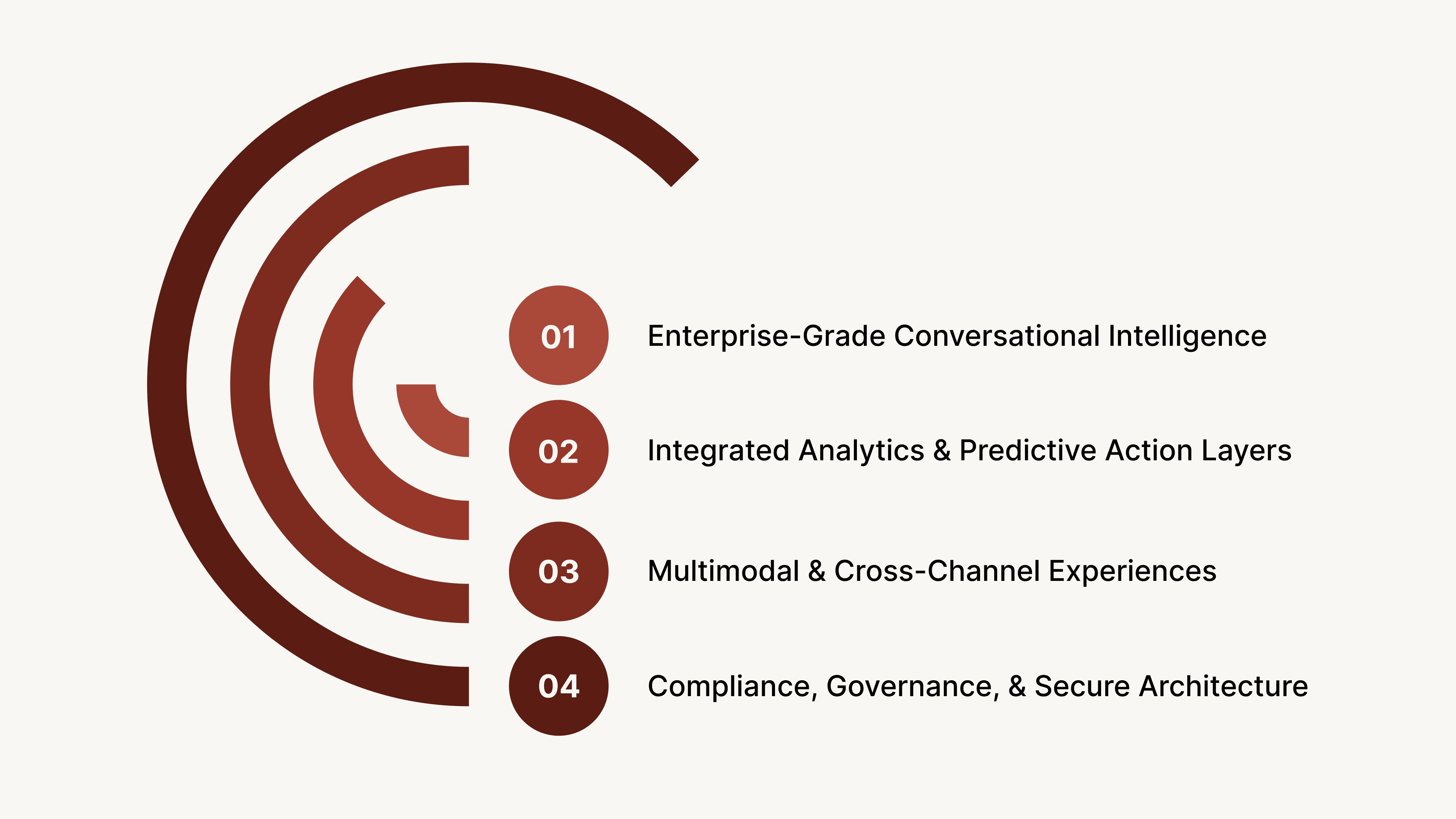
Enterprise-Grade Conversational Intelligence
CubeRoot goes beyond scripted responses. Its advanced NLP models are trained for:
Contextual understanding
Intent recognition
Sentiment and emotional interpretation
Natural human-like voice delivery
This ensures conversations feel intuitive, empathetic, and context-aware instead of mechanical.
Integrated Analytics and Predictive Action Layers
With CubeRoot, every conversation becomes a strategic data asset. The platform:
Converts voice interactions into structured insights
Tracks behavioral patterns, trends, and escalation signals
Powers predictive triggers such as reminders, follow-ups, and alerts
Leaders gain a clear view of performance, customer behavior, and operational health and can act on it instantly.
Multimodal and Cross-Channel Experiences
Businesses are no longer limited to single-interface Voice AI deployments.
CubeRoot supports inbound and outbound Voice AI
Integrates with IVR, mobile applications, and enterprise communication tools
Maintains conversation continuity across channels
This creates seamless engagement journeys instead of fragmented service experiences.
Compliance, Governance, and Secure Architecture
Compliance is built into CubeRoot’s foundation, not bolted on later. The platform delivers:
Encrypted storage for voice, transcripts, and metadata
Consent-driven communication architecture
Traceable audit logs
Sector-ready compliance frameworks for BFSI, Healthcare, and enterprises
This ensures enterprises operate safely, transparently, and confidently.
Conclusion
Voice AI is evolving into an intelligent, predictive, secure, and accessibility-driven technology foundation that is reshaping how enterprises communicate, automate, and scale. What once started as basic speech recognition has matured into context-aware, emotionally intelligent, multimodal, and deeply integrated voice ecosystems capable of handling real operational workloads.
From proactive engagement and predictive analytics to multilingual access and governance-ready deployments, the voice AI technology trends shaping 2026 will redefine service delivery, experience management, and enterprise automation across healthcare, BFSI, eCommerce, SaaS, logistics, and public services in India.
Organizations that move early will not just modernize but will build sustainable competitive advantage, stronger user trust, and future-ready operational intelligence.
If you are ready to lead with enterprise voice, then talk to CubeRoot and build your future-ready voice strategy.
FAQs
Q1. What are the top voice AI technology trends in 2026?
Trends include conversational intelligence, predictive analytics, multimodal UX, enterprise integration, data security, and multilingual support.
Q2. How does voice AI differ from traditional speech recognition?
Voice AI includes context, sentiment, intent recognition, and decision support — not just converting speech to text.
Q3. Can voice AI integrate with enterprise systems like CRM/ERP?
Yes. Modern voice AI platforms offer API-first architecture for seamless integration into core business systems.
Q4. Is voice AI secure enough for enterprise use?
When built with encryption, consent, governance, and auditable logs, voice AI meets enterprise security and compliance expectations.
Q5. How will voice AI impact customer experience in 2026?
Voice AI will enable more natural engagement, faster task completion, intelligent personalization, and broader accessibility across languages and devices.