Jan 14, 2026
Top 9 Voicebot Platforms Compared for 2026
Across Indian enterprises, voice-led interactions still dominate customer engagement, from banking helplines and eCommerce support to healthcare appointments and SaaS onboarding. As call volumes grow and customer expectations shift towards faster, more consistent responses, AI-powered voicebots are increasingly being adopted to automate routine conversations without overloading human teams.
In this blog, we will provide a voicebot product comparison for 2026, evaluating top platforms based on their features, scalability, and use cases, particularly for Indian enterprises in sectors like BFSI, eCommerce, SaaS, healthcare, and D2C.
Key Takeaways
Voicebots automate routine tasks, enhancing efficiency and scalability, particularly for BFSI, eCommerce, and D2C businesses in India.
Multilingual voicebot support enables businesses to engage with India’s diverse customer base in multiple languages, improving customer accessibility and satisfaction.
Lead qualification and sales funnel automation through voicebots improve conversion rates and streamline sales processes for D2C brands and fintech companies.
CRM integration with voicebots boosts operational efficiency by streamlining customer engagement and sales workflows, making automation more seamless.
Top voicebot platforms like CubeRoot offer scalable, customizable solutions that integrate smoothly into existing business systems.
What is an AI Voice Bot?
An AI voice bot is a conversational agent powered by artificial intelligence (AI) that can simulate human-like voice interactions. These bots use speech recognition and natural language processing (NLP) to interpret spoken language and generate appropriate responses. Voicebots are commonly used in customer service applications, where they help businesses automate routine interactions such as answering questions, processing requests, and providing real-time assistance.
These voicebots can engage customers in several languages, making them ideal for industries like BFSI, healthcare, and eCommerce, where timely responses and personalized experiences are essential.
Also Read: What Is Customer Satisfaction and How to Improve It?
Now that we know what an AI voice bot is, let's look at how it compares to another popular technology, chatbots.
What is the Difference Between a Voicebot and a chatbot?
While both voicebots and chatbots serve similar functions, there are key differences between the two. Voicebots use voice input and output, while chatbots operate through text-based interactions. Below is a comparison table highlighting the differences:
Feature | Voicebot | Chatbot |
Mode of Communication | Voice (speech input/output) | Text (typed input/output) |
Technology | Speech Recognition, NLP | Text Processing, NLP |
User Experience | Provides a more natural, hands-free experience | Text-based interactions through chat windows or apps |
Usage | Ideal for voice-driven applications like customer service calls | Primarily used in web chat or messaging apps |
Real-Time Interaction | Real-time conversations through voice | Real-time text conversations |
Also Read: 10 Proven Ways to Improve Customer Experience Management in Banking
After understanding the difference between voicebots and chatbots, let’s look into the top voicebot platforms in 2026.
A Comparison of the Top 9 Voicebot Platforms in 2026
Below is a list of some of the top voicebot platforms to watch in 2026, particularly for enterprises in India.
Platform | Key Focus | Pros | Cons | Benefits |
CubeRoot | Enterprise-grade voice AI for automation | Multilingual support, customizable workflows, scalable | Primarily suited for larger enterprises | Ideal for BFSI, eCommerce, and healthcare with sector-specific workflows, fast deployment |
Drift | Conversational marketing and sales automation | Real-time lead qualification, CRM integration, fast setup | Primarily for SaaS and D2C companies | Boosts conversion rates through automated lead qualification, streamlines sales funnels |
Dialogflow | Voice and text-based conversational interfaces | Integrates with Google Cloud, supports 20+ languages, visual interface | Requires technical expertise for setup | Supports multilingual applications, ideal for eCommerce and SaaS, with seamless integration |
Kore.ai | Enterprise-level automation and customer service | Advanced NLP capabilities, customizable AI models, multi-channel support | Can be complex to configure for small businesses | Optimizes contact centers, reduces operational costs with deep AI and machine learning integration |
IBM Watsonx Assistant | Enterprise-grade virtual assistants for customer service | Multi-channel support, advanced NLP and machine learning | Expensive for smaller businesses | Integrates with IBM Cloud, ideal for enterprise-level automation in BFSI and healthcare |
Haptik | Customer service and engagement automation | User-friendly design tools, strong NLP, multi-channel integration | Limited customization for advanced use cases | Quick deployment with industry-specific templates for BFSI and eCommerce, great for customer service |
LivePerson | AI-powered customer service, sales, and marketing | AI-human hybrid support, real-time messaging, deep CRM integration | High cost for small businesses | Offers 24/7 support, integrates with CRM for sales and customer service automation |
Also Read: Outbound Calls Explained: What They Are and How They Work?
Let’s now expand on each platform’s key features and discuss why businesses should consider adopting them for their operations.
1. CubeRoot
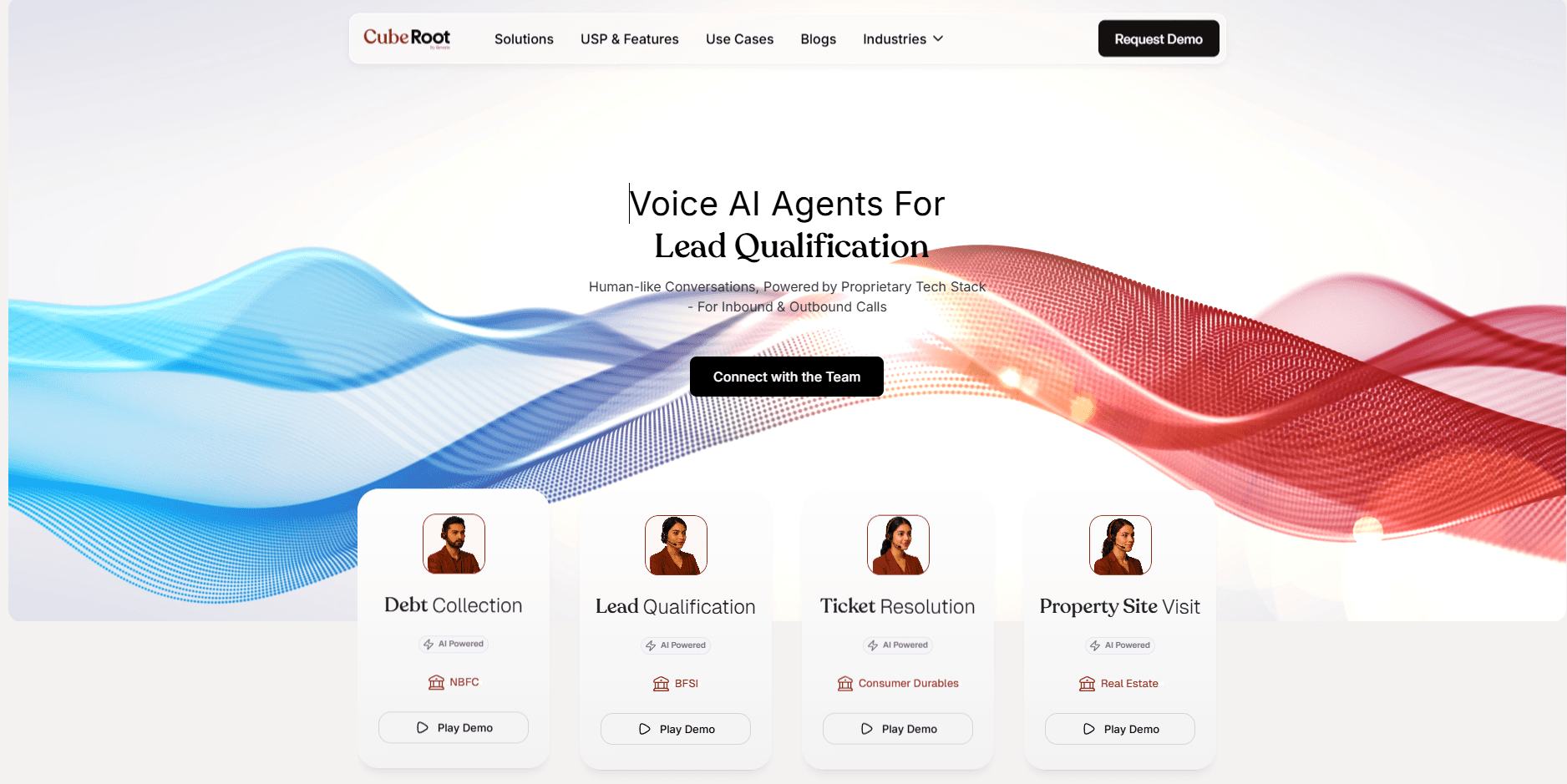
CubeRoot is an India-based, enterprise-grade voice AI platform designed to automate customer interactions at scale. It is built to handle both inbound and outbound voice communication, making it perfect for industries like BFSI, eCommerce, and healthcare.
The platform offers multilingual support, which is particularly important in India’s diverse linguistic environment. CubeRoot’s domain-trained voice agents engage customers naturally and efficiently, automating a range of tasks such as balance inquiries, order tracking, debt collection, and more.
Key Features:
Voice AI Agent Platform: The Voice AI Agent Platform replaces or augments traditional call centers with intelligent, multilingual voice agents. It supports BFSI tasks like loan status updates, debt collections, retail operations like order tracking and returns, and cross-industry use cases like appointment booking and post-sale engagement.
Outbound & Collections Automation: The platform automates pre-due and post-due payment reminders, follow-ups, and promise-to-pay confirmations, especially beneficial for NBFCs, insurers, and lenders. It improves customer connect and pickup rates, boosts recovery percentages, and ensures compliance with strict regulatory scripts.
Order & Returns Automation: Order & Returns Automation is optimized for high-volume eCommerce businesses, handling order updates, return processing, and delivery feedback. It manages seasonal surges without the need to increase headcount, making it ideal for platforms with 100K+ monthly transactions.
Lead Qualification & Sales Funnel Automation: Automates lead qualification and sales funnel processes by handling eligibility checks, intent routing, and hot lead escalation. This feature is especially valuable for fintech, D2C brands, and real estate companies looking to boost conversions and improve sales efficiency.
Voice Feedback & Post-Sale Engagement: The platform enhances NPS and CSAT collection rates by using voice-first outreach after purchase or service delivery. It includes pre-triaging of complaints before escalation, ensuring better customer experiences and improving post-sale interactions.
CubeRoot’s platform is designed to scale rapidly, providing enterprise-level automation with sector-specific workflows, enabling businesses to offer real-time voice support, improve customer engagement, and boost operational efficiency. Its no-code API-first deployment model also ensures seamless integration with existing systems, making it easy for businesses to go live quickly.
2. Drift
Drift is a conversational marketing platform that uses voice AI to help businesses engage with customers in real-time. Known for its AI-driven lead qualification, Drift enables businesses to automate initial interactions and book meetings directly with sales teams. Its real-time chat capabilities make it an ideal solution for SaaS businesses looking to optimize sales funnels and improve conversion rates.
Key Features:
Real-Time Engagement: Offers instant chat and voice for immediate customer interactions.
Lead Qualification: Automates lead qualification and integrates with CRM systems.
Customizable Experience: Tailors chatbots to align with brand voice and customer needs.
Appointment Scheduling: Supports sales automation through scheduling and follow-ups.
3. Dialogflow
Dialogflow, developed by Google, is a powerful platform for creating voice and text-based conversational interfaces. It offers natural language understanding (NLU) and supports over 20 languages, making it an ideal choice for businesses looking to offer multilingual support. Its integration with Google Cloud ensures seamless scalability and high reliability.
Key Features:
Multilingual Support: Supports 20+ languages for global engagement.
Natural Language Understanding: Delivers accurate responses with advanced NLU and dialog management.
Visual Interface: Easy-to-use interface for building conversational flows.
Google Cloud Integration: Seamless integration with Google Cloud for scalability.
4. Kore.ai
Kore.ai is a robust conversational AI platform that provides enterprise-level automation for customer service, sales, and support. It is widely used in BFSI, healthcare, and SaaS industries for deploying advanced voicebots capable of managing high-volume interactive voice responses and complex workflows.
Key Features:
Advanced NLP: Provides a deep understanding of customer intent for better engagement.
Multi-Channel Support: Engages customers across voice, text, and social media.
Customizable AI Models: Tailor AI models for industry-specific needs.
Analytics & Reporting: Provides data-driven insights to improve service.
5. IBM Watsonx Assistant
IBM Watsonx Assistant provides an enterprise-grade solution for creating intelligent virtual assistants capable of handling customer service and complex workflows. Powered by IBM's NLP and machine learning capabilities, it offers deep integration with IBM Cloud for easy deployment and scalability.
Key Features:
Machine Learning Integration: Utilizes AI and machine learning for accurate responses.
Multi-Channel Support: Supports voice, web, and mobile channels.
Customizable Flows: Tailor conversational flows to specific business needs.
IBM Cloud Integration: Seamlessly integrates with IBM Cloud for robust performance.
Also Read: Multilingual Voice Bots for Enhanced Customer Interaction
6. Haptik
Haptik is a popular AI-powered customer service and engagement platform known for its ease of use and strong NLP capabilities. Haptik helps businesses deploy voicebots for everything from customer inquiries to transaction processing across retail, BFSI, and eCommerce industries.
Key Features:
User-Friendly Design: Easy-to-use visual tools for quick bot deployment.
Pre-Built Templates: Ready-to-use templates for BFSI and eCommerce.
Strong NLP: Recognizes customer intent for accurate responses.
Multi-Channel Integration: Engages customers across various platforms.
7. LivePerson
LivePerson provides an AI-powered platform for customer service, sales, and marketing that blends real-time messaging and voice interactions. This hybrid model allows businesses to automate customer engagement while still maintaining human oversight when necessary.
Key Features:
Hybrid AI-Human Support: Combines AI automation with human support for personalized service.
Real-Time Messaging & Voice: Instant engagement through voice and chat.
CRM Integration: Integrates with CRM systems for streamlined workflows.
Analytics & Insights: Tracks performance for ongoing optimization.
8. Cognigy.ai
Cognigy.ai offers enterprise-level automation for customer service and contact centers. Its advanced AI and machine learning capabilities make it ideal for businesses managing high volumes of interactions, such as in the BFSI, healthcare, and SaaS industries.
Key Features:
Advanced AI: Uses AI and machine learning to improve customer service.
Multi-Channel Engagement: Supports voice, text, and chat interactions.
Customizable Workflows: Automates complex processes for higher efficiency.
Seamless Integration: Easily integrates with existing enterprise systems.
9. Yellow.ai
Yellow.ai offers AI-driven conversational experiences for enterprises in customer support, engagement, and automation. It provides robust support for both voice and text interactions across multiple channels.
Key Features:
AI-Driven Engagement: Creates personalized conversational experiences for customers.
Multi-Channel Support: Engages customers across voice and text channels.
Customizable Chatbots: Tailors chatbots to fit business needs.
Performance Tracking: Provides real-time analytics for continuous improvement.
Also Read: Importance of Customer Service: Key Reasons and Benefits
With a comprehensive understanding of the platforms, let’s wrap up by looking at how to choose the best voicebot platform for your business in 2026.
How to Choose the Best Voicebot Platform in 2026
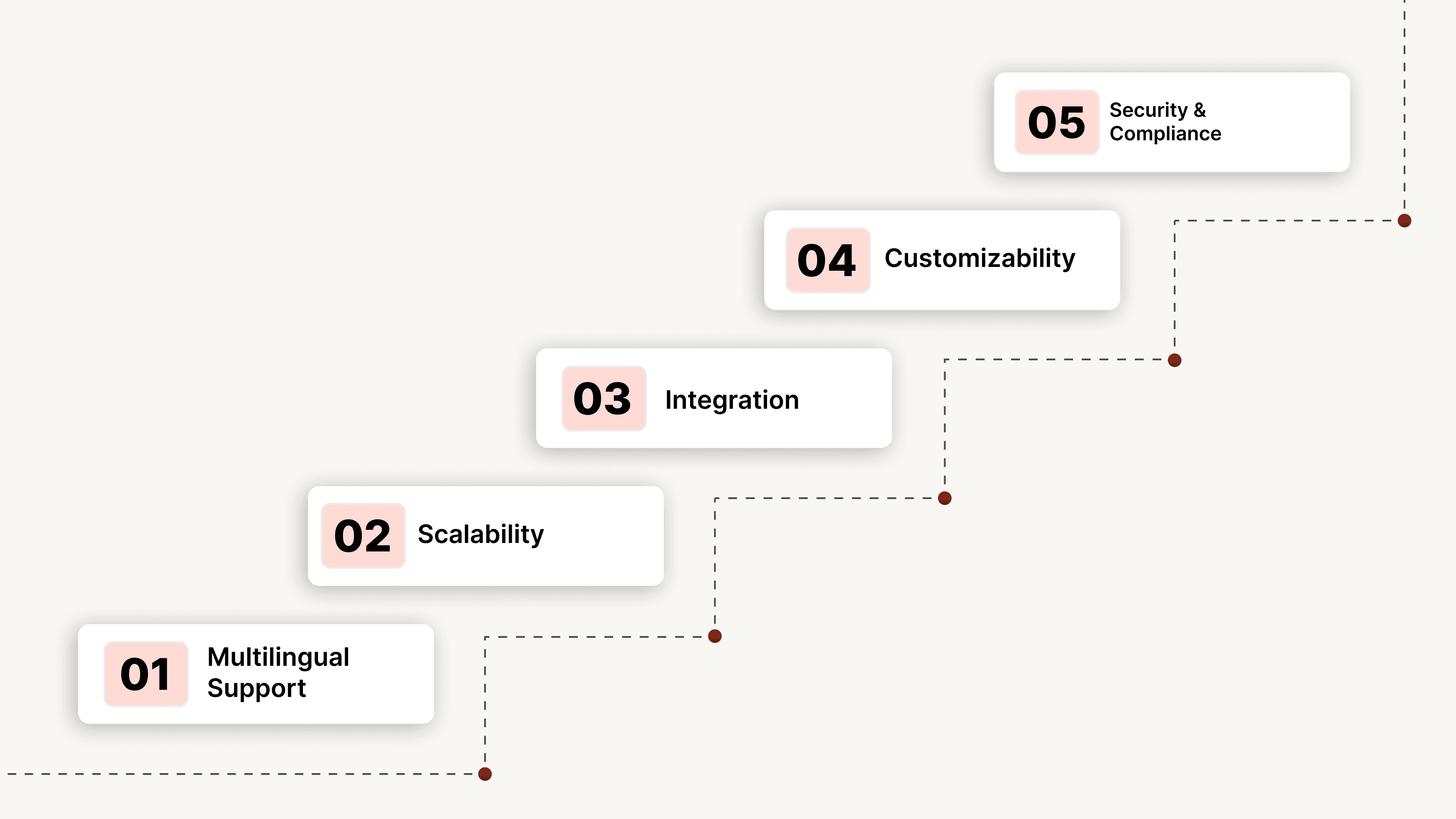
Choosing the right voicebot platform depends on several factors, including your business needs, industry, and customer engagement goals. Consider the following criteria:
Multilingual Support: Essential for businesses operating in India’s diverse linguistic environment.
Scalability: Look for platforms that can handle high volumes of interactions, especially during peak times.
Integration: Ensure the platform integrates seamlessly with your existing CRM, ERP, and telephony systems.
Customizability: The platform should allow customization of workflows, voice agents, and use cases to meet specific business needs.
Security & Compliance: Ensure the platform meets industry standards for data protection, especially in regulated sectors like BFSI and healthcare.
Selecting the best voicebot platform in 2026 requires evaluating your business needs, scalability, and integration capabilities to ensure a smooth customer experience.
Also Read: Mastering Inbound Calls: Strategies and Benefits for Business Success
Conclusion
Voicebot platforms are redefining how Indian enterprises manage customer service, sales, and support at scale. This makes a structured voicebot product comparison essential, rather than relying on surface-level feature claims.
As organisations plan for 2026, a well-informed voicebot product comparison helps identify platforms that truly align with language coverage, scalability, compliance requirements, and enterprise workflows.
Transform your customer service with CubeRoot’s Voice AI Agent Platform. Its multilingual support and industry-specific workflows make it perfect for BFSI, eCommerce, and healthcare. Automate routine tasks and enhance customer engagement, all while ensuring compliance and scalability.
Book a demo with CubeRoot to see how our AI-powered voicebot solutions can transform your enterprise automation and customer engagement.
FAQs
1. How can voicebots help streamline customer service for BFSI companies?
Voicebots automate common tasks like balance inquiries and loan updates, providing fast, scalable, and efficient customer support for BFSI companies.
2. What are the benefits of using multilingual voicebots for customer support in India?
Multilingual voicebots enable companies to engage diverse Indian audiences in multiple languages, enhancing accessibility and customer experience in sectors like eCommerce and healthcare.
3. How do voicebots enhance sales funnel automation for D2C brands?
Voicebots qualify leads, automate follow-ups, and route high-potential prospects to sales teams, improving conversion rates and streamlining sales funnels for D2C brands.
4. What are the key advantages of integrating voicebots with CRM systems?
Integrating voicebots with CRM systems ensures seamless data flow, automating customer engagement and sales processes, thus improving overall efficiency and customer satisfaction.
5. Can voicebots be integrated with existing contact center platforms for seamless service?
Yes, many voicebot platforms integrate seamlessly with existing contact center systems, optimizing operations and reducing costs by automating routine customer interactions.