Dec 4, 2025
Understanding AI Virtual Assistants: Benefits, Use Cases, and How They Help Enterprises Scale
Indian enterprises are moving toward automated customer interactions with clear intent, and the market data reflects this shift. IMARC Group reports that the conversational AI market in India reached USD 516.8 million in 2024, indicating strong adoption across sectors such as BFSI, Retail, Healthcare and EdTech.
For you, this growth signals a practical change in how customers want to engage with brands. People expect quick responses, accurate information and support in their preferred language. Traditional call centers often struggle to meet these expectations consistently, especially when volumes rise.
AI virtual assistants help you bridge this gap by offering reliable, round-the-clock interactions that feel natural and reduce operational strain. They allow your teams to focus on higher-value tasks while ensuring customers receive timely and contextual assistance.
In this blog, you will understand what an AI virtual assistant actually is and why it has become a core part of modern enterprise communication.
Key Takeaways
India’s enterprise market is rapidly adopting AI virtual assistants for high-volume customer operations.
These assistants automate real workflows such as verification, order updates and appointment management.
Mixed-language understanding is essential for serving Indian customers effectively.
System integrations matter because they enable the assistant to complete tasks, not just answer queries.
Voice interactions deliver higher completion rates, especially in Tier 2 and Tier 3 markets.
CubeRoot provides an enterprise-grade Voice AI platform built for scale, compliance and multilingual accuracy.
Early adoption helps you reduce operational load, improve service quality and achieve consistent customer outcomes.
What Is an AI Virtual Assistant?
An AI virtual assistant is a conversational system that listens to a customer query, understands the intent and completes an action without human intervention. It uses speech recognition, intent classification and structured workflows to support high-volume customer interactions across voice or text.
You can use an AI virtual assistant to automate tasks that usually slow down your contact center.
Some practical examples include:
Verifying loan applicants by collecting ID details and validating them against your internal systems
Guiding customers through real-time policy or claim status checks.
Assisting shoppers with order status, return eligibility or delivery scheduling in e-commerce
Coordinating appointment bookings and follow-up reminders in healthcare environments
Qualifying leads and routing them to the right counselor or sales team in EdTech
This type of assistant works well in India because customer conversations often include a mix of English, Hindi and regional languages. Your assistant can interpret these blended interactions and respond clearly, which reduces repetition and improves call completion rates.
When you integrate an AI virtual assistant into your workflow, it becomes the first touchpoint that handles routine but high-impact conversations. The next section explains how the underlying technology processes each query and maintains accuracy at scale.
How AI Virtual Assistants Work in Real Enterprise Workflows
An AI virtual assistant processes each customer query through a sequence of tightly connected steps. The goal is to understand the user clearly, retrieve the right information and complete the required task with accuracy.
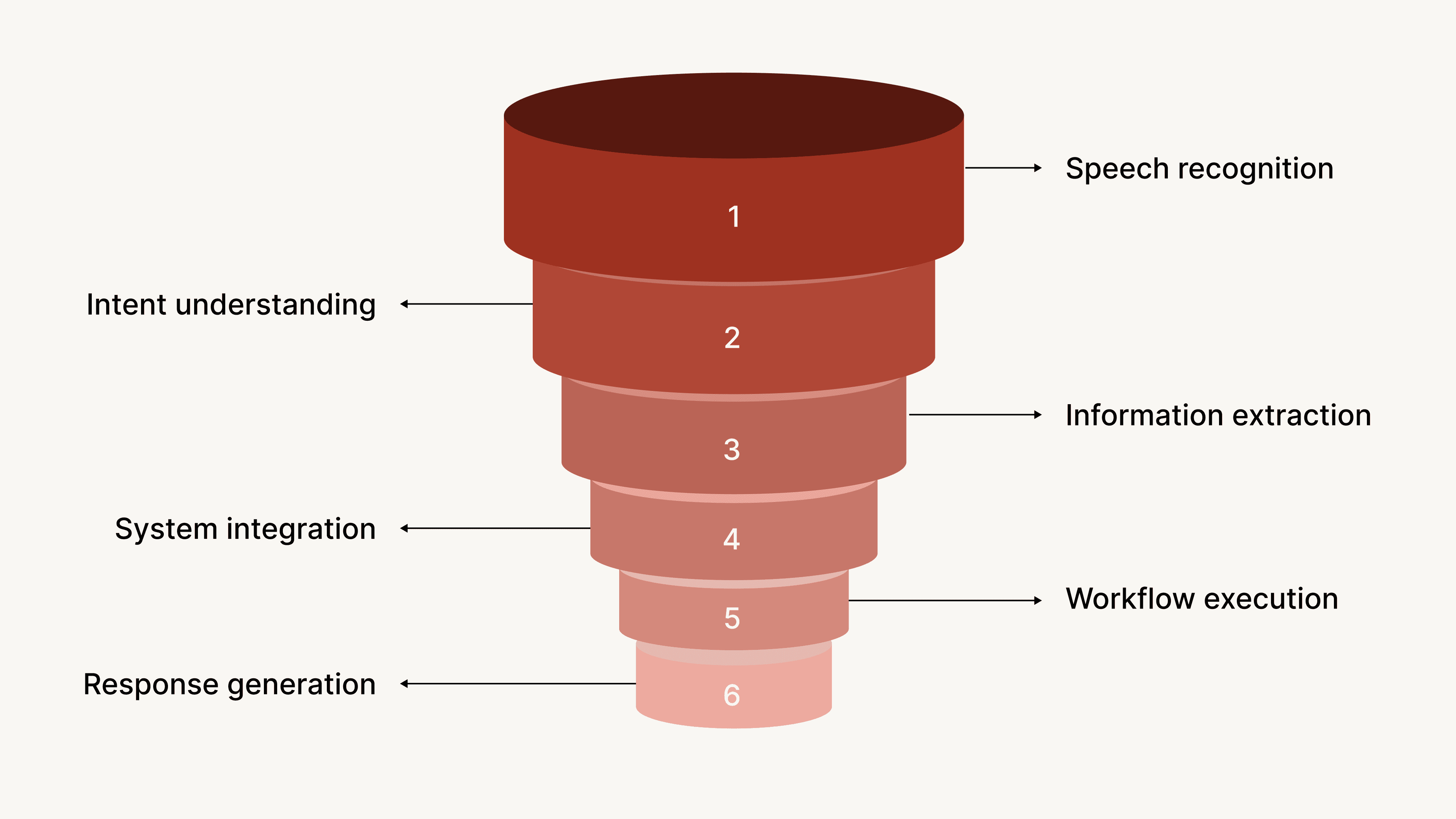
The workflow usually follows this path:
1. Speech recognition
If the customer speaks, the system converts the audio into text using automatic speech recognition. This step must handle Indian accents, background noise and mixed-language sentences, which are common in real customer calls.
2. Intent understanding
The assistant classifies the purpose of the query. For example, it identifies whether the caller wants to check a loan status, request a refund, reschedule a delivery or confirm an appointment. This step uses natural language models trained on domain-specific data.
3. Information extraction
The assistant extracts customer details such as dates, policy numbers, order IDs or addresses. In India, customers often provide partial or loosely structured information. A strong assistant learns these patterns and fills the gaps without repeated prompts.
4. System integration
The assistant connects with your internal systems. These may include your CRM, core banking software, claims platform, order management system or patient record system. This allows it to fetch real-time data and complete tasks instead of delivering generic responses.
5. Workflow execution
Once the intent and details are clear, the assistant follows a defined workflow. Examples include verifying a customer, raising a ticket, retrieving claim status or generating an OTP. Each workflow ensures accuracy and compliance.
6. Response generation
The assistant provides a clear and contextually correct answer to the customer. In voice channels, the output is converted back to speech with natural tone and pace.
This structured process ensures that your assistant handles thousands of conversations consistently. It reduces the load on human teams while maintaining clarity, compliance and service quality. The next section explores the benefits you can expect when you introduce an AI virtual assistant into your operations.
Also read: Multilingual Voice Bots for Enhanced Customer Interaction
Key Benefits of AI Virtual Assistants for Large Enterprises
AI virtual assistants create measurable impact when they are designed for real operational environments. Instead of offering surface-level convenience, they help you improve efficiency, strengthen customer experience and streamline high-volume workflows.
Here are the benefits that matter most to Indian enterprises:
1. Faster resolution of routine queries
Your teams no longer need to spend time on repetitive tasks such as order lookups, appointment confirmations or policy checks. The assistant closes these queries instantly, which reduces call waiting time and improves overall service quality.
2. Higher completion rates in voice interactions
Indian customers often prefer speaking rather than typing. A capable assistant understands accents and mixed-language inputs, which increases call completion rates and reduces the number of repeated attempts.
3. Lower operational cost per conversation
When the assistant handles verification, updates or basic troubleshooting, your human agents can focus on priority cases. This allows you to manage peak volumes without expanding headcount or adding new contact centers.
4. Better compliance and audit readiness
Every interaction is recorded, timestamped and structured. This makes it easier for you to meet compliance requirements in sectors such as BFSI and Healthcare. It also reduces the risk of inconsistent or noncompliant communication from human teams.
5. Improved customer experience across regions
Regional language support helps you reach customers in Tier 2 and Tier 3 markets more effectively. The assistant communicates clearly and avoids misunderstandings that often occur in text-only systems.
6. Consistent performance across all time slots
Customer behavior is not restricted to office hours. Virtual assistants operate continuously, which ensures that your customers receive the same level of service at midnight as they would during peak business time.
These benefits help you build a scalable and predictable customer interaction model. The next section highlights how different industries use AI virtual assistants to solve high-impact problems.
Industry-Wise Use Cases
AI virtual assistants create value when they solve problems that occur daily in your workflows. The examples below reflect how Indian enterprises apply the technology in real operational settings.
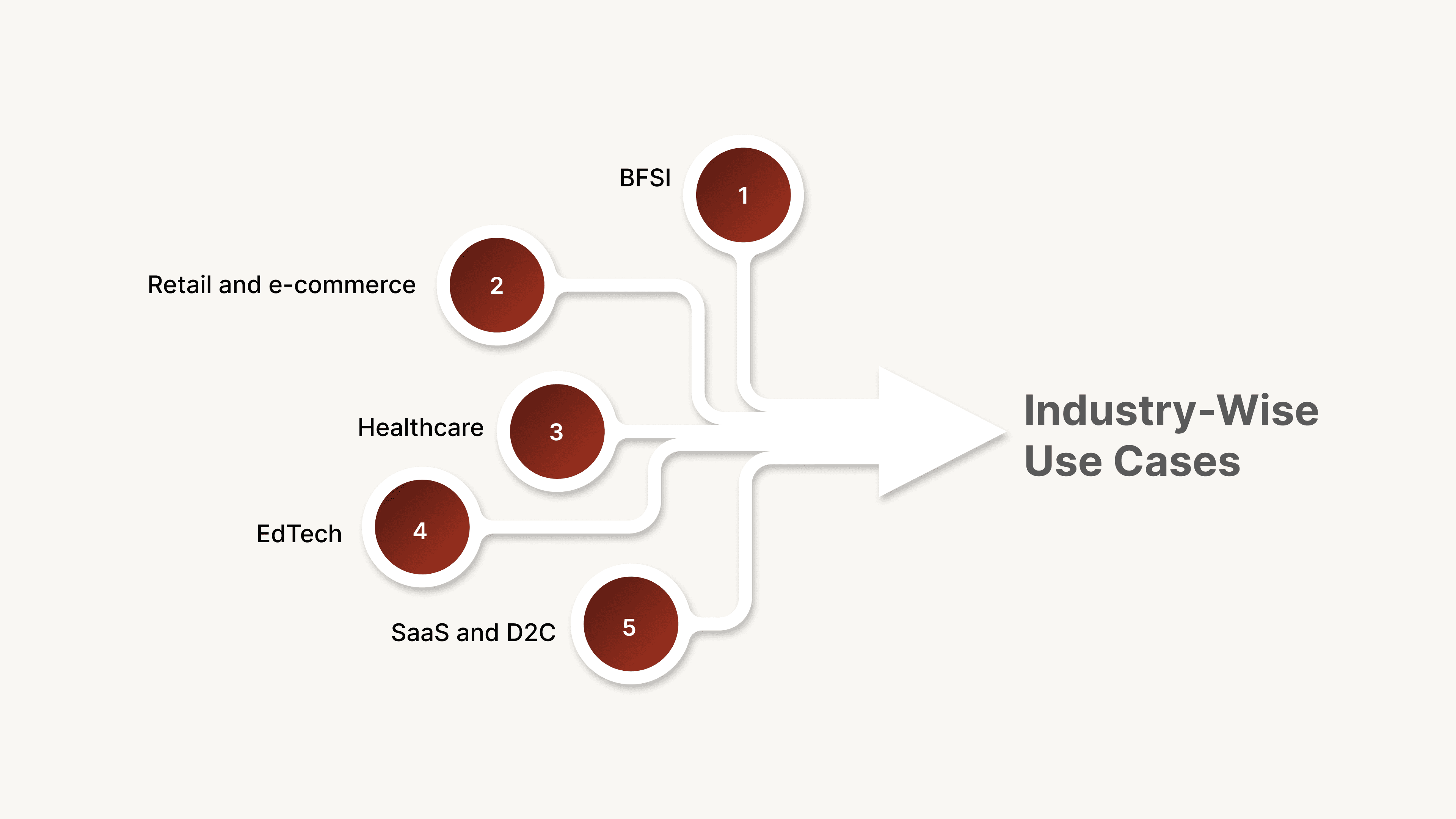
BFSI
Banks and lenders use virtual assistants to manage verification, collections and customer servicing at scale.
Completing preliminary loan checks by collecting PAN, date of birth and income details
Sharing real-time updates on policy status or EMI schedules
Reminding customers about upcoming payments with personalized context
Screening high-risk interactions by identifying suspicious patterns in caller behavior.
Retail and e-commerce
Online and offline retailers use assistants to improve order-related communication and reduce last-mile friction.
Providing instant order status updates based on the customer’s mobile number
Coordinating returns by checking eligibility and logging the request
Confirming delivery windows to reduce missed or rejected deliveries
Sharing personalized recommendations during post-purchase calls
Healthcare
Hospitals, clinics and diagnostic networks rely on assistants to reduce scheduling load and manage patient coordination.
Confirming appointments and sending follow-up reminders
Sharing lab report availability once results are uploaded
Guiding patients through preparation steps for diagnostic procedures
Collecting pre-visit details such as symptoms or preferred time slots
EdTech
EdTech platforms use virtual assistants to improve lead qualification and student support.
Screening inquiries by capturing course interest, budget and location
Scheduling counseling sessions with the right academic advisor
Following up with inactive leads to improve conversion rates
Assisting existing learners with payment queries or class access issues
SaaS and D2C
Growth-focused teams use assistants to streamline renewals and customer retention.
Notifying customers about subscription expiry and completing the renewal
Addressing payment failures by guiding users through resolution steps
Supporting new users with onboarding instructions and feature walkthroughs
Gathering product feedback through structured voice surveys
These use cases show how virtual assistants integrate directly into your operational flow. The next section compares AI virtual assistants with IVR systems and chatbots to help you understand where each solution fits best.
AI Virtual Assistants vs IVR vs Chatbots: What Enterprises Should Choose
Enterprises often group these systems together, but they solve different problems and deliver different levels of customer experience. Understanding the distinction helps you choose the right approach for your operational needs.
Traditional IVR
IVR systems follow a fixed menu structure. The customer must navigate through numbered options, which slows down resolution and increases drop-offs. IVR works for simple routing but struggles with natural queries, regional accents or unexpected customer behavior.
Chatbots
Chatbots handle text-based queries and perform well when customers follow a predictable pattern. They usually work on websites or apps and depend on structured inputs. They are effective for FAQs or basic troubleshooting but offer limited value for audiences who prefer voice communication.
AI Virtual Assistants
AI virtual assistants handle natural language across voice and text. They recognize free-flowing queries, extract details and complete tasks through system integrations. This creates a smoother experience for customers who want quick answers without navigating menus or typing long messages.
The table below captures the difference clearly:
Capability | IVR | Chatbot | AI Virtual Assistant |
Handles natural language | No | Partially | Yes |
Supports Indian regional languages | Limited | Limited | Strong |
Completes tasks through system integrations | Basic | Moderate | Strong |
Works well for voice-first users | Weak | Not applicable | Strong |
Reduces operational load at scale | Low | Medium | High |
Handles mixed-language customer inputs | No | Weak | Strong |
AI virtual assistants stand out because they combine automation, natural language capability and workflow execution in one system. This makes them suitable for high-volume environments where accuracy and speed are equally important.
The next section explains the essential capabilities you should evaluate before selecting an AI virtual assistant for your organization.
Suggested read: Understanding Customer Value: Definition, Impact, Trends & Strategies
Essential Features to Look For in an Enterprise-Ready AI Virtual Assistant
Selecting an AI virtual assistant requires more than checking for basic automation. The assistant should fit your operational reality, support your customers’ language preferences and integrate cleanly with your existing systems. The capabilities below reflect what Indian enterprises evaluate before deployment.
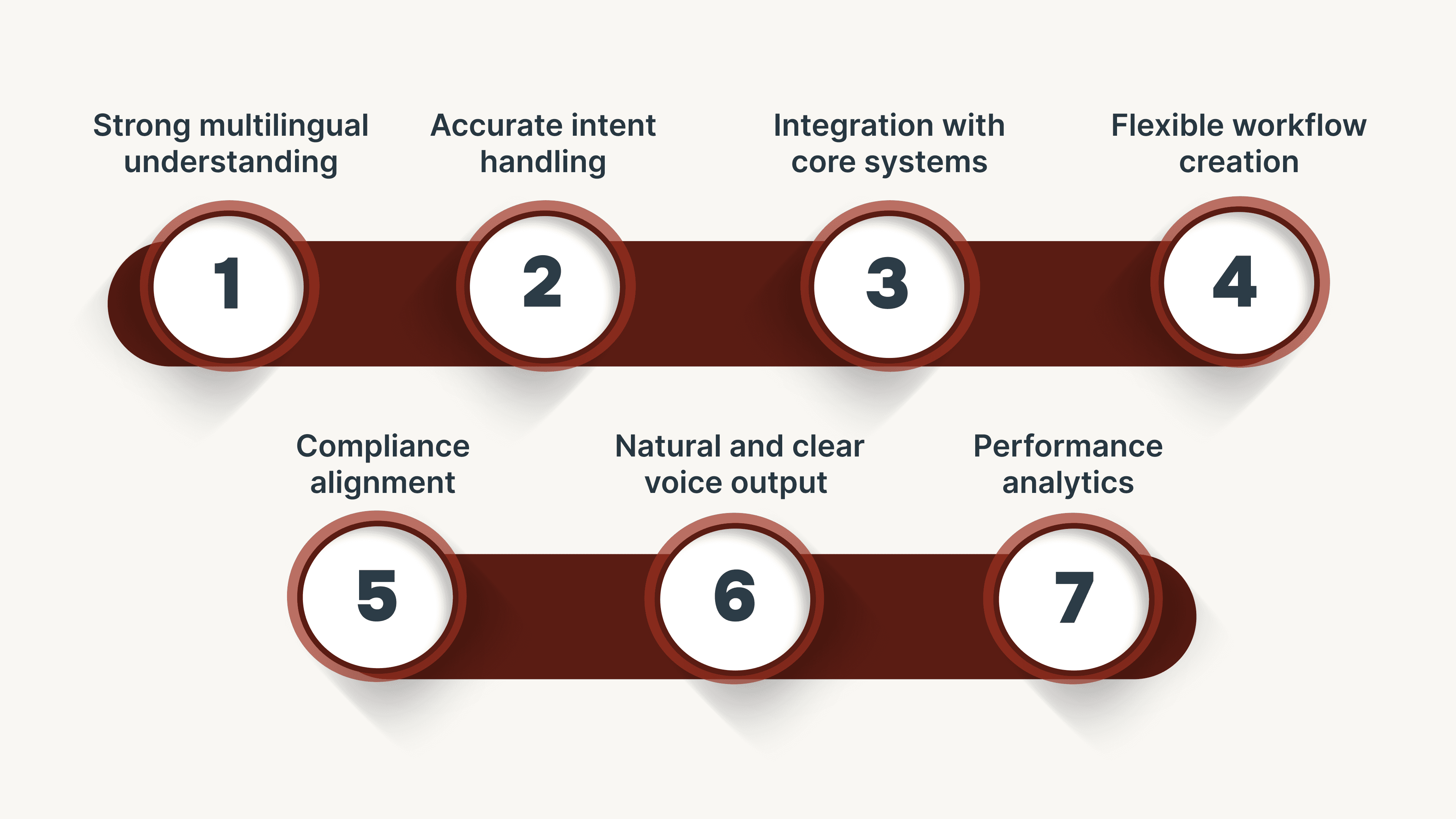
1. Strong multilingual understanding
Your customers often switch between English, Hindi and a regional language within the same sentence. The assistant must understand these patterns and respond clearly without forcing the customer to repeat themselves.
2. Accurate intent handling in real customer conditions
Background noise, short phrases and nonlinear responses are common on calls. The assistant should perform reliably in these conditions and interpret incomplete or indirect statements that many Indian users naturally provide.
3. Integration with core systems
A useful assistant connects directly to your CRM, order management system, claims software, banking core or ticketing stack. This allows it to complete tasks such as verifying users, retrieving records or raising tickets without manual intervention.
4. Flexible workflow creation
Your internal processes change over time. A no-code or low-code workflow builder helps your team update call flows, add checks or refine steps without relying on engineering resources.
5. Compliance alignment for regulated sectors
Sectors such as BFSI and Healthcare require adherence to strict data and communication guidelines. The assistant should provide controlled access, clear audit trails and deployment models that meet your compliance expectations.
6. Natural and clear voice output
The speech output should sound clear and comfortable to the listener. Abrupt pacing or robotic tone increases drop-off rates, especially in voice-first regions.
7. Performance analytics that support decision-making
Your team needs visibility into call duration, completion rates, common failure patterns and escalation triggers. Good analytics help you tune workflows and improve overall accuracy.
These capabilities form the foundation of a reliable and scalable voice automation strategy. The next section explains why voice continues to play a central role in customer engagement across the Indian market.
Why Voice Matters in the Indian Market
Voice continues to be the most effective channel for customer engagement in India because it aligns with how people naturally communicate. Text-based systems often struggle with the diversity of languages, writing styles and digital literacy levels across the country, while voice interactions remove these barriers and create a more inclusive experience.
1. High comfort with spoken communication
A large share of Indian customers prefer speaking to a system rather than typing long messages or navigating menus. This is especially true for service interactions where the customer wants quick clarity without following multiple steps.
2. Strong adoption among mobile-first users
Most Indian users access the internet through their smartphones. Voice input feels faster and more convenient in mobile environments, particularly when customers are on the move or dealing with urgent service issues.
3. Natural support for regional languages
India has diverse linguistic preferences across states and micro-markets. Voice systems allow customers to communicate in the language they use every day, even if it includes blended vocabulary or regional variations.
4. Better accessibility for non-technical users
Many customers do not feel comfortable typing in English or navigating digital interfaces. Voice simplifies the experience and ensures that customers with limited digital skills can still engage effectively with your business.
5. Higher trust in spoken confirmations
Customers often feel more confident when they hear information clearly rather than reading it on a screen. This trust factor is important in sectors such as BFSI, Healthcare, and e-commerce, where accuracy and reassurance influence customer decisions.
These factors make voice an essential channel for businesses that want to reach customers across regions and demographics. The next section outlines how CubeRoot’s voice-first approach helps you deploy these advantages at scale.
How CubeRoot’s Voice AI Assistant Helps You Scale
CubeRoot’s platform is built to support large enterprises that need reliable, multilingual and compliant voice automation. The focus is on solving operational problems that occur every day, not just offering a conversational interface. Each capability is designed to fit the realities of Indian customer behavior and the workflows your teams already use.
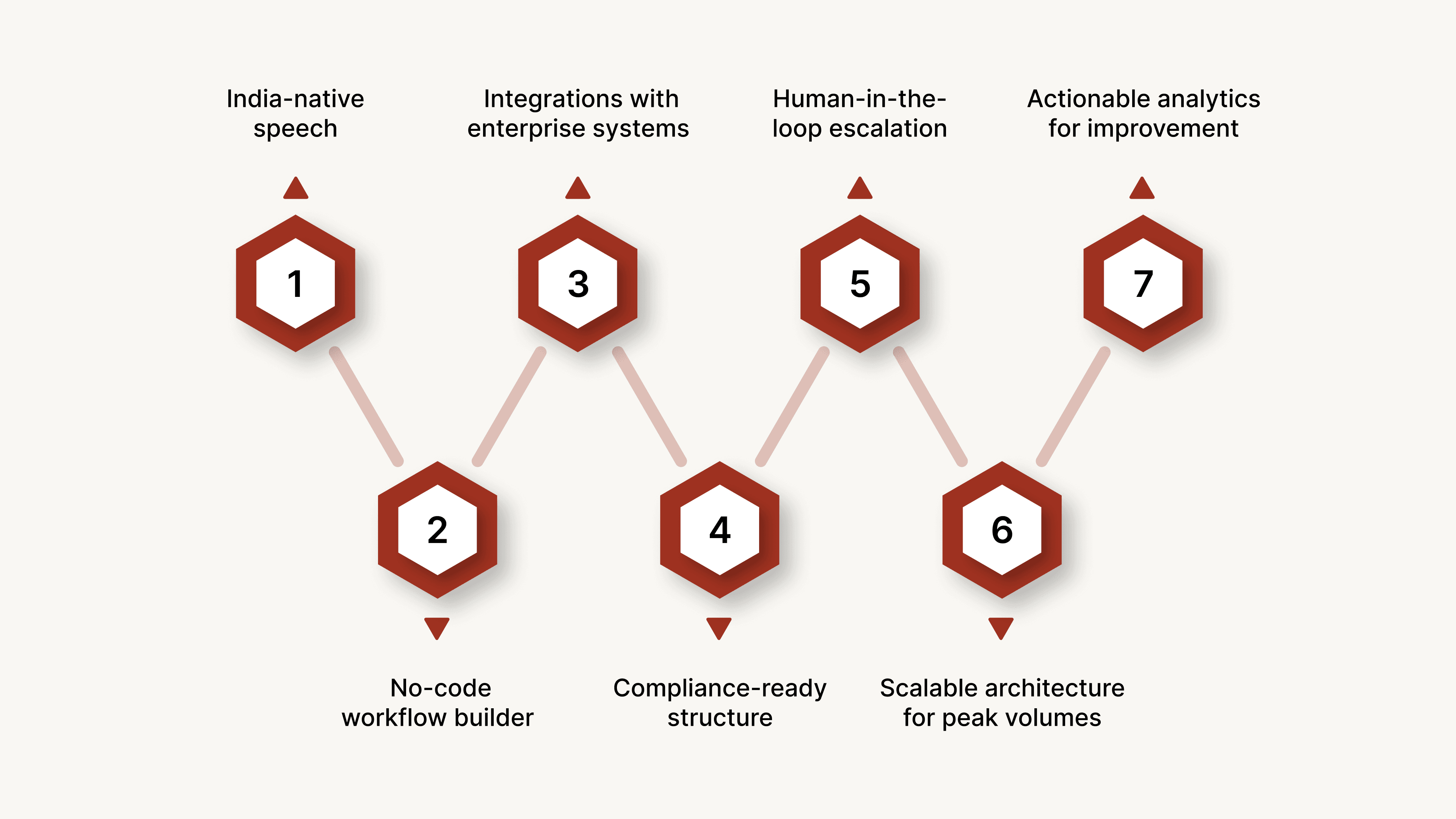
1. India-native speech and language models
CubeRoot understands Indian accents, mixed-language inputs and region-specific vocabulary. This improves call completion rates and reduces customer repetition, which is critical in high-volume environments.
2. No-code workflow builder for rapid deployment
Your operations team can create and modify workflows without engineering support. This allows you to roll out new use cases, make quick updates or adapt to regulatory changes with minimal friction.
3. Integrations with enterprise systems
The platform connects directly to CRMs, core banking systems, claim platforms, order management systems and payment gateways. This ensures that the assistant not only answers queries but also completes tasks such as verification, record retrieval and issue resolution.
4. Compliance-ready structure for regulated sectors
CubeRoot supports audit trails, controlled access and secure data handling. This is essential for BFSI, Healthcare and Insurance teams that operate under strict compliance frameworks.
5. Human-in-the-loop escalation
When a customer needs a human agent, the system transfers the conversation smoothly with full context. This reduces frustration and lowers the effort required from your call center teams.
6. Scalable architecture for peak volumes
Whether you handle a few thousand calls a day or several million a month, the platform scales without compromising accuracy or response time. This helps you manage seasonal spikes or campaign-related surges with confidence.
7. Actionable analytics for continuous improvement
CubeRoot provides detailed insights on call outcomes, customer sentiment, drop-off points and workflow performance. Your team can use this data to refine processes and maintain high service quality.
These capabilities combine to create a voice automation layer that supports real business outcomes such as faster resolutions, lower operational costs and better customer engagement. The next section brings these ideas together and encourages you to explore how CubeRoot can support your automation goals.
Conclusion
AI virtual assistants are becoming a core part of how Indian enterprises manage customer conversations at scale. They remove friction from routine interactions, improve consistency and help your teams focus on situations that genuinely require human judgment. When designed for India’s language patterns and operational complexity, they create measurable improvements in resolution speed, compliance and customer satisfaction.
If your organization is evaluating voice automation, now is a practical time to explore a platform that fits your workflows. CubeRoot gives you the tools to deploy multilingual voice assistants, integrate with enterprise systems and maintain high accuracy even during peak volumes. You can start with one use case and expand gradually as your team sees the impact.
To understand how CubeRoot can support your automation goals, consider scheduling a demo with our solutions team. This allows you to explore real use cases from BFSI, Retail, Healthcare, EdTech and D2C and identify where voice automation can bring the strongest results. The final section answers common questions to help you make an informed decision.
FAQs
Q: What makes an AI virtual assistant useful for Indian enterprises?
A: Indian customers often communicate in mixed languages and expect quick resolutions. A well-trained assistant understands these patterns, retrieves information from your systems and completes tasks without creating extra steps for the customer.
Q: Can an AI virtual assistant handle sensitive workflows such as verification or payments?
A: Yes. When integrated with your internal systems, the assistant can manage verification steps, trigger secure OTP flows or complete payment-related actions. These workflows follow predefined rules that maintain accuracy and compliance.
Q: How long does it take to deploy a virtual assistant with CubeRoot?
A: Teams usually begin with a single use case and go live within a short period because CubeRoot offers a no-code workflow builder and ready templates for sectors such as BFSI, e-commerce and Healthcare. Expansion to additional use cases is faster once initial integrations are in place.
Q: Does the assistant support regional languages?
A: CubeRoot’s speech and language models are trained on Indian accents and regional vocabulary. This helps the assistant understand customers who switch between English, Hindi and other local languages during the same conversation.
Q: How does CubeRoot ensure data security and compliance?
A: CubeRoot maintains secure data handling practices, offers audit-ready logs and supports deployment models that align with the compliance needs of regulated sectors such as BFSI and Healthcare.