Jan 14, 2026
Future of Chatbots and Conversational AI Trends 2026
The future of chatbots and conversational AI is no longer about simple scripted responses. Chatbots and conversational AI have evolved to sophisticated systems capable of understanding natural language, context, and even human emotions.
Modern AI can carry out complex multi-step tasks, guide users through processes, and personalise interactions based on past conversations.
Research shows that by 2026, 78% of companies plan to make chatbots central to their digital transformation strategies.
By 2026, these technologies will move beyond reactive support; they will proactively engage users, anticipate needs, and become intelligent collaborators in business operations.
From customer service and sales to internal workflows, conversational AI is poised to transform how organisations interact, automate, and deliver experiences that feel genuinely human.
As we move toward 2026, understanding the future of chatbots and conversational AI is essential for Indian businesses. This article explores why conversational AI is set to become a core part of enterprise operations.
TL;DR
Chatbots are evolving into proactive, intelligent conversational systems by 2026.
Conversational AI is becoming essential across BFSI, retail, SaaS, healthcare, and edtech.
Context awareness, multilingual support, and human escalation now define modern platforms.
Security, trust, and compliance remain key barriers to enterprise adoption.
Future-ready platforms like CubeRoot focus on scalability, control, and enterprise integration.
Why the Future of Chatbots and Conversational AI Matters in 2026
By 2026, conversational AI won’t just answer basic queries; it will transform how businesses engage with customers.
Enterprises are increasingly relying on AI to automate interactions, enabling human teams to focus on complex tasks.
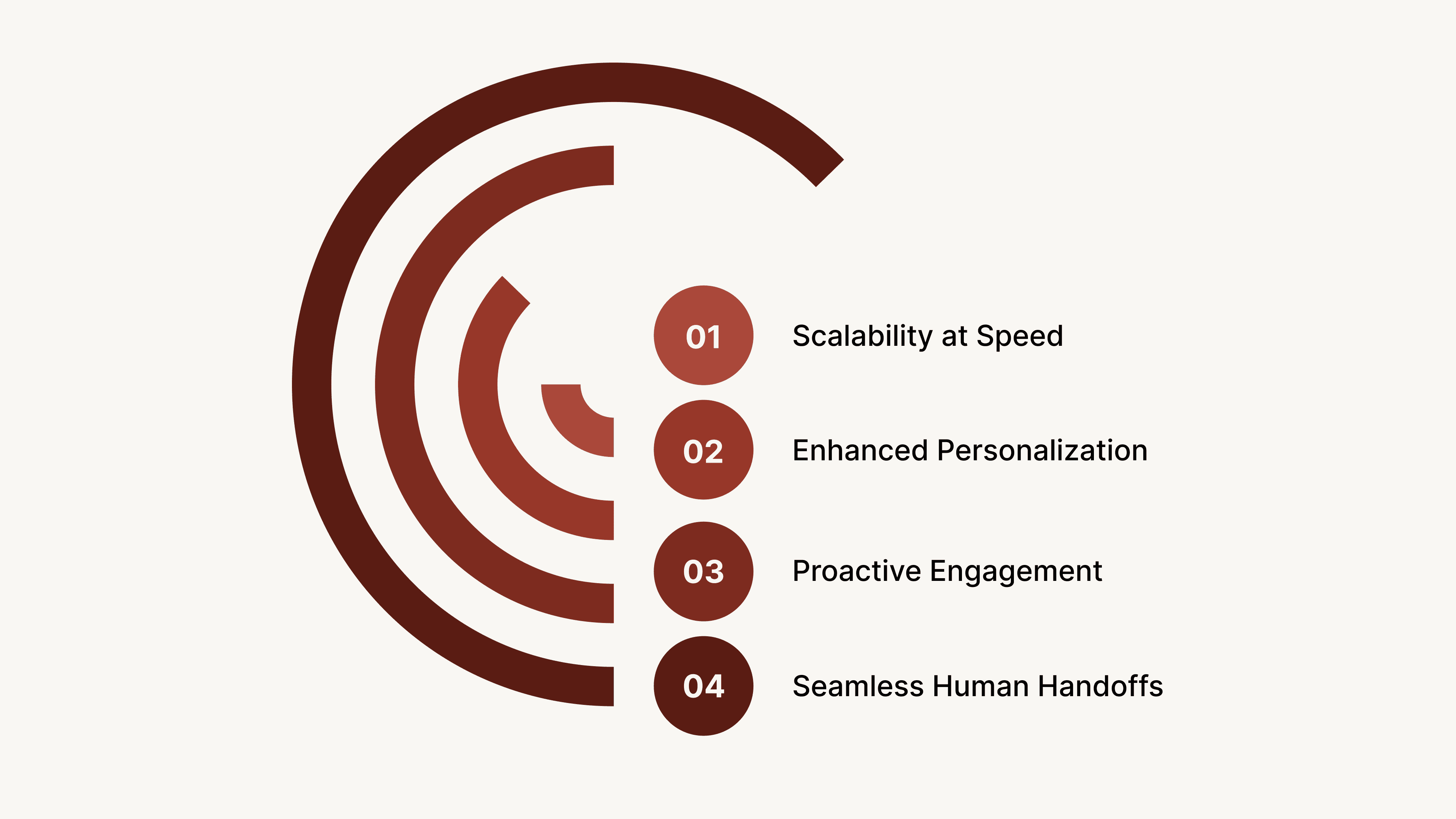
Key reasons why this matters include:
Scalability at Speed:
AI chatbots can handle thousands of interactions simultaneously, reducing wait times and improving customer satisfaction.
Enhanced Personalization:
By remembering past interactions, AI can tailor responses and recommendations to individual users.
Proactive Engagement:
Instead of reacting to queries, AI can initiate interactions based on predicted customer behavior.
Seamless Human Handoffs:
Complex cases are escalated to live agents without losing conversation context, ensuring continuity.
For example, global brands like Bank of America have already demonstrated how advanced chatbots can drive real business results.
Their AI assistant “Erica” has processed hundreds of millions of customer requests, helping users with everything from account look‑ups to bill payments, and in the process significantly reducing response times and enhancing client retention.
Conversational AI uses context retention and user profiling to personalise interactions and employs smooth escalation protocols to transfer complex cases to human agents without losing conversation history.
That combination of speed, context, and continuity is why the future of chatbots and conversational AI is a central focus for forward‑thinking organisations.
The Evolution of Chatbots and Conversational AI Since 2023
In the early days, chatbots followed rigid scripts, leading to frequent misunderstandings, incomplete solutions, and frustrated users because the systems couldn’t think beyond their limited rules.
However, the landscape changed dramatically as foundational technologies improved:
Large Language Models (LLMs):
These advanced AI models understand natural language more like a human would, recognising context and intent instead of just keywords.
Deeper NLP (Natural Language Processing):
Modern NLP enables systems to interpret meaning even in varied phrasing or complex sentences.
Real‑Time Analytics & Feedback Loops:
Conversational platforms today learn from ongoing interactions and use that data to improve responses over time.
What Modern Conversational AI Can Do Today
Modern systems can:
Detect user intent with much higher accuracy
Maintain context across long, multi‑turn conversations
personalise responses based on previous interactions
Support multilingual and voice‑enabled conversations
Escalate complex cases to humans without losing context
These improvements make chatbots far more useful than they once were, not just for basic FAQs, but for real business tasks like onboarding, payments, and lead qualification.
Take Sephora’s chatbot, for example, it doesn’t just answer questions.
It provides personalised product recommendations, helps customers find items based on preferences, and aids with booking appointments and offers, significantly boosting online engagement.
This shift from simple response to guided discovery is a hallmark of evolved conversational AI.
It is one of the most significant markers of progress in this space, and it paves the way for the trends we’ll see accelerate by 2026.
Also Read: Voice Assistants AI Comparison: Exploring Best Options for Enterprises in 2026
Key Conversational AI Trends to Watch in 2026
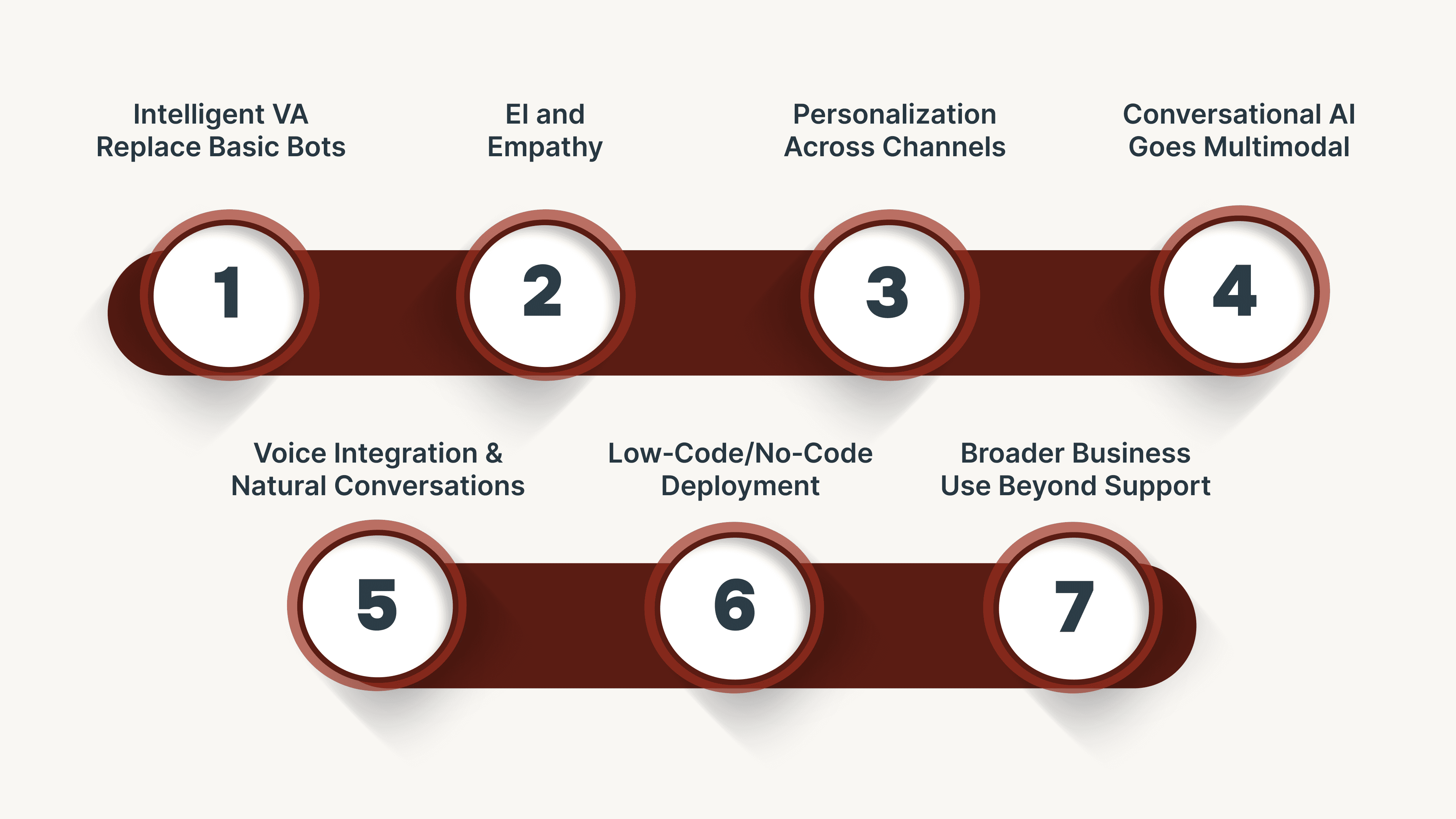
By 2026, businesses will see chatbots evolving from reactive assistants to proactive partners that personalise interactions, handle complex workflows, and bridge communication across text, voice, and visuals.
The trends below highlight the innovations that will define this next phase of AI-driven conversation.
1. Intelligent Virtual Assistants Replace Basic Bots
In 2026, chatbots will no longer be limited to answering static questions. Intelligent virtual assistants (IVAs) powered by generative AI will handle multi‑step workflows, adapt to context, and even execute tasks like booking appointments or completing orders based on conversation flow.
This goes well beyond typical chatbot functions and reflects where the future of chatbots and conversational AI is truly headed.
Why it matters:
Intelligent systems reduce hand‑offs to humans, leading to faster resolution and higher satisfaction.
2. Emotional Intelligence and Empathy
Conversational systems are increasingly designed to understand tone, sentiment, and emotion, not just keywords.
This emotional intelligence enables them to respond more empathetically and tailor interactions based on how users feel, not just what they say.
Example:
A customer frustrated with repeated errors may receive an empathetic apology and priority routing to human support, while a happy user may get positive reinforcement or upsell suggestions.
3. Hyper‑Personalization Across Channels
Consumers expect interactions that feel personal and relevant.
Future chatbots will not only recall past interactions but adjust tone, recommendations, and next steps based on the individual’s history and behavior.
By 2026, predictive chatbots that use behavioural history could handle 50% of loyalty and re‑engagement campaigns, according to research projections.
4. Conversational AI Goes Multimodal
Chatbots are no longer limited to text and voice, you will begin to see conversational AI blend images, voice, video, and real‑time visual cues.
This multimodal interaction model allows systems to understand and respond across formats, making experiences more intuitive and inclusive.
5. Voice Integration and Natural Conversations
Text is no longer the only interface.
Voice‑enabled AI systems are rapidly gaining popularity because they offer faster, more natural interaction, especially on mobile devices and smart speakers.
This trend is tightly linked to the future of chatbots and conversational AI as users get comfortable speaking instead of typing.
6. Low‑Code/No‑Code Deployment for Rapid Rollout
One of the biggest barriers to adoption used to be complexity.
Today, low‑code and no‑code frameworks let non‑technical teams build, train, and deploy sophisticated conversational AI quickly.
This democratisation is crucial for rapid expansion, especially for small and medium businesses that lack internal AI expertise.
7. Broader Business Use Beyond Support
Chatbots are moving into revenue‑centric roles: sales automation, onboarding, internal HR workflows, and even finance operations.
Conversational AI is extending its value beyond reactive support to proactively identify opportunities, assist decisions, and automate tasks across departments.
These trends are not just technical upgrades.
They directly change how businesses talk to customers, handle growth, and stay competitive.
Also Read: AI Voice vs Human Agents: What Indian Enterprises Must Choose in 2026
Why This Matters for Indian Enterprises
The conversational AI market is projected to reach $32.62 billion by 2030, reflecting the rapid adoption of AI-driven conversations as a core capability.
For Indian enterprises, this shift directly impacts scale, efficiency, and customer experience.
Across industries, conversational AI is already delivering measurable value:
BFSI: Chatbots handle balance checks, transaction queries, and service requests while also supporting intelligent cross-selling of financial products.
Retail and Ecommerce: Conversational agents assist customers with product discovery, real-time recommendations, order updates, and checkout support, helping improve conversion rates.
SaaS: Automated onboarding, in-app guidance, and support reduce churn while improving product adoption.
Healthcare: Appointment scheduling, reminders, and post-care follow-ups become faster and more reliable.
Edtech: Chat assistants support enrollments, fee reminders, course updates, and learner engagement at scale.
A strong local example is HDFC Bank’s “EVA” chatbot, which handles millions of customer interactions annually, helping users with everyday banking queries while reducing pressure on call centres.
This shows how conversational AI can scale securely in high-trust, high-volume environments.
India’s multilingual and diverse user base further accelerates adoption.
Voice-enabled and language-aware conversational AI performs far better than basic text bots, which often struggle with regional languages, accents, and mixed-language conversations.
Platforms built with multilingual intelligence such as those highlighted in CubeRoot’s enterprise use cases are better suited to operate in this complexity without sacrificing accuracy or compliance.
While the value of conversational AI is clear for enterprises, turning that potential into real results comes with its own set of challenges.
Also Read: How Conversational AI IVR Transforms CX for Indian Enterprises
Challenges and Considerations When Adopting Conversational AI
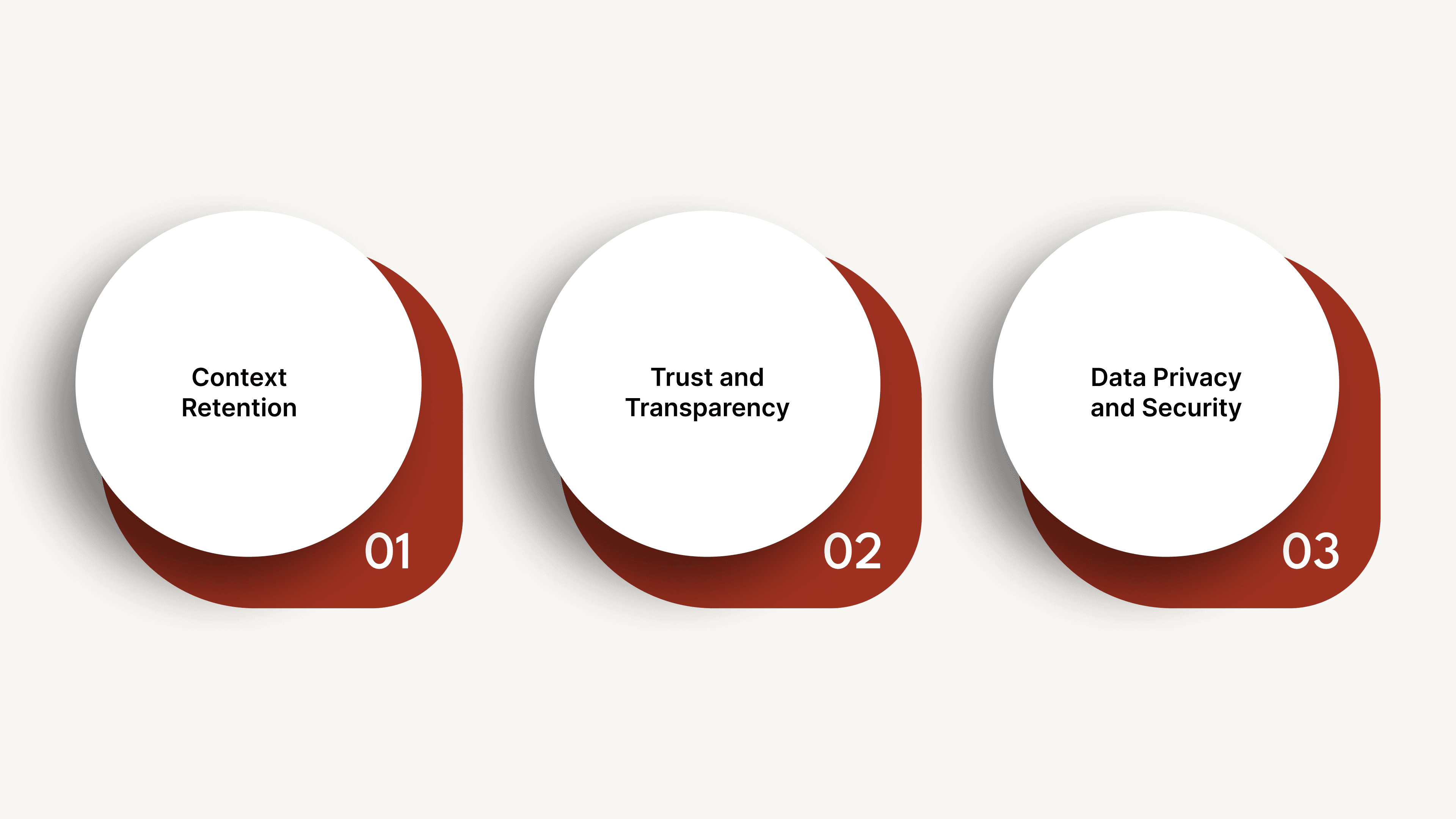
While conversational AI adoption is accelerating, success depends on how thoughtfully it’s implemented.
Enterprises are no longer asking whether to use chatbots, but how to deploy them responsibly and at scale.
Several challenges still shape this decision:
Context Retention:
Users expect conversations to continue smoothly across chat, voice, and channels. Losing context mid-journey leads to frustration and drop-offs, especially in support and BFSI use cases.
Trust and Transparency:
Customers want to know when they’re interacting with AI and how their data is being used. Clear disclosures and consistent responses are essential to build confidence.
Data Privacy and Security:
As conversational AI connects deeper with CRMs, payment systems, and health records, safeguarding sensitive data becomes critical, particularly in regulated industries.
These concerns directly influence how enterprises evaluate platforms.
What to Look for in the Right Platform
To overcome these challenges, enterprises should prioritise solutions that offer:
Strong Language and Regional Support:
Multilingual capabilities improve engagement in diverse markets.
Ease of Deployment:
Low-code or no-code tools help teams move faster without heavy IT involvement.
Reliable Scalability:
Platforms must handle peak volumes without performance drops.
Built-In Compliance and Security:
Especially important for BFSI and healthcare workflows.
If these fundamentals are unclear or underdeveloped, the platform may struggle to support long-term growth.
Choosing the right conversational AI solution is less about features and more about readiness, reliability, and responsibility.
How CubeRoot Fits Into the Future of Conversational AI
As conversational AI evolves toward proactive, multilingual, and compliance-first systems, platforms must combine intelligence with operational reliability.
CubeRoot is designed around these emerging expectations.
Key aspects that align with the future of conversational AI include:
Context-Aware Conversations: Maintains continuity across long, multi-step interactions.
Multilingual Intelligence: Supports conversations across multiple languages for broader reach.
Industry-Ready Workflows: Built for real use cases in BFSI, retail, SaaS, healthcare, and edtech.
Compliance and Control: Designed with secure logging and auditability in mind.
Human-in-the-Loop Escalation: Ensures complex scenarios are handled without breaking context.
Together, these capabilities reflect how modern conversational AI platforms are evolving, moving beyond basic automation toward reliable, enterprise-ready engagement.
Conclusion
As conversational AI becomes more intelligent, multilingual, and deeply integrated with enterprise systems, the real differentiator will be how responsibly and effectively it’s deployed.
organisations that invest early in platforms built for context retention, compliance, and scalability will be better positioned to handle growing customer expectations without increasing operational complexity.
At the same time, balancing automation with human oversight will remain essential to building trust and long-term value.
If you’re exploring how conversational AI can fit into your customer engagement strategy, it’s worth considering platforms designed for enterprise-grade use cases.
CubeRoot, for example, focuses on compliant, multilingual conversational and voice AI workflows that align with real operational needs, helping teams scale conversations without losing control.
Explore CubeRoot’s conversational AI capabilities to understand how future-ready automation can support smarter, more consistent customer interactions.
FAQs
1. What Is the Future of Chatbots and Conversational AI?
It is moving toward intelligent, proactive systems that understand context, emotions, and integrate deeply with business operations.
2. Will Chatbots Replace Human Agents?
Not completely, AI will handle routine and repetitive queries, while humans focus on complex, empathetic conversations.
3. How Important Is Multilingual Support?
Crucial in diverse markets like India, where regional languages and dialects shape customer engagement success.
4. Are Voice‑Enabled Conversational Agents Growing?
Yes. Voice interactions are rising due to natural engagement and wider mobile adoption.
5. How Should Enterprises Choose a Conversational AI Platform?
Focus on language support, scalability, integration capabilities, and measurable business impact.