Dec 31, 2025
Voice Assistants AI Comparison: Exploring Best Options for Enterprises in 2026
What if your business could automate customer service, streamline operations, and scale interactions all through voice? AI-powered voice assistants are no longer just a convenience; they are becoming indispensable tools for enterprises looking to enhance productivity, improve customer experiences, and reduce costs.
The global market for voice AI agents is projected to reach $47.5 billion by 2034, highlighting the rapid adoption of this technology across industries. In 2026, businesses are relying on voice assistants for everything from automating support workflows and managing customer inquiries to handling complex tasks autonomously.
In this blog, we’ll compare the top AI voice assistants available today, helping you understand their unique strengths and which one is the best fit for your enterprise in 2026 and beyond.
TL;DR
AI voice assistants help businesses automate tasks like customer support, lead management, and scheduling, improving efficiency and reducing costs.
Major players include Amazon Alexa, Google Assistant, Apple Siri, and Microsoft Cortana, each offering unique features for personal or business use.
CubeRoot stands out for industry-specific workflows, rapid deployment, and seamless integrations for enterprise environments across BFSI, healthcare, and retail.
Key factors to consider when choosing a voice assistant include integration capabilities, security, multilingual support, and scalability.
Common challenges include system integration, data privacy, and user adoption, but selecting the right platform can mitigate these risks.
What Are AI Voice Assistants?
AI voice assistants are advanced systems that use natural language processing (NLP), speech recognition, and machine learning to understand and respond to spoken commands. These assistants go beyond simple voice recognition; they engage in meaningful conversations, process information in real-time, and take action based on context.
Unlike traditional systems that require predefined instructions, AI voice assistants are designed to:
Understand context and adapt responses accordingly.
Learn from interactions to improve performance over time.
Execute tasks autonomously, such as setting appointments, processing orders, or responding to customer inquiries.
AI voice assistants can perform tasks such as:
Customer support automation (handling queries, complaints, and requests).
Sales and marketing automation (lead generation, product recommendations).
Internal operations (scheduling meetings, task management, and HR functions).
Personalization (recommending services based on user behavior).
From the early days of voice assistants like Siri and Alexa to today’s sophisticated models that drive enterprise efficiency, the technology has advanced rapidly. Today’s AI voice assistants are built to handle complex, multi-step workflows, integrate with various enterprise tools, and scale quickly across departments.
Now that we understand the fundamentals of AI voice assistants, let’s take a closer look at the leading solutions in the market and how they compare for enterprises in 2026.
5 Leading AI Voice Assistants in the Market (2026)
Below is a comparison of the top general-purpose AI-powered voice assistants that are commonly used across industries in 2026. These solutions provide a wide range of capabilities, from simple customer service automation to more complex workflows, depending on the enterprise’s needs.
1. CubeRoot (Enterprise-Focused Voice AI)
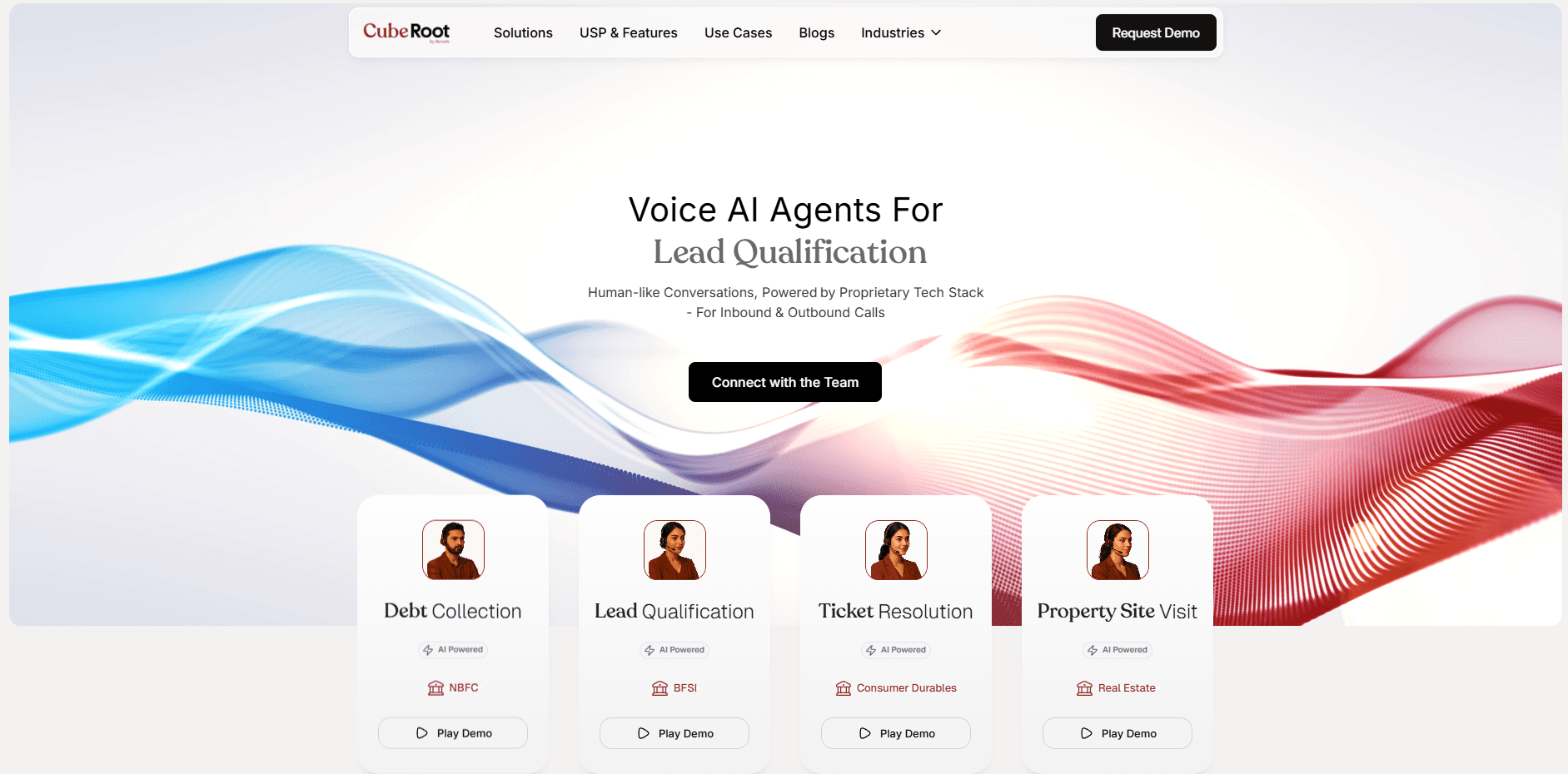
What it is: CubeRoot is an enterprise-grade voice AI platform designed for high-volume operations in industries like BFSI, healthcare, retail, and real estate. It automates end-to-end workflows with industry-specific AI voice agents.
Key Features:
Industry-tailored workflows (e.g., loan collections, appointment scheduling).
Seamless integrations with CRMs, ERPs, and telephony systems.
Multilingual voice support and context retention.
Pros:
Deep integrations with enterprise systems.
Custom-built for regulated industries (compliant with data privacy).
Scalable for large organizations.
Cons:
Primarily focused on large enterprises in specific industries.
More complex setup for smaller organizations.
Use Cases:
BFSI: Automated loan collections and payment reminders.
Healthcare: Appointment scheduling, patient follow-ups.
Retail: Order tracking, customer support automation.
Scale your voice operations effortlessly with CubeRoot.
2. Amazon Alexa for Business
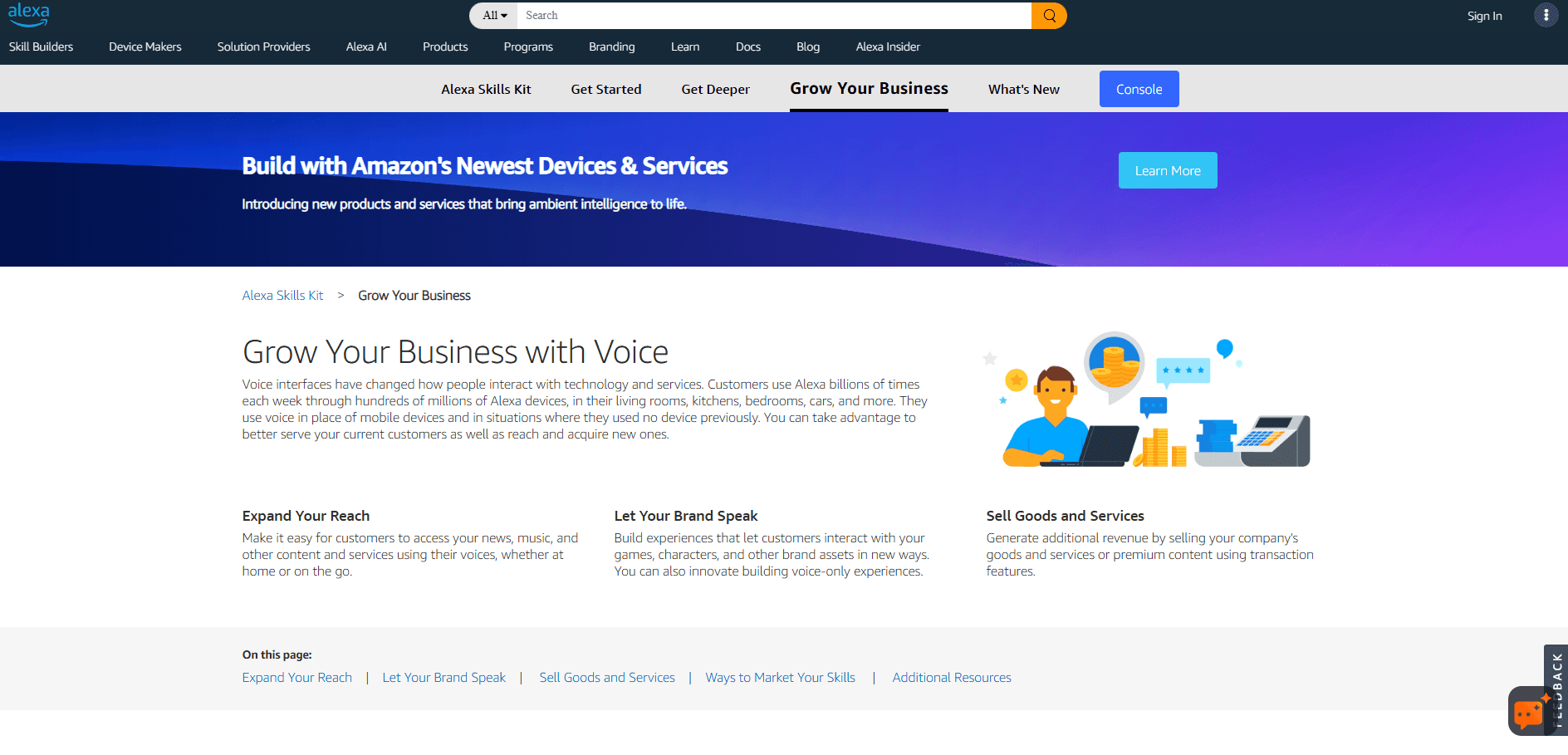
What it is: Amazon Alexa for Business enables businesses to automate daily tasks in the workplace using voice commands. It focuses on smart office automation and voice-controlled productivity.
Key Features:
Voice-enabled task automation (meeting management, smart devices control).
Integration with AWS services and third-party applications.
Multi-device support across smart office environments.
Pros:
Easy setup and use for basic office automation.
Strong integration with Amazon's ecosystem.
Scalable for enterprise environments.
Cons:
Lacks depth in enterprise-specific integrations like CRMs or ERPs.
Limited in its ability to handle complex customer interactions.
Use Cases:
Conference room scheduling.
Voice-controlled office automation.
3. Google Assistant

What it is: Google Assistant is a versatile voice assistant that integrates well with Google’s ecosystem, excelling in handling user queries and tasks across devices and platforms.
Key Features:
Strong NLP and search capabilities.
Multi-platform integration (Google Workspace, IoT).
Personalized responses based on user data.
Pros:
Great for handling natural language queries.
Seamlessly integrates with Google’s ecosystem.
Strong in customer-facing applications like support.
Cons:
Limited customization for enterprise-specific workflows.
Security and compliance features are not as robust as others for enterprise use.
Use Cases:
Customer service automation.
Task management for individuals and teams.
4. Apple Siri
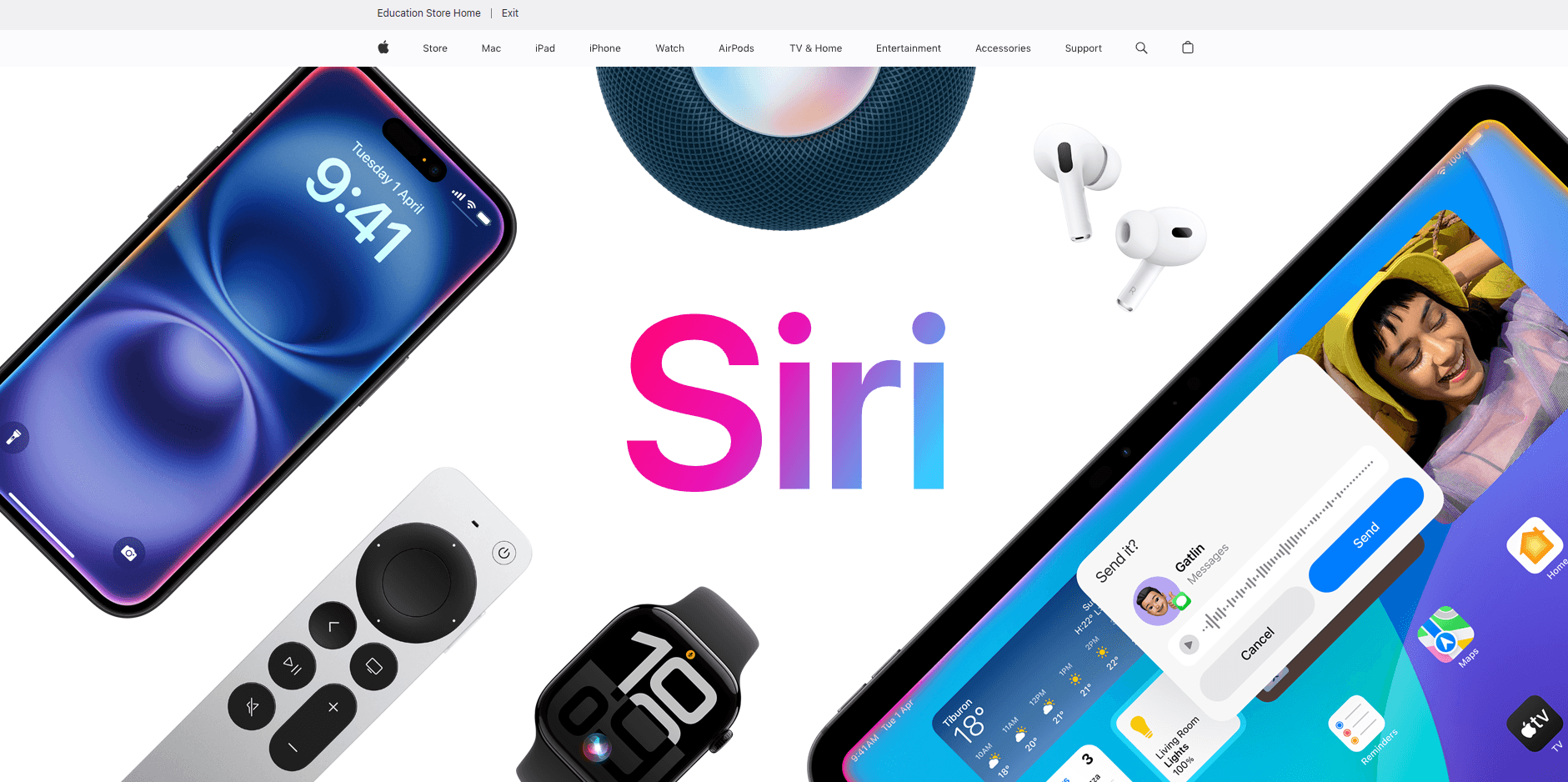
What it is: Siri, Apple's voice assistant, is designed to work seamlessly within Apple’s ecosystem. It helps automate tasks on Apple devices and integrates with Apple's cloud services.
Key Features:
Integration with Apple devices and applications.
Hands-free functionality for common tasks (setting reminders, sending messages).
Secure voice recognition for personal and professional use.
Pros:
Excellent for users heavily invested in the Apple ecosystem.
High accuracy with voice recognition.
Simple, intuitive interface.
Cons:
Limited to Apple devices.
Not as powerful for complex business processes compared to others.
Use Cases:
Personal assistant for calendar and reminders.
Basic customer service tasks on Apple devices.
5. Microsoft Cortana
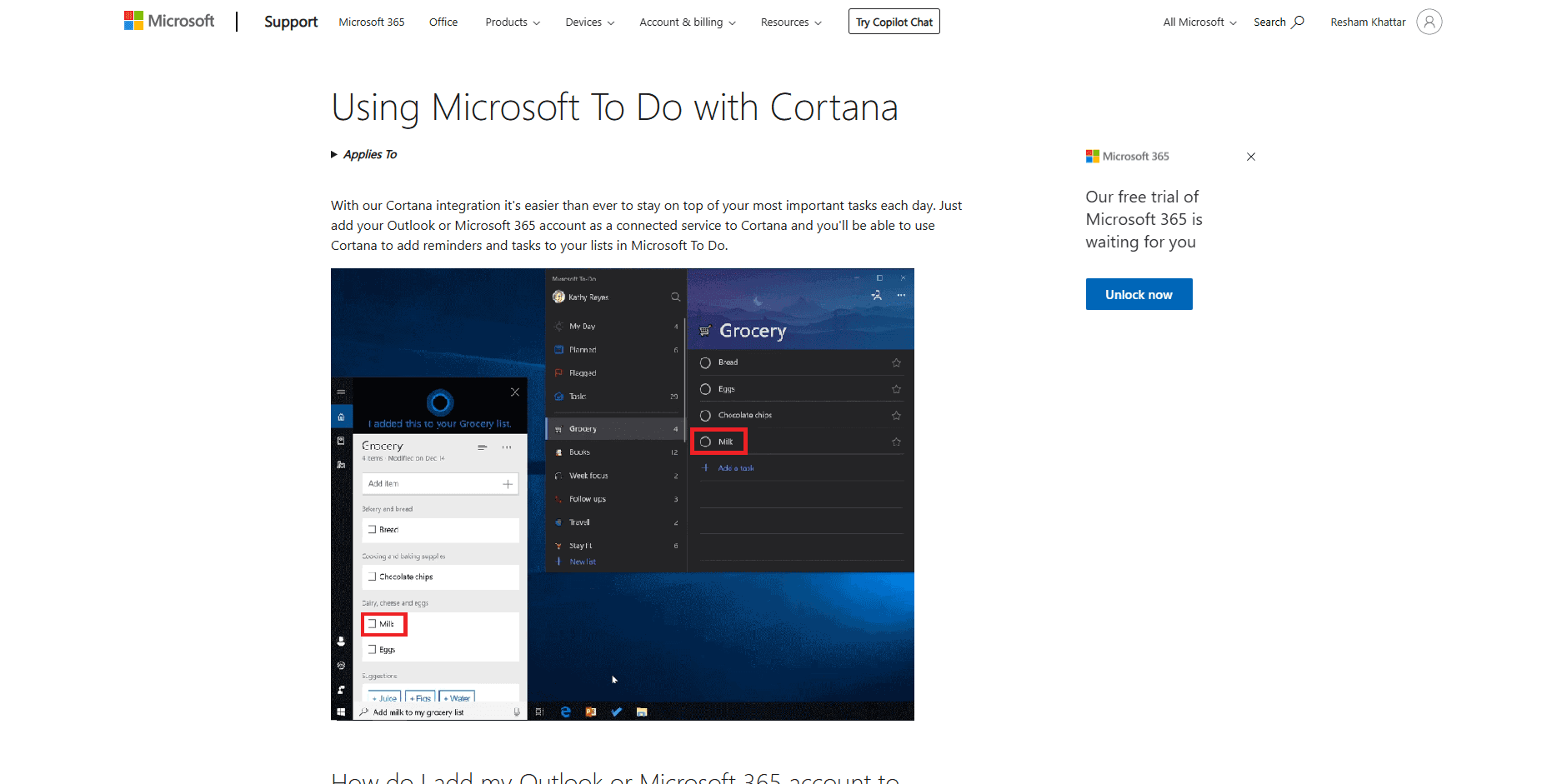
What it is: Cortana is Microsoft’s enterprise-focused digital assistant, designed to help businesses enhance productivity and automate workflows within Microsoft’s ecosystem.
Key Features:
Deep integration with Microsoft 365 tools like Outlook and Teams.
Task automation for meeting schedules, reminders, and workflow management.
Built-in compliance and security for enterprise environments.
Pros:
Excellent for Microsoft users, especially in enterprise environments.
Strong productivity features.
High security and compliance support for regulated industries.
Cons:
Lacks flexibility for non-Microsoft environments.
Less powerful for customer-facing use cases.
Use Cases:
Internal team collaboration and scheduling.
Automating tasks within Microsoft products (e.g., email management, meeting coordination).
Voice Assistants AI Comparison: Feature Breakdown
Here’s a dive deeper into the key features of these five popular AI voice assistants for businesses in 2026.
Feature | CubeRoot | Amazon Alexa for Business | Google Assistant | Apple Siri | Microsoft Cortana |
NLP Accuracy | High | Medium | High | Medium | Medium |
Multilingual Support | Extensive | Limited | Extensive | Limited | Limited |
Enterprise Integrations | High | Medium | High | Low | High |
Security & Compliance | High | Medium | Medium | High | High |
Task Automation | High | Medium | High | Low | High |
Industry-Specific Features | High | Low | Medium | Low | Medium |
User Experience | High | Medium | High | High | Medium |
Scalability | High | High | High | Medium | High |
Setup Complexity | Medium | Medium | Low | Low | Medium |
Now that we’ve compared the key features of these voice assistants, let's explore the critical factors to consider when choosing the right voice assistant for your enterprise.
Related: What Is Voice AI and How Can It Transform Customer Engagement?
Key Factors to Consider When Choosing a Voice Assistant
When evaluating an AI voice assistant for your enterprise, it’s important to consider several key factors that align with your business needs. Here are the most important elements to guide your decision:
Factor | Key Considerations |
Functionality | Determine the complexity of tasks to be automated (e.g., basic commands vs. multi-step workflows). |
Integration | Ensure compatibility with existing systems (CRM, ERP, telephony) and ecosystem (Google, Microsoft). |
Multilingual Support | Assess if the assistant supports multiple languages and dialects for global operations. |
Security & Compliance | Verify compliance with industry regulations (e.g., GDPR, HIPAA) and ensure robust data protection. |
Scalability | Evaluate if the assistant can handle increasing volume and complexity as your business grows. |
Cost vs. Benefit | Compare the total cost of ownership against potential operational savings and efficiency gains. |
User Experience | Look for ease of use and customization options for both employees and customers. |
With these factors in mind, let’s now explore some of the challenges businesses may face when deploying AI voice assistants and strategies for overcoming them.
Challenges in Deploying AI Voice Assistants in Enterprises
Deploying AI voice assistants can present challenges that need careful planning. Here are the most common obstacles and ways to address them.
1. Integration Complexity
Challenge: Integrating voice assistants with existing enterprise systems (CRM, ERP, telephony) can be difficult and time-consuming.
Solution: Choose platforms with API-first architecture and pre-built integrations for seamless setup.
2. Data Privacy and Security
Challenge: Handling customer and business data raises concerns about privacy and regulatory compliance (e.g., GDPR, HIPAA).
Solution: Ensure the solution meets industry security standards with end-to-end encryption and compliance features.
3. User Adoption
Challenge: Employees or customers may resist using AI voice assistants due to unfamiliarity or complexity.
Solution: Focus on intuitive design and training to enhance user experience and increase adoption.
4. Maintenance and Optimization
Challenge: Voice assistants require ongoing maintenance to update models, integrations, and ensure compliance.
Solution: Choose platforms that support automated updates and regular performance reviews.
5. Handling Complex Queries
Challenge: AI assistants may struggle with complex queries or industry-specific terminology.
Solution: Customize the assistant with relevant data and training to improve accuracy and contextual understanding.
6. Cost of Implementation
Challenge: The initial cost of deployment can be significant.
Solution: Evaluate the long-term ROI through automation, customer experience improvement, and operational efficiency.
Addressing these challenges effectively sets the foundation for successful AI voice assistant deployment. Let’s explore what the future holds for AI voice assistants in 2026 and beyond.
Also read: Top AI Voice Assistants in 2025
The Future of AI Voice Assistants: What to Expect in 2026 and Beyond
AI voice assistants are rapidly evolving. In the next few years, advancements will reshape how businesses use these tools for automation, customer engagement, and data-driven decision-making.
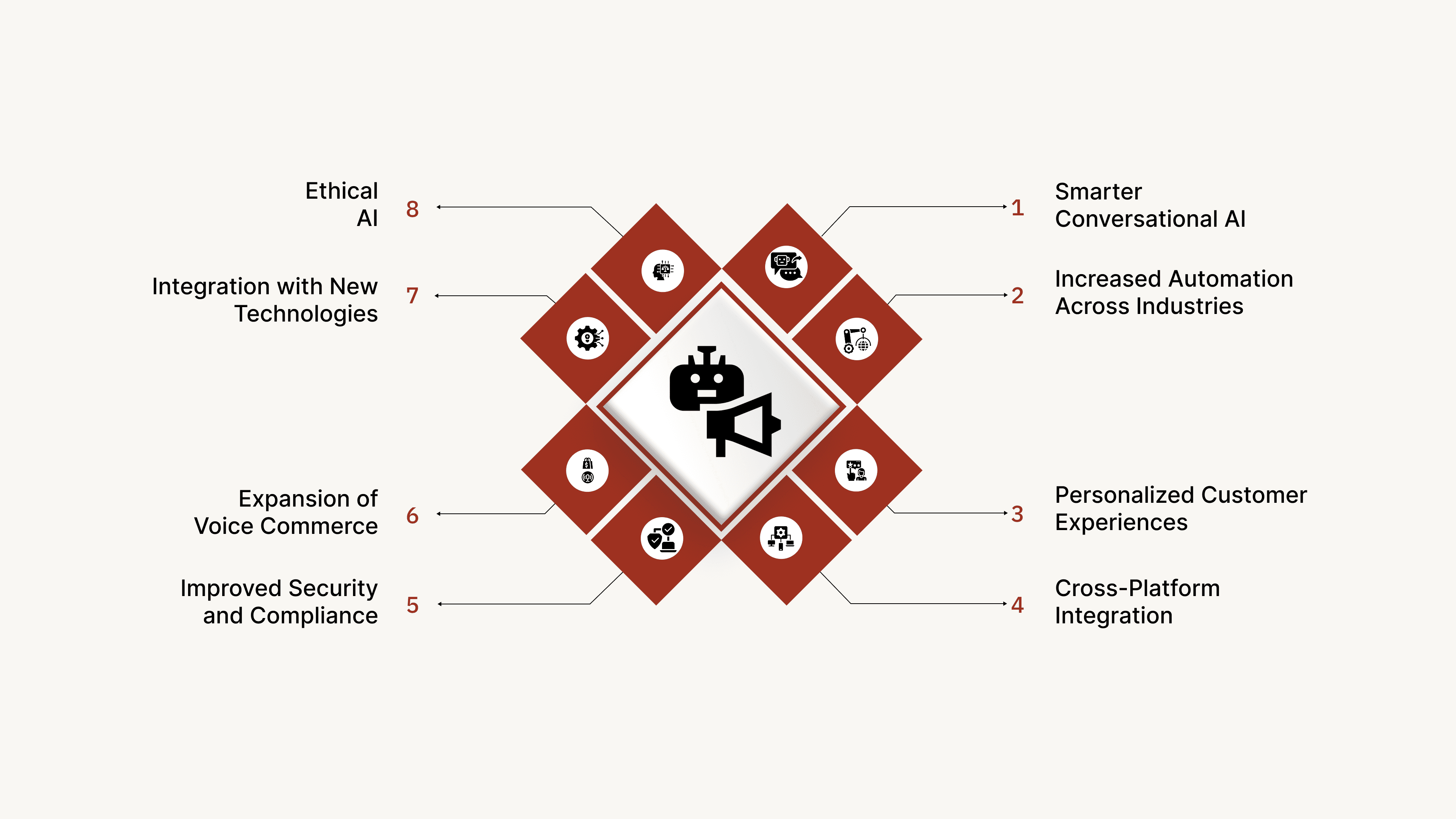
1. Smarter Conversational AI
Voice assistants will handle multi-step conversations with greater contextual understanding, making them capable of managing more complex tasks and nuanced interactions.
2. Increased Automation Across Industries
Expect deeper integration into enterprise workflows — automating everything from customer support to internal operations, cutting down on manual processes and reducing human error.
3. Personalized Customer Experiences
Voice assistants will become more personalized, using machine learning to anticipate needs, understand preferences, and provide tailored recommendations or solutions in real time.
4. Cross-Platform Integration
Seamless integration with multiple platforms (CRMs, ERPs, IoT devices) will allow businesses to manage workflows and data from a single interface, streamlining operations across departments.
5. Improved Security and Compliance
With increased data handling, expect more secure systems and features designed to meet privacy regulations, including voice authentication and encrypted data transfer.
6. Expansion of Voice Commerce
Voice-enabled transactions will become common, allowing customers to place orders, check stock, and get real-time service updates entirely through voice interfaces.
7. Integration with New Technologies
AI voice assistants will increasingly integrate with AR, VR, and IoT to deliver real-time, context-aware experiences across devices and environments.
8. Ethical AI
Future voice assistants will prioritize transparency, explaining actions and decisions clearly to users, while working to eliminate biases and ensuring fairness in interactions.
How CubeRoot Helps Enterprises Overcome Voice Assistant Implementation Challenges
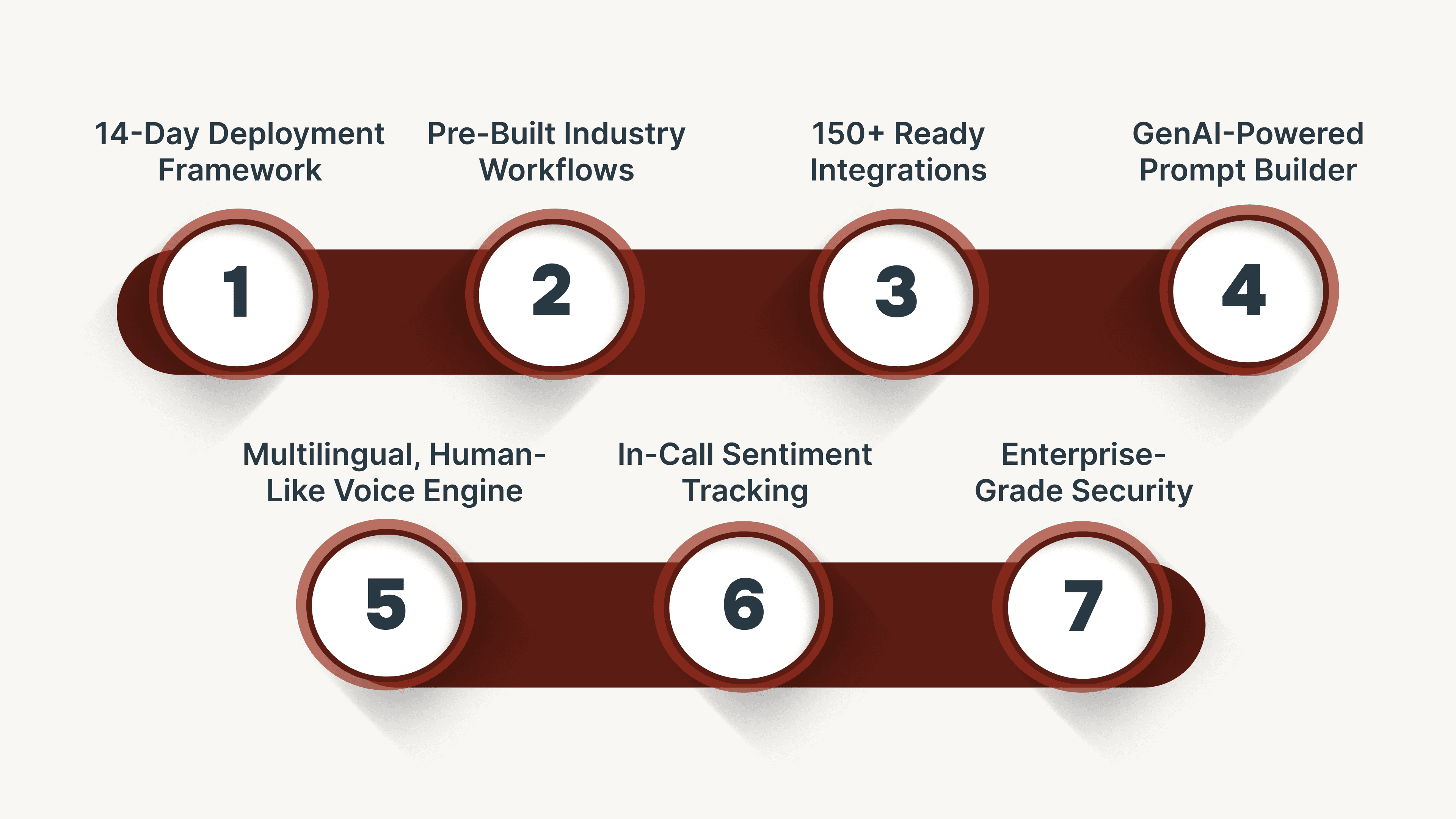
Implementing AI voice assistants can be a complex, slow process, especially for large enterprises dealing with fragmented systems and diverse operational needs. CubeRoot is designed to solve these challenges, offering a streamlined approach to quick deployment, seamless integration, and scalability.
By combining proprietary AI voice technology with pre-trained industry-specific workflows and out-of-the-box integrations, CubeRoot enables enterprises to deploy human-like voice agents quickly and scale without friction.
Key Features That Make Implementation Easy:
14-Day Deployment Framework:
CubeRoot enables rapid deployment, allowing businesses to move from concept to go-live in as little as 14 days. This process includes training agents, integrating them with internal systems, and scaling through continuous optimization.Pre-Built Industry Workflows:
CubeRoot provides ready-to-use workflows tailored for industries like BFSI, healthcare, and retail, eliminating the need for lengthy development cycles and reducing setup time.150+ Ready Integrations:
CubeRoot offers seamless integration with key enterprise systems such as CRMs, ERPs, and telephony systems, ensuring voice agents are integrated with live data from day one.GenAI-Powered Prompt Builder:
With CubeRoot’s easy-to-use prompt builder, enterprises can rapidly design and refine use cases without extensive technical expertise, enabling faster adoption.Multilingual, Human-Like Voice Engine:
CubeRoot supports multilingual capabilities to engage customers in diverse markets while delivering natural-sounding, human-like interactions.In-Call Sentiment Tracking:
Understand customer sentiment in real-time, allowing agents to address concerns proactively, reduce escalations, and improve CSAT (Customer Satisfaction) scores.Enterprise-Grade Security and Compliance:
CubeRoot ensures that all voice interactions are secure, compliant with regulations (e.g., HIPAA, GDPR), and fully auditable for industries that require strict data handling.
If you’re ready to streamline voice assistant implementation and improve customer engagement, schedule a demo to see how CubeRoot can help your business scale effortlessly.
FAQs
1. What is the difference between general voice assistants and enterprise voice AI platforms?
General voice assistants (e.g., Siri, Alexa) focus on personal tasks, while enterprise voice AI platforms like CubeRootautomate complex business processes, such as customer support, lead management, and workflow automation.
2. How do AI voice assistants benefit enterprises?
AI voice assistants help businesses automate routine tasks, reduce operational costs, improve customer service, and enhance efficiency by handling inquiries, scheduling, and backend operations.
3. What industries can benefit from AI voice assistants?
Industries like BFSI, healthcare, retail, and real estate benefit most, as they often require automation for tasks like loan collections, appointment scheduling, order tracking, and lead generation.
4. How secure are AI voice assistants in regulated industries?
Many AI voice platforms, including CubeRoot, offer high security and compliance features (e.g., GDPR, HIPAA), ensuring they meet industry standards for data protection.
5. What challenges come with deploying AI voice assistants in enterprises?
Challenges include system integration, user adoption, data privacy concerns, and maintaining accuracy for complex queries. Selecting a platform with strong integrations and security features helps mitigate these issues.
6. How do I choose the right AI voice assistant for my business?
Consider integration capabilities, security needs, task automation, scalability, and cost when selecting a platform. Choose a solution that aligns with your industry’s needs and workflows.