Jan 14, 2026
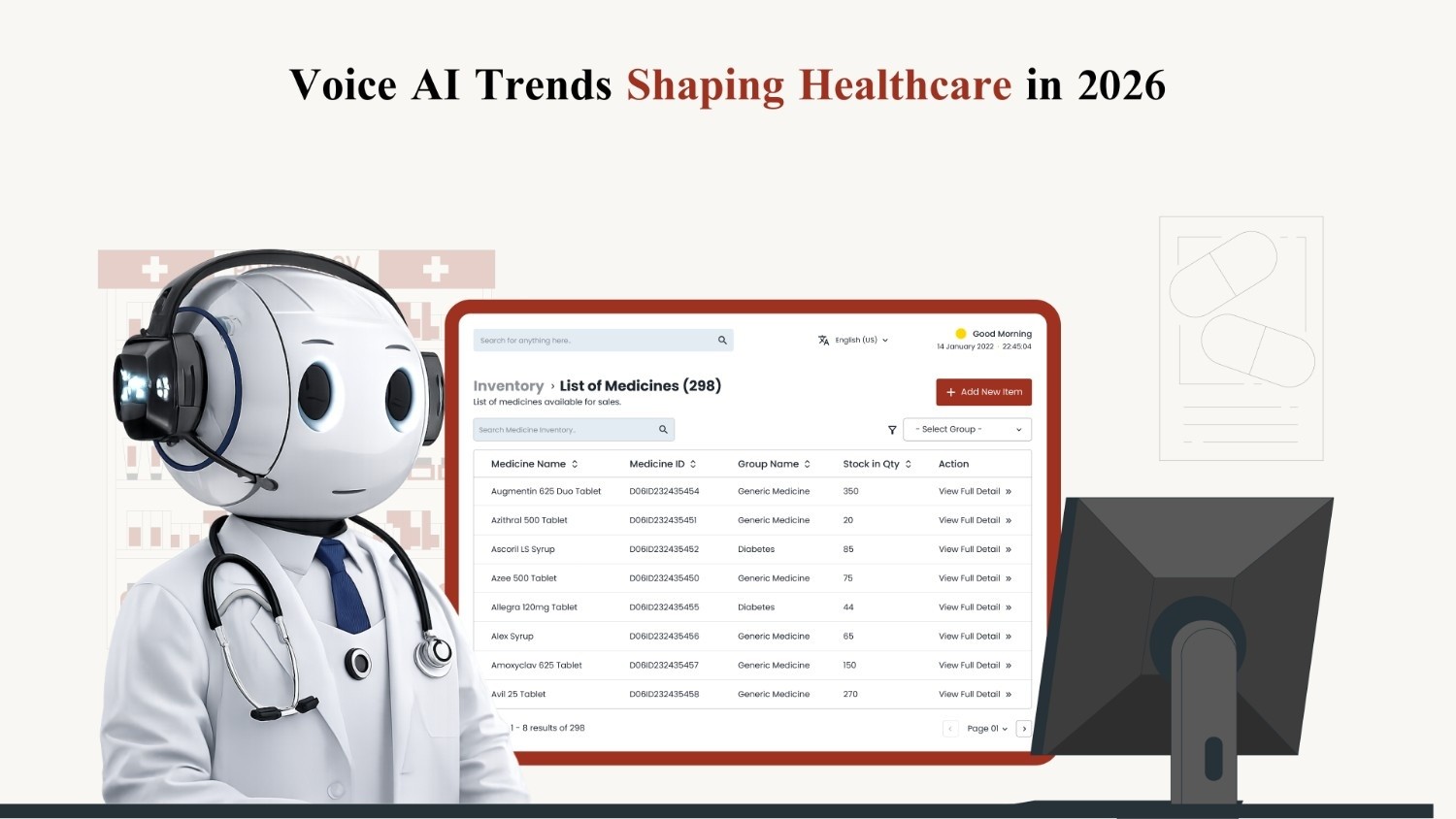
Top 5 Voice AI Trends Shaping Healthcare in 2026
India’s healthcare ecosystem is entering 2026 under mounting pressure. Patient volumes are rising faster than hospital capacity, call centers remain overwhelmed, and multilingual communication gaps continue to limit access to timely care. Clinicians and staff spend significant time on routine coordination and documentation, reducing focus on direct patient care.
At the same time, patient expectations for faster responses, clear communication, and consistent follow-ups are increasing. With a large share of healthcare interactions being routine and repeatable, hospitals need scalable solutions that do not add staffing burden.
And this is exactly where the next wave of AI and voice-driven innovation will transform Indian healthcare in 2026. By enabling natural, multilingual conversations at scale, voice AI helps healthcare organizations automate patient communication, reduce administrative load, and improve engagement while meeting privacy and compliance requirements.
Let’s get into the details.
Key Takeaways
In 2026, Indian healthcare faces rising patient volumes, administrative overload, and multilingual communication gaps, making AI adoption unavoidable rather than optional.
Voice AI is emerging as a frontline engagement layer, enabling hospitals to manage appointments, triage, reminders, and follow-ups at scale.
AI-powered diagnostics and ambient documentation reduce clinician burden by converting conversations into structured clinical records and real-time decision support.
Voice-driven automation is transforming hospital operations by cutting no-shows, streamlining coordination, and maintaining continuous patient engagement beyond discharge.
Predictive and personalized AI supports chronic care, proactive outreach, and better treatment adherence through context-aware voice interactions.
Platforms like CubeRoot enable this shift by delivering scalable, multilingual, secure, and compliance-ready voice AI integrated directly into hospital systems.
Why 2026 Is a Defining Year for Healthcare Voice AI
Indian healthcare enters 2026 at a pivotal moment, where AI shifts from experimentation to enterprise-scale deployment. Hospitals are under sustained pressure to handle rising patient loads, deliver multilingual care experiences, and operate within tightening compliance expectations. Voice AI is emerging as a strategic answer, not just a technology upgrade.
Here’s why 2026 matters:
Healthcare demand is outpacing human capacity with OPD volumes, chronic care needs, and follow-up requirements increasing.
Digital health maturity has accelerated, pushing hospitals from pilots to production-grade AI deployments that directly impact operations and patient experience.
Voice AI solves India’s accessibility gap, enabling natural, regional-language conversations without requiring typing, apps, or literacy.
Operational efficiency gains are measurable, from reduced call center load to higher appointment adherence and improved satisfaction scores.
Trust, privacy, and compliance are now core expectations, making enterprise-ready, auditable AI systems essential.
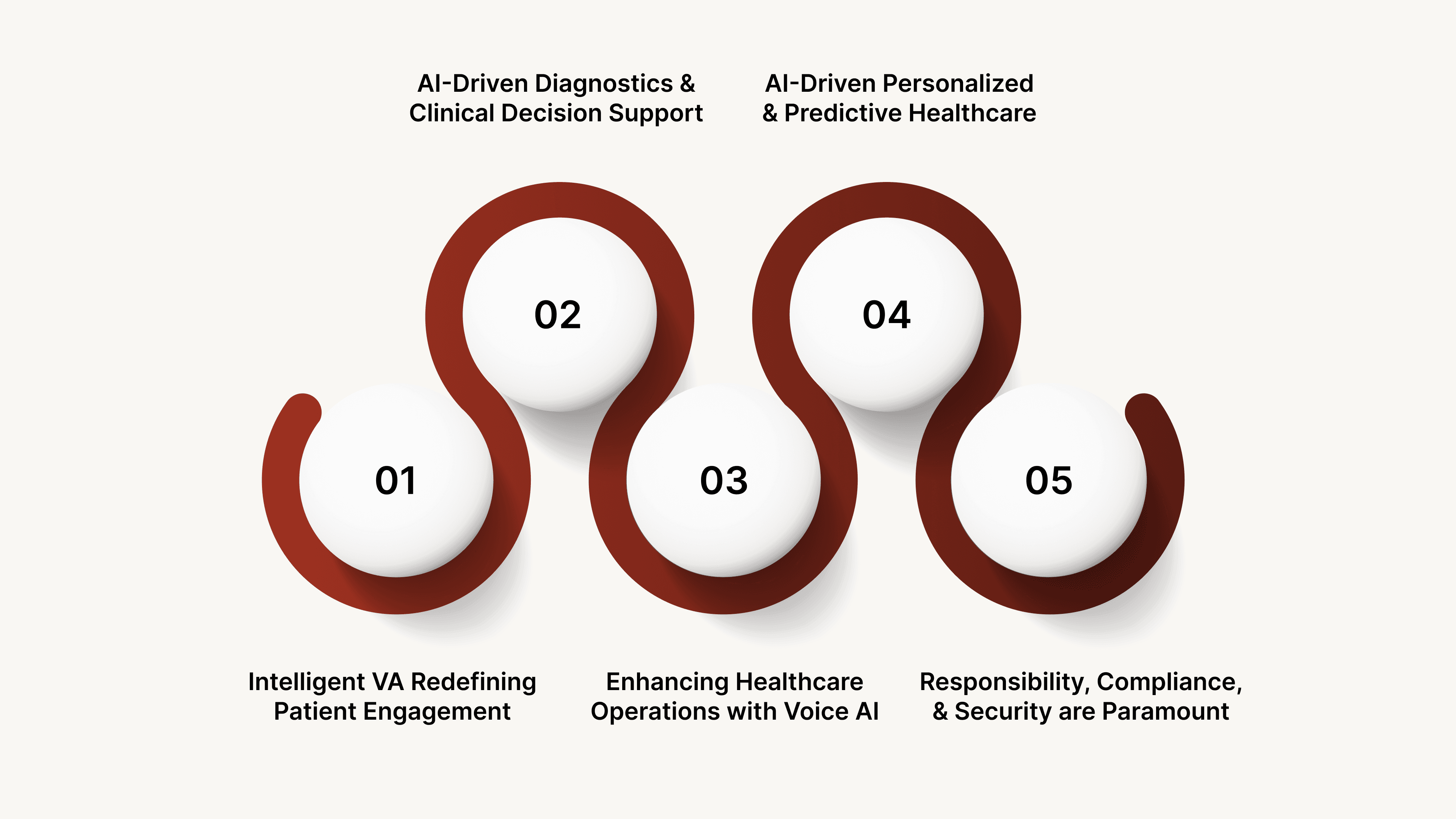
Trend 1: Intelligent Voice Assistants Redefining Patient Engagement
Voice AI is no longer limited to basic chatbots in healthcare. Hospitals and digital health platforms are deploying enterprise-grade voice assistants to manage massive volumes of patient interactions with consistency, speed, and personalization. Instead of functioning as simple support tools, these systems now act as frontline engagement layers, handling everything from first contact to guided follow-ups.
AI-Driven Voice Triage and Support
Modern healthcare voice systems are now equipped to do the following:
Conduct structured symptom screening and basic triage conversations before routing to clinicians.
Manage appointment confirmations, missed-call callbacks, and routine inquiries without human intervention.
Reduce waiting queues and call handling pressure, helping hospitals respond faster while maintaining service quality.
This shift mirrors global healthcare transformation, where voice interfaces are becoming a natural entry point into clinical pathways rather than an optional add-on.
Multilingual Conversational Accessibility
Voice AI also strengthens inclusivity by:
Supporting regional Indian languages and dialects, ensuring patients can speak naturally in their preferred language.
Helping hospitals serve Tier-2 and Tier-3 regions, elderly patients, and users with limited digital literacy.
Bridging the accessibility gap where text-based tools, apps, and portals often fail.
For India’s linguistically diverse healthcare ecosystem, voice AI expands access to care.
As patient engagement becomes more intelligent and inclusive at the front end, the real transformation continues inside hospitals, where AI is now reshaping how clinicians work, document, and make decisions.
Also Read: AI Voice Assistants for Care Navigation
Trend 2: AI-Powered Diagnostics and Clinical Decision Intelligence
AI in healthcare is moving beyond experimentation into clinically meaningful support. Hospitals are now using advanced AI models for radiology interpretation, diagnostic prioritization, and risk prediction, while voice AI makes these capabilities usable in real clinical settings by eliminating clicks, typing, and navigation friction.
Ambient Clinical Documentation
What modern AI systems do:
Capture real doctor–patient conversations during consultations
Convert them into structured EMR records with clinical-grade accuracy
Auto-generate summaries, visit notes, and follow-up instructions
This significantly reduces administrative fatigue, improves record completeness, and supports clinicians who face increasing documentation pressure in busy Indian hospitals.
Voice-Assisted Decision Support
Conversational AI tools are also enabling hands-free clinical intelligence access, allowing clinicians to:
Retrieve patient histories, lab results, and radiology updates using natural voice commands
Access drug interaction alerts or guideline-based treatment insights during care
Receive real-time prompts around risk indicators and critical follow-ups
By embedding intelligence into everyday clinical workflows, voice AI supports faster decision-making without forcing clinicians to break concentration or switch systems.
As diagnostics and clinical workflows become more intelligent, the next leap is happening in hospital operations, where AI is now transforming how healthcare institutions run day-to-day.
Trend 3: Automating Healthcare Operations with Voice AI
In 2026, hospitals are no longer viewing voice AI as an experimental add-on. It is increasingly becoming an operational backbone, handling routine administrative communication, stabilizing patient coordination, and reducing dependency on overstretched hospital staff. Voice automation is proving especially valuable in India, where healthcare institutions manage massive patient volumes and require reliable, scalable communication without escalating staffing costs.
Automated Scheduling and Follow-Ups
Healthcare voice automation now supports:
Appointment confirmations, cancellations, and rescheduling through natural voice interaction
No-show reduction through intelligent reminders and follow-up prompts
Real-time communication with patients without waiting on call center queues
Hospitals benefit from improved appointment adherence, fewer manual coordination calls, and measurable reductions in administrative burden.
Streamlined Hospital Coordination
Beyond scheduling, voice AI is increasingly used to coordinate critical patient engagement touchpoints such as:
Discharge communication and post-care follow-up calls
Medication adherence reminders and compliance check-ins
Routine patient experience surveys and service recovery triggers
This creates smoother operational flow, reduces staff workload, and helps maintain consistent patient contact even after discharge—an area where many healthcare institutions traditionally struggle.
As operational automation takes hold, healthcare leaders are turning their focus to the next frontier—personalized and predictive AI that supports long-term patient care and proactive healthcare delivery.
Also Read: How Voice-Based Patient Feedback is Transforming Healthcare Quality
Trend 4: Personalized and Predictive Healthcare with AI
Healthcare in 2026 is shifting from reactive care to anticipatory and personalized care ecosystems. Instead of treating every patient the same, AI is enabling healthcare providers to understand patient behavior, treatment adherence, and risk patterns in far greater depth. Voice AI strengthens this shift by capturing rich conversational data, revealing intent, sentiment, lifestyle cues, and emerging health concerns that traditional digital channels often miss.
AI-Driven Personalized Patient Journeys
Modern AI systems are now capable of:
Detecting risk indicators such as missed medications, delayed follow-ups, or recurring symptoms
Triggering proactive outreach to the right patients at the right moment
Tailoring communication based on treatment stage, condition type, and previous engagement patterns
This enables hospitals and digital health platforms to move from generic mass communication to context-aware, patient-specific care engagement, strengthening outcomes and patient trust.
Chronic Care and Long-Term Support
For chronic disease management—where India faces a significant burden—voice AI is becoming a powerful support layer. It can:
Check in on chronic patients regularly through natural, human-like voice conversations
Reinforce medication adherence and lifestyle guidance
Identify distress signals early enough to intervene before complications escalate
This consistent engagement improves adherence, reduces avoidable hospital visits, and builds a more continuous care relationship between providers and patients.
As personalization and predictive intelligence reshape patient care strategies, the next critical priority for healthcare leaders is ensuring that AI is governed responsibly, securely, and ethically at scale.
Also Read: Voice AI for Patient Registration in Healthcare
Trend 5: Responsibility, Compliance, and Security Take Center Stage
As AI systems move deeper into clinical and operational workflows, Indian healthcare leaders are prioritizing trust, safety, and regulatory readiness as much as innovation. Hospitals now recognize that AI deployment is not only a technology initiative but also a governance responsibility, one that must protect patient rights, ensure clinical integrity, and meet compliance expectations as regulations evolve.
Secure, Encrypted Voice and Data Handling
Healthcare providers increasingly expect enterprise-grade protections such as:
End-to-end encryption for voice interactions and stored data
Explicit consent capture and consent traceability
Role-based access controls and secure audit storage
These safeguards are essential in a healthcare environment where patient confidentiality and data protection are foundational expectations, not optional features.
Ethical and Auditable AI Deployments
Responsible AI in 2026 also means:
Transparent and explainable outputs so clinicians understand AI-supported decisions
Systems monitored for bias to ensure fairness across languages, regions, and demographics
Comprehensive audit trails that help organizations demonstrate accountability during reviews or audits
This ensures AI remains clinically trustworthy, legally defensible, and aligned with patient-first healthcare principles.
With technology capability advancing and governance frameworks strengthening, healthcare organizations now need partners who can deliver secure, compliant, and truly scalable AI solutions and that’s where CubeRoot plays a strategic role.
Healthcare Voice AI Trends 2026: Where CubeRoot Fits in
As healthcare organizations in India move from experimentation to scaling AI, they need platforms designed for real-world hospital environments, not generic consumer tools.
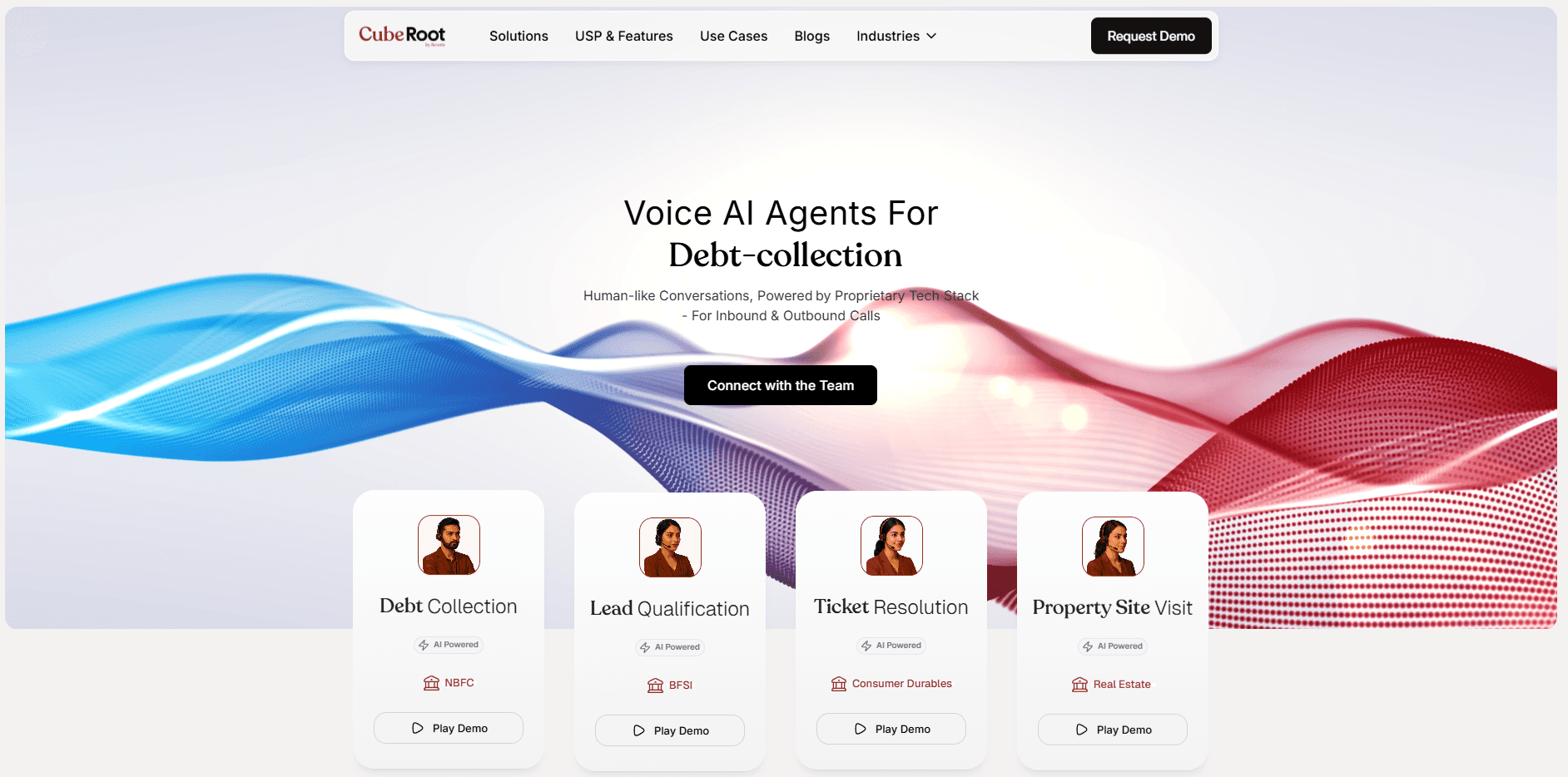
CubeRoot is purpose-built for this shift, being a voice-first AI platform engineered for scale, multilingual inclusivity, compliance readiness, and seamless enterprise integration across Indian hospitals, clinics, and healthcare platforms.
Natural, Scalable Voice Engagement
CubeRoot enables hospitals to:
Handle massive patient interaction volumes without increasing manpower
Deliver human-like voice conversations that feel closer to real hospital communication
Provide real-time, always-available patient support for scheduling, inquiries, and follow-ups
This makes voice AI a dependable operational layer instead of a one-off digital experiment.
Built for India: Language and Localization Strength
Healthcare in India is multilingual by default. CubeRoot addresses this by:
Supporting major Indian languages and regional dialects with natural fluency
Understanding speech variations, accents, and real conversational behavior
Ensuring accessibility for elderly patients, rural populations, and users with limited digital literacy
This expands the reach of digital healthcare to every patient segment.
Seamless Integration with Hospital Systems
For healthcare leaders, AI only creates value when it works inside existing systems. Here is what CubeRoot does:
Integrates with HMS, CRM, EMR, and patient engagement platforms via secure APIs
Automates workflows like reminders, follow-ups, documentation triggers, and routing
Functions as part of the hospital’s operating environment, not a disconnected tool
This ensures speed, continuity, and real operational impact.
Secure, Compliant, and Auditable
CubeRoot is designed with healthcare governance expectations in mind through:
Enterprise-grade security and encryption for voice interactions and stored data
Consent capture, access controls, and privacy-by-design principles
Compliance-ready audit logs that support accountability and regulatory reviews
This gives healthcare organizations the confidence to scale AI without compromising trust.
Want to modernize patient experience, reduce operational burden, and build future-ready healthcare communication with Voice AI? Book a CubeRoot Demo Today.
FAQs
Q1. What are the biggest healthcare voice AI trends in 2026?
Natural voice assistants, multilingual patient engagement, AI-driven clinical support, automated workflows, and compliant AI governance.
Q2. How does voice AI help hospitals in India?
It reduces call center burden, improves patient communication, enables multilingual access, and automates operational tasks.
Q3. Is voice AI safe for healthcare use?
Yes, when platforms ensure encryption, consent handling, audit logs, and compliance with healthcare standards.
Q4. Will AI replace human healthcare staff?
No, AI supports staff by reducing repetitive workloads so humans can focus on critical care tasks.
Q5. Can healthcare voice AI integrate with hospital systems?
Modern enterprise platforms integrate with HMS, CRM, EMR, and workflow tools to function as part of the healthcare ecosystem.