Jan 13, 2026
AI Bots for Efficient Call Center Operations
Are your call center agents struggling to keep up with rising call volumes, long wait times, and increasingly demanding customers? Traditional call center models, heavily dependent on human agents, are becoming expensive, inefficient, and difficult to scale.
This is where AI bots are transforming call center operations.
By automating routine conversations, providing instant responses, and supporting agents with real-time insights, AI bots are enabling businesses to run faster, smarter, and more cost-effectively without compromising on customer experience.
In this blog, we’ll explore what AI bots are, how they improve call center efficiency, real-world use cases, key benefits, implementation challenges, and how CubeRoot’s AI-powered voice bots are enabling enterprises to scale their call center operations seamlessly.
At a glance
AI bots automate repetitive call center tasks like FAQs, order tracking, and balance inquiries
They reduce wait times and operational costs while improving customer satisfaction
AI bots provide 24/7 support and scale effortlessly during peak call volumes
Multilingual voice bots enable better regional and global customer engagement
CubeRoot offers an enterprise-grade AI bot platform tailored for high-volume call center operations
What Are AI Bots in Call Center Operations?
AI bots in call centers are intelligent, voice-driven, or conversational systems powered by Artificial Intelligence (AI), Natural Language Processing (NLP), and speech recognition. Unlike traditional IVR systems that rely on rigid menu options, AI bots understand natural human language and respond in a conversational, context-aware manner.
These bots can manage both inbound and outbound calls, handling tasks such as:
Answering customer queries
Providing real-time account or order information
Sending reminders and alerts
Qualifying leads
Routing complex issues to human agents
In simple terms, AI bots act as virtual call center agents that work alongside human teams to improve efficiency, accuracy, and scalability.
Also Read: Top 20 AI Use Cases in Call Centers with ROI Impact
Why Do Call Centers Need AI Bots Today?
Modern call centres operate in a high-pressure environment where speed, accuracy, and personalisation are no longer optional - they are expected. Customers want quick resolutions, minimal waiting times, and consistent service across every interaction, while businesses must manage escalating operational costs and workforce challenges.
High call volumes, agent fatigue, rising training expenses, and limited service availability place significant strain on traditional, human-only support models.
At the same time, maintaining uniform service quality across agents becomes increasingly difficult as teams scale. These challenges make it clear that relying solely on human agents is no longer sustainable, creating a strong case for AI-driven solutions that enhance efficiency and customer experience.
Let's look at why call centers need AI bots:
1. High call volumes leading to long wait times
Call centres often experience unpredictable spikes in call traffic, especially during peak hours, product launches, or service disruptions. When call volumes exceed agent capacity, customers are placed in long queues, leading to frustration, abandoned calls, and negative brand perception.
Extended wait times also reduce first-call resolution rates, as hurried agents may struggle to fully address customer concerns once connected.
2. Agent burnout from handling repetitive queries
A large percentage of inbound calls involve repetitive, low-complexity queries such as balance checks, order status updates, password resets, or basic troubleshooting. Handling these calls repeatedly can lead to mental fatigue, disengagement, and burnout among agents.
Over time, this affects morale, increases error rates, and contributes to higher employee turnover, further destabilising operations.
3. Rising staffing and training costs
Recruiting, onboarding, and training skilled call centre agents is both time-consuming and expensive. As customer expectations grow, agents require ongoing training to handle new products, policies, and communication standards.
High attrition rates compound these costs, forcing organisations into a continuous cycle of hiring and retraining, which significantly impacts overall profitability.
4. Limited availability outside business hours
Traditional call centres are typically constrained by fixed operating hours due to staffing limitations and cost considerations.
This leaves customers without support during nights, weekends, or holidays - often when they need assistance the most. In today’s always-connected world, limited availability can lead to lost sales opportunities and reduced customer satisfaction.
5. Inconsistent service quality across agents
Even with standardised scripts and training, service quality can vary from one agent to another due to differences in experience, communication skills, and workload pressure. This inconsistency can confuse customers, weaken brand trust, and result in uneven customer experiences across different touchpoints.
Also Read: AI-Driven Voice Interaction: A Practical Guide for Indian Enterprises
How AI Bots Improve Call Center Efficiency?
AI bots enhance call centre operations across multiple dimensions by streamlining workflows, reducing response times, and optimising resource utilisation. They handle high volumes of routine enquiries instantly, eliminating long wait times and ensuring consistent responses across all customer interactions.
By operating 24/7, AI bots extend support beyond business hours without increasing staffing costs. They also assist human agents in real time by providing relevant customer data, suggested responses, and next-best actions, enabling faster and more accurate resolutions.
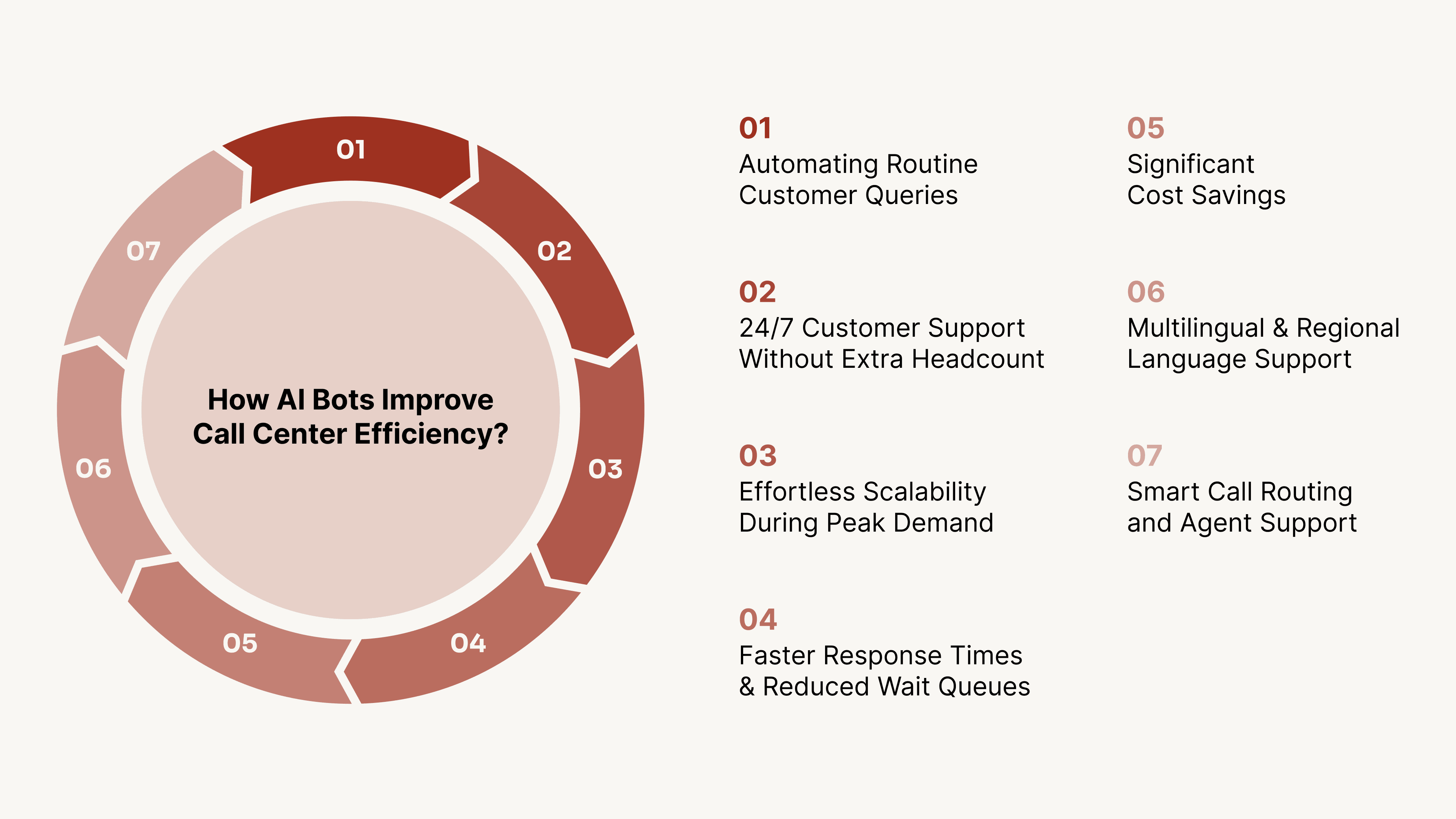
As a result, agents can focus on complex issues, improving productivity, service quality, and overall customer satisfaction.
Here is how AI bots help improve overall efficiency:
1. Automating Routine Customer Queries
A large percentage of call center calls are repetitive in nature, e.g. status checks, basic FAQs, or simple requests. AI bots can handle these instantly without human involvement.
Examples:
“What’s my account balance?”
“Where is my order?”
“When is my appointment?”
By offloading these queries, human agents are freed to focus on complex or sensitive issues.
2. 24/7 Customer Support Without Extra Headcount
AI bots operate around the clock, ensuring customers can get assistance at any time - day or night, weekdays or weekends.
This not only improves customer satisfaction but also eliminates the cost and complexity of night shifts or extended support teams.
3. Effortless Scalability During Peak Demand
Whether it’s a festive sale, product launch, or seasonal surge, AI bots can handle thousands of simultaneous calls without slowing down.
Unlike human teams, AI bots don’t require additional hiring, training, or infrastructure to scale.
4. Faster Response Times and Reduced Wait Queues
AI bots answer calls instantly, dramatically reducing wait times and abandoned calls. Faster first responses lead to:
Higher customer satisfaction (CSAT)
Improved first-call resolution rates
Better brand perception
5. Significant Cost Savings
By automating a large portion of call volume, businesses can:
Reduce agent hiring and training costs
Lower operational overheads
Optimise workforce utilisation
AI bots help call centers do more with fewer resources, without sacrificing service quality.
6. Multilingual and Regional Language Support
In diverse markets like India and global customer bases, language is a major barrier. AI bots with multilingual capabilities can engage customers in their preferred language, improving understanding and trust.
This is especially valuable for call centers serving regional or international audiences.
7. Smart Call Routing and Agent Support
AI bots can identify customer intent and route calls to the most appropriate agent when escalation is required. They can also provide agents with real-time context, reducing handling time and improving resolution quality.
How AI Bots Work in Call Centers?
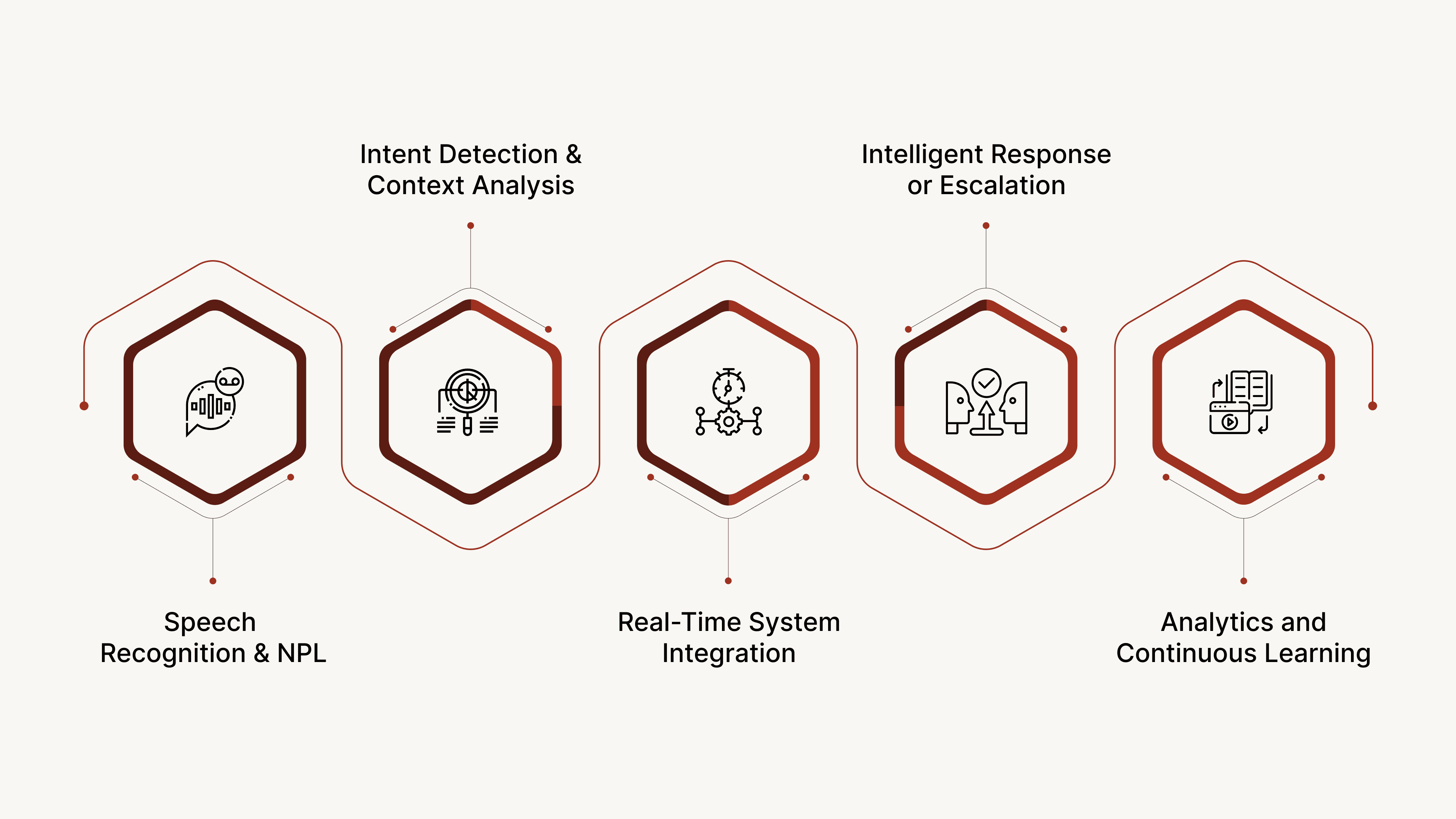
Although the technology behind AI bots is highly sophisticated, their functioning within call centres follows a clear and logical process designed to deliver fast, accurate, and human-like interactions. Each stage plays a crucial role in ensuring a smooth customer experience while supporting operational efficiency.
1. Speech Recognition & Natural Language Processing (NLP)
When a customer speaks, the AI bot first uses Automatic Speech Recognition (ASR) to convert spoken language into text. This text is then processed through Natural Language Processing (NLP), which allows the bot to understand not just the words used, but also the meaning behind them.
NLP enables the bot to recognise accents, variations in speech, and common conversational phrases, making interactions feel more natural rather than robotic.
2. Intent Detection and Context Analysis
Once the speech is understood, the bot identifies the customer’s intent, such as checking an order status, reporting an issue, or requesting account information. At this stage, context analysis becomes critical. The AI bot may reference previous interactions, caller history, or session-specific data to understand the request more accurately.
This prevents customers from having to repeat themselves and ensures more personalised responses.
3. Real-Time System Integration
AI bots are integrated with core business systems such as CRM, ERP, billing platforms, and ticketing tools. Through these integrations, the bot can securely retrieve real-time information, update customer records, create support tickets, or trigger workflows.
This allows the bot to provide precise, up-to-date answers rather than generic responses, significantly improving resolution speed.
4. Intelligent Response or Escalation
Based on the complexity of the request, the AI bot either delivers a conversational response or escalates the interaction to a human agent. For straightforward queries, the bot resolves the issue instantly. For complex or sensitive cases, it transfers the call along with relevant context, ensuring the agent is fully informed before engaging with the customer.
5. Analytics and Continuous Learning
Every interaction is logged and analysed using AI-driven analytics. These insights help identify common issues, gaps in service, and opportunities for improvement. Over time, machine learning models refine the bot’s understanding, accuracy, and response quality, enabling continuous performance enhancement and better customer experiences.
Together, these steps allow AI bots to function as intelligent, always-on virtual agents that enhance efficiency while maintaining high service standards.
Real-World Use Cases of AI Bots in Call Centers
AI bots are already transforming call centre operations across multiple industries by automating high-volume interactions, improving response times, and ensuring consistent service delivery. Below are some of the most impactful real-world use cases.
BFSI (Banking, Financial Services & Insurance)
In the BFSI sector, call centres manage large volumes of sensitive, time-critical enquiries. AI bots handle routine requests securely and efficiently, reducing pressure on human agents.
Key use cases include:
Balance enquiries: Customers can instantly check account balances without waiting for an agent.
Loan status updates: Bots provide real-time updates on loan approvals, disbursements, or documentation requirements.
Payment reminders: Automated calls or voice bots remind customers of upcoming or overdue payments, improving collection efficiency.
Fraud alerts: AI bots can notify customers of suspicious activity and guide them through verification steps.
Example interaction:
“Your loan application has been approved. Would you like to review the details now?”
This proactive engagement improves customer confidence while freeing agents to handle complex financial discussions.
E-commerce & Retail
E-commerce and retail call centres experience frequent spikes during sales, holidays, and product launches. AI bots help manage this demand efficiently.
Key use cases include:
Order tracking: Customers receive instant updates on order status and delivery timelines.
Returns and refunds: Bots guide customers through return policies, initiate requests, and provide refund status updates.
Stock availability: Customers can quickly check whether a product is in stock at a particular location or online.
Delivery notifications: Automated alerts keep customers informed, reducing “where is my order” calls.
Example interaction: “Your order will be delivered tomorrow. Press 1 to track it.”
This reduces inbound call volume and enhances the post-purchase experience.
Healthcare
Healthcare call centres require accuracy, empathy, and compliance while managing a high volume of repetitive communications. AI bots streamline administrative tasks without compromising care.
Key use cases include:
Appointment confirmations: Bots confirm or reschedule appointments automatically.
Reminder calls: Patients receive timely reminders, reducing no-show rates.
Follow-ups: Post-visit follow-ups ensure patients adhere to care instructions or medication schedules.
Example interaction: “Your appointment is scheduled for tomorrow at 10 AM.”
This improves operational efficiency and patient engagement.
Travel & Hospitality
In travel and hospitality, customers expect quick updates and seamless support, especially during disruptions.
Key use cases include:
Booking confirmations: Instant confirmation of flights, hotels, or reservations.
Schedule changes: Automated notifications for delays, cancellations, or itinerary updates.
Support queries: Handling FAQs related to baggage, check-in, or cancellation policies.
AI bots ensure travellers stay informed in real time, even during peak travel periods.
Telecom & Utilities
Telecom and utility providers handle high volumes of service-related enquiries daily. AI bots significantly reduce call centre load.
Key use cases include:
Billing enquiries: Customers can check bills, due dates, or payment status instantly.
Service outages: Bots provide real-time outage information and estimated resolution times.
Plan upgrades: AI bots suggest suitable plans based on usage patterns and customer preferences.
By automating these interactions, organisations deliver faster resolutions while maintaining consistent service quality across all customer touchpoints.
Also Read: Conversational AI Interfaces: Transforming Customer Engagement in India
Key Business Benefits of AI Bots
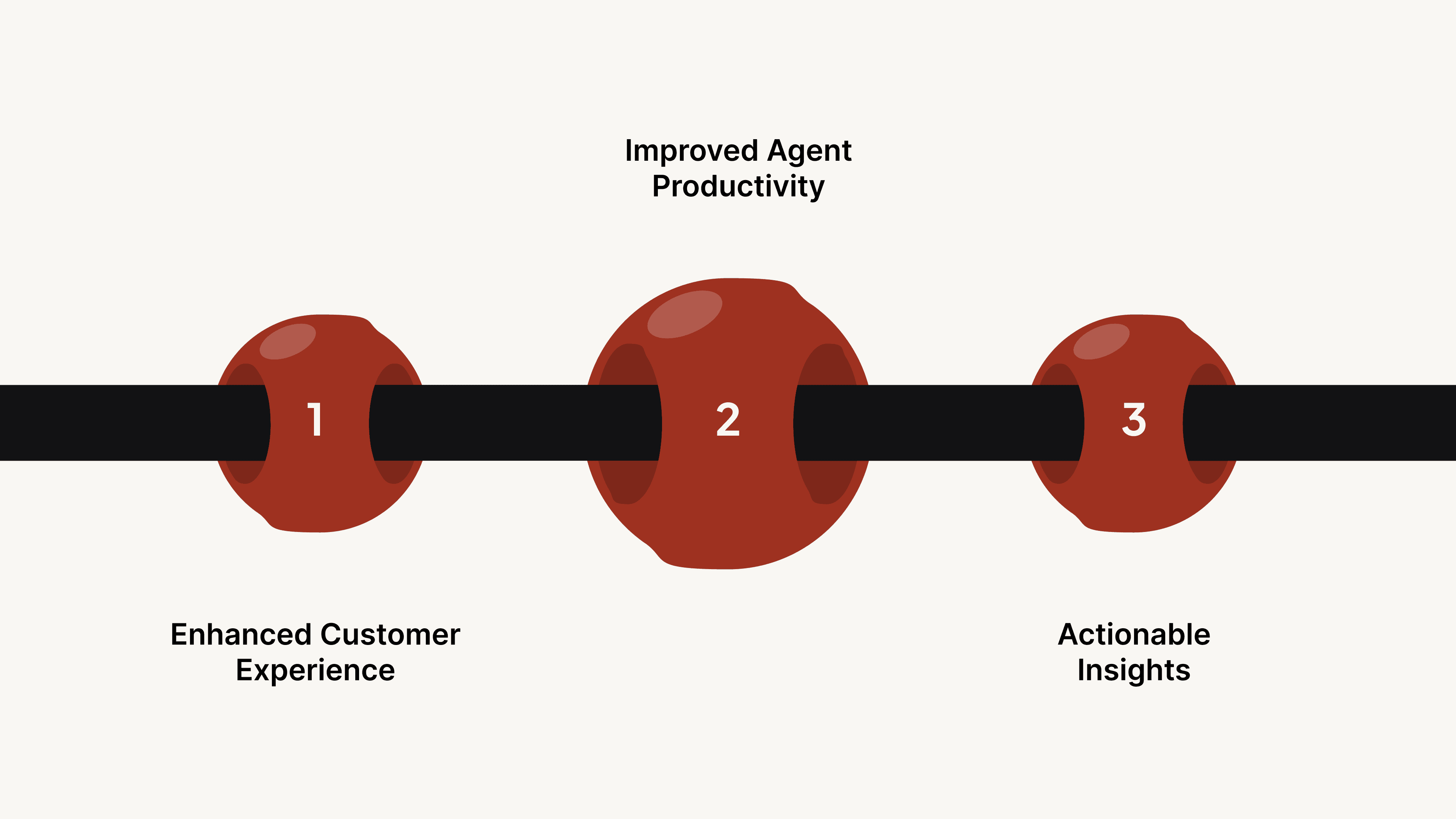
AI bots deliver measurable business value by improving customer satisfaction, optimising agent performance, and providing data-driven insights. When implemented effectively, they become a strategic asset rather than just an automation tool.
Here are the business benefits of using AI bots:
Enhanced Customer Experience
AI bots significantly elevate the overall customer experience by ensuring interactions are fast, relevant, and consistent.
Faster responses: AI bots respond instantly to customer queries, eliminating long wait times and reducing call abandonment. Customers receive immediate assistance, even during peak hours or outside business hours, which improves satisfaction and trust.
Personalised interactions: By leveraging customer data, past interactions, and behavioural patterns, AI bots tailor responses to individual needs. This personalisation makes conversations feel more human and relevant, increasing engagement and loyalty.
Consistent service quality: Unlike human agents, AI bots deliver uniform responses every time. This consistency ensures that customers receive accurate information regardless of when or how they contact the call centre, strengthening brand reliability.
Improved Agent Productivity
AI bots act as intelligent support systems for human agents, enabling them to work more efficiently and effectively.
Reduced workload: By handling repetitive and low-complexity queries, AI bots significantly reduce the volume of calls agents must manage. This allows teams to operate more efficiently without increasing headcount.
Better focus on complex issues: With routine interactions automated, agents can dedicate more time and attention to complex, sensitive, or high-value customer concerns that require human judgment and empathy.
Lower burnout rates: Reduced call pressure and fewer repetitive tasks lead to improved job satisfaction. This helps lower burnout and attrition rates, creating a more stable and motivated workforce.
Actionable Insights
Beyond automation, AI bots generate valuable data that helps businesses continuously improve performance.
Call analytics: AI bots analyse call volumes, resolution times, and common enquiry types, providing clear visibility into customer demand and operational efficiency.
Customer sentiment analysis: By assessing tone, language, and emotional cues, AI systems can identify customer sentiment in real time. This enables proactive interventions and better service recovery strategies.
Performance optimisation opportunities: Insights from AI-driven analytics highlight gaps in processes, training needs, and workflow inefficiencies. Businesses can use this data to refine strategies, improve service quality, and drive long-term growth.
How CubeRoot Powers Efficient Call Centre Operations with AI Bots?
CubeRoot provides an enterprise-grade AI voice bot platform designed to optimise call centre operations with speed, accuracy, and scalability. Built for real-world business environments, the platform supports seamless automation while maintaining a high-quality customer experience.
Seamless System Integration
CubeRoot integrates smoothly with existing CRM, ERP, and call centre infrastructure, enabling data-driven and personalised conversations without disrupting current workflows.
Built for High-Volume Scalability
The platform can handle thousands of concurrent calls effortlessly, ensuring reliable performance during peak hours, campaigns, or seasonal surges.
Multilingual Voice Bots
Engage customers in their preferred language, improving accessibility, reach, and satisfaction across diverse regions and customer segments.
Real-Time Analytics and Insights
Monitor call performance, customer behaviour, and outcomes in real time to identify optimisation opportunities and improve decision-making.
Security and Compliance
Enterprise-grade security measures and industry-standard compliance ensure sensitive customer data remains protected.
Book a demo with CubeRoot today to see how AI bots can transform your call centre into a faster, smarter, and more efficient customer engagement engine.
FAQs
1. What are AI bots in call centre operations?
AI bots are intelligent, voice-based systems that automate customer interactions, handle routine queries, and support agents using AI and NLP technologies.
2. How do AI bots improve call center efficiency?
They reduce wait times, automate repetitive tasks, provide 24/7 support, and allow agents to focus on complex interactions.
3. Do AI bots replace human agents?
No. AI bots complement human agents by handling routine calls and escalating complex issues to live agents.
4. Can AI bots support multiple languages?
Yes, modern AI bots can handle multiple languages and regional accents, making them ideal for diverse customer bases.
5. Are AI bots secure for customer data?
Enterprise platforms like CubeRoot follow strict data security and compliance standards to protect sensitive customer information.