Dec 5, 2025

Conversational AI Interfaces: Transforming Customer Engagement in India
Every business today faces the same challenge; your customers expect instant answers, in their language, and on the platform they prefer. Whether it’s a bank customer asking about a loan payment or a shopper checking an order status, people now want support that feels human and responsive.
You probably understand how challenging it can be to meet these expectations across multiple languages and platforms, especially when traditional support systems often fall short.
Traditional chatbots rarely meet these expectations. They rely on fixed scripts, struggle to understand intent, and often make users repeat the same information. What your business needs now are systems that can listen, interpret, and respond naturally. That’s where conversational AI interfaces come in.
According to Grand View Research, the conversational AI market in India was valued at USD 455.4 million in 2024 and is projected to grow at a 26.3% CAGR, reaching USD 1.85 billion by 2030. This rapid growth shows how businesses like yours are adopting AI-driven voice and chat solutions to enhance customer experience, reduce response time, and scale communication efficiently.
In this blog, you’ll learn what conversational AI interfaces are, how they differ from traditional chatbots, and why they’re essential for modern enterprises across industries like BFSI, retail, healthcare, and education.
Key Takeaways
Conversational AI interfaces enable natural two-way communication through voice or text, making interactions smoother and more intuitive.
They go beyond traditional chatbots by understanding intent, context, and even emotion, allowing for more personalised conversations.
You can use them across multiple platforms: mobile apps, websites, social media, and voice systems for consistent engagement.
With multilingual and adaptive learning capabilities, these interfaces become smarter and more context-aware over time.
Businesses like yours can automate support, boost retention, and personalise engagement at scale without increasing costs.
What Is a Conversational AI Interface?
A conversational AI interface lets your users interact with your business naturally through voice or text. Instead of clicking through menus, users can simply speak or type what they need, and the system responds intelligently.
These interfaces work by combining three key technologies:
Natural Language Processing (NLP) – Understands and interprets user queries.
Speech Recognition – Converts spoken input into text.
Machine Learning (ML) – Improves responses over time through continuous learning.
You’ve likely seen these interfaces in action through:
Chat widgets on websites
Voice assistants on smartphones
Interactive Voice Response (IVR) systems in call centres
AI-powered customer service apps
Simply put, conversational AI helps you create experiences that feel human; faster, more natural, and more responsive.
Must read: What Is A Conversational UI? A Simple Guide
Chatbots vs. Conversational AI Interfaces
A common question is: “Are chatbots also conversational interfaces?”
While all chatbots enable basic dialogue, not all of them qualify as conversational AI.
Here’s how they differ:
Feature | Traditional Chatbot | Conversational AI Interface |
Interaction Style | Rule-based and scripted | Contextual and natural language-driven |
Intelligence | Limited to pre-set responses | Learns from conversations using AI and ML |
Channels | Usually text-only | Supports voice, text, and multimodal communication |
Personalisation | Minimal and static | Dynamic, based on user intent and behavior |
Example | Basic FAQ chatbot | Voice AI agent or AI-driven customer support system |
Chatbots follow fixed paths and handle routine tasks. Conversational AI interfaces adapt, learn, and understand emotions, allowing them to engage in more natural, intelligent, and context-rich conversations.
How Conversational AI Interfaces Work
Conversational AI interfaces rely on a combination of technologies that allow machines to interpret your words, understand what you mean, and respond intelligently. Each stage plays a distinct role in making the interaction feel natural, relevant, and almost human.
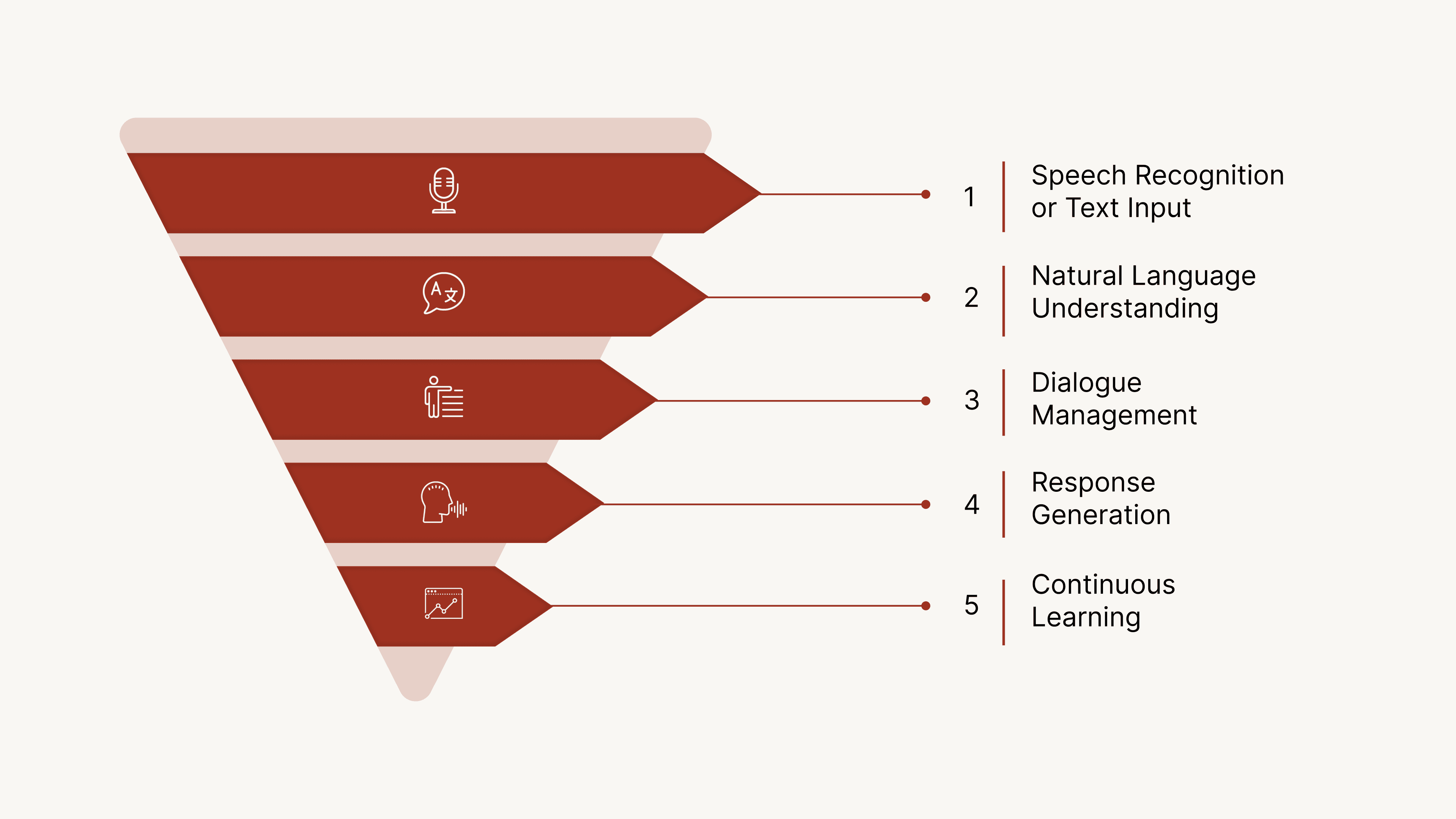
1. Speech Recognition or Text Input
Every interaction starts with your input, either spoken or typed. The interface first converts what you say or write into digital data that it can process.
In voice-based systems, speech recognition technology transcribes your spoken words into text that the AI can understand.
In text-based systems, your message is captured directly through a chat window or messaging app.
Advanced AI systems also pick up on subtle cues like pauses, tone, and pronunciation. This helps the system identify your intent more accurately, especially when you speak in regional languages such as Hindi, Tamil, or Bengali.
2. Natural Language Understanding (NLU)
Once your input is captured, the NLU layer begins analyzing it. It identifies three key elements:
Intent – what you are trying to do or ask
Entities – details like dates, amounts, or product names
Sentiment – the emotional tone behind your message
For example, if you say, "I need to reschedule my loan payment," the NLU engine understands that you want to reschedule, recognizes the loan payment as the focus, and detects urgency in your tone. This contextual understanding helps the AI deliver a meaningful and accurate response instead of a generic one.
3. Dialogue Management
This component acts as the brain of the system. It decides how the conversation should progress based on what you said and what has already been discussed.
It remembers previous exchanges to maintain continuity throughout the conversation.
It selects the best response strategy using AI models and predefined logic.
For complex or sensitive cases, it escalates the chat to a human agent when necessary.
In industries such as banking or healthcare, this helps ensure that conversations stay consistent and compliant with regulatory standards.
4. Response Generation
After interpreting your intent, the system generates a suitable response in natural language.
In voice interfaces, the response is converted into speech through text-to-speech technology.
In text interfaces, the response appears as a message in the chat window.
Modern conversational AI systems are designed to sound natural and empathetic. They use tone and phrasing that reflect the user’s emotion or urgency, making the experience more personal.
5. Continuous Learning
Every interaction helps the conversational AI improve. Through feedback loops, user corrections, and real-time analytics, the system continuously refines its performance.
This process, supported by reinforcement learning, makes the interface more context-aware and precise over time. It learns to understand new topics, adapt to regional variations, and deliver faster, more accurate responses.
Suggested read: Everything You Need to Know About AI Assistants
Key Features of Conversational AI Interfaces
Modern AI-powered communication systems are built to go far beyond basic automation. These features help you deliver intelligent, human-like, and scalable communication that adapts to every customer’s needs.
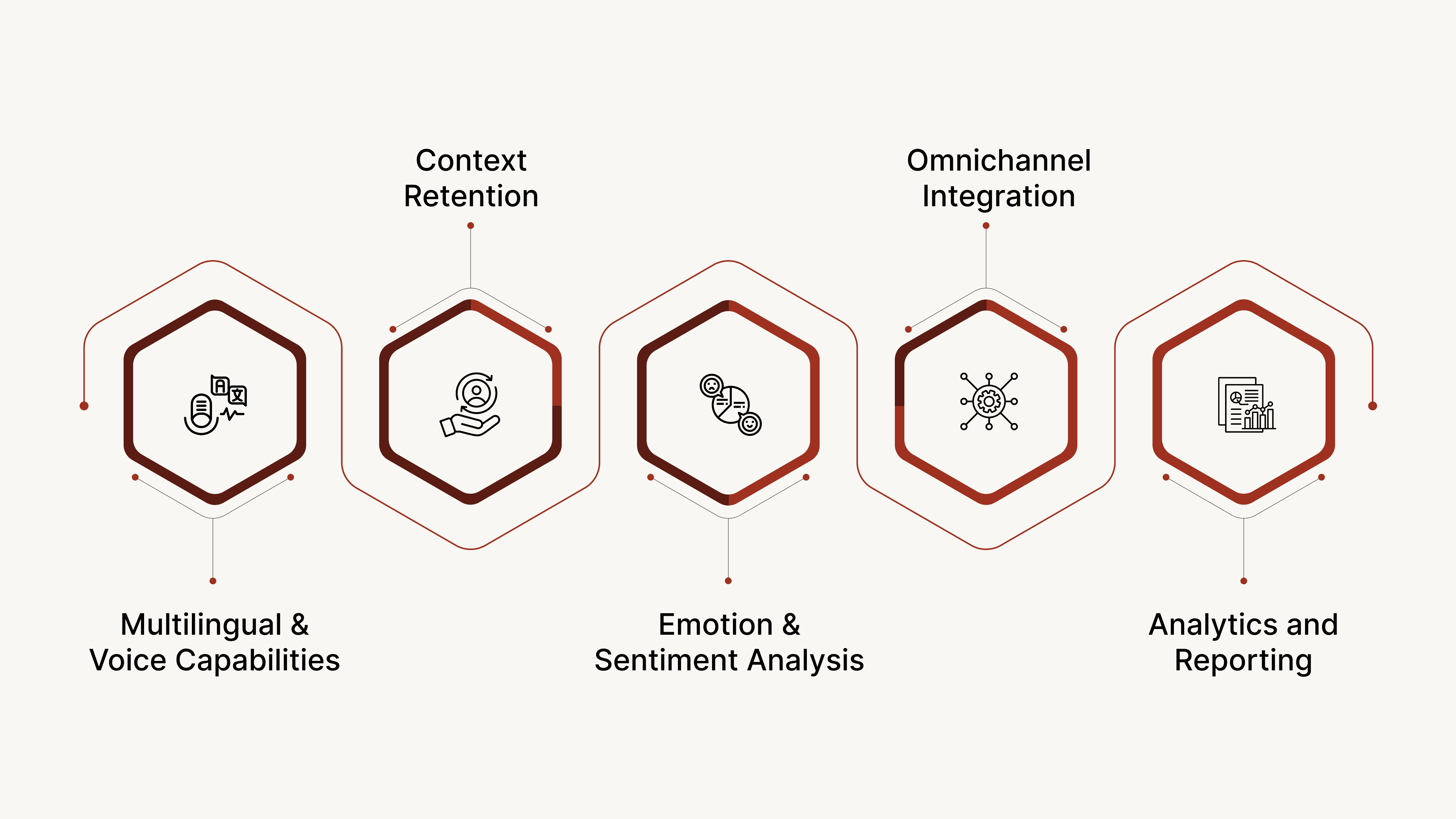
1. Multilingual and Voice Capabilities
India’s linguistic diversity makes multilingual communication essential for any business. Conversational AI interfaces can communicate in multiple Indian and global languages, understanding accents, tone, and regional variations in speech.
For example, a banking customer from Chennai can speak in Tamil, while another from Lucknow can use Hindi during the same session.
Voice capabilities make customer interactions more inclusive and natural. This is especially valuable for industries like banking, eCommerce, and healthcare, where many users find speaking more comfortable than typing.
2. Context Retention
Unlike traditional chatbots that reset after each query, conversational AI interfaces can remember the context of previous interactions.
If a customer has already asked about a refund or loan update, the system remembers the earlier conversation and continues from where it left off.
This creates a seamless experience and builds customer confidence by eliminating the need to repeat information.
3. Emotion and Sentiment Analysis
Emotion detection allows conversational AI systems to understand the tone and sentiment behind each message.
If a customer sounds frustrated, the system can automatically transfer the chat to a live agent. On the other hand, a satisfied customer may receive a personalized recommendation or feedback prompt.
This emotional intelligence adds empathy to automated interactions, improving satisfaction and reducing escalation rates.
4. Omnichannel Integration
Conversational AI interfaces work across multiple platforms so your customers can connect through their preferred channels.
They can operate on WhatsApp, websites, IVR systems, and mobile apps while maintaining the same accuracy and tone.
Integration with CRMs, ERPs, and help desk software ensures that both AI and human agents access unified customer data for faster and more consistent service delivery.
5. Analytics and Reporting
Every customer interaction generates valuable data that helps you measure performance and identify opportunities for improvement.
Dashboards provide insights into key metrics such as intent recognition accuracy, response times, and engagement rates.
In regulated industries like banking and finance, audit logs and compliance reports are automatically generated to maintain transparency and accountability.
Benefits of Conversational AI for Businesses
Conversational AI enhances how enterprises manage operations, connect with customers, and scale their services. It brings measurable improvements in performance, cost, and customer satisfaction.
1. Scalable Customer Support
Conversational AI can manage thousands of simultaneous interactions without affecting speed or quality.
During peak periods like festive sales or billing cycles, AI-driven systems maintain service levels without adding more agents.
This capability ensures business continuity and reliability across multiple customer touchpoints.
2. 24/7 Availability
AI interfaces provide uninterrupted service at all hours.
Customers can check payment status, schedule appointments, or request updates anytime, without depending on human staff.
This round-the-clock availability enhances trust and strengthens long-term relationships with customers.
3. Operational Cost Reduction
Automation reduces dependency on large call centre teams and minimises repetitive tasks.
Functions like EMI reminders, order tracking, and return confirmations are handled automatically, freeing agents for complex cases.
According to Global AI Adoption Index 2024, companies implementing conversational AI have reduced operational costs by up to 40 percent through automation and improved agent productivity.
4. Enhanced Personalisation
Conversational AI uses stored data, preferences, and historical interactions to create personalised experiences.
In an e-commerce context, it can suggest complementary products or proactively track orders.
In BFSI, the AI can recall previous loan inquiries or account details to deliver relevant, data-backed support instantly.
5. Higher CSAT and NPS
Combining accuracy, empathy, and instant support yields measurable improvements in customer satisfaction scores.
Rapid resolutions and multilingual support encourage positive feedback and repeat business.
Real-time sentiment tracking helps identify and resolve negative experiences before they affect brand perception.
Conversational AI does not replace human interaction; it enhances it. By combining speed, intelligence, and personalisation, it helps businesses provide meaningful and consistent experiences that strengthen customer loyalty.
Suggested read: Conversational AI in Banking: Trends and Benefits Guide
Applications Across Industries
Conversational AI interfaces have become core to enterprise communication strategies, offering domain-specific solutions that improve efficiency, accuracy, and customer experience across key sectors.
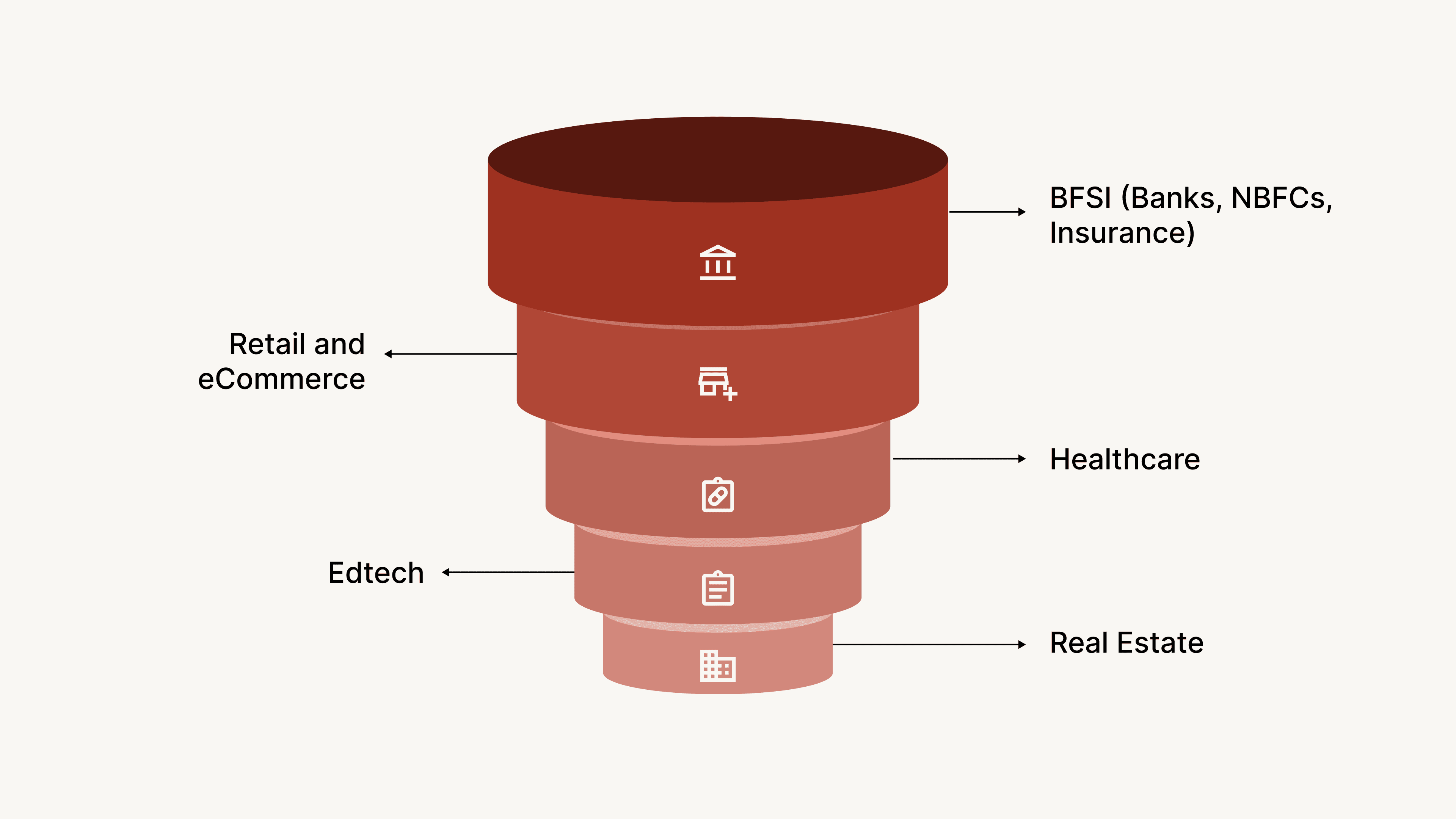
BFSI
Banks and financial institutions rely on conversational AI to simplify high-volume interactions that demand both precision and compliance.
Customers can check balances, request account statements, and receive payment reminders instantly.
Voice AI agents ensure that every conversation adheres to RBI communication guidelines, reducing regulatory risks.
Loan and credit departments use conversational AI to manage collection reminders and resolve overdue accounts without manual follow-ups.
Retail and eCommerce
For retailers and online marketplaces, conversational AI has become an essential tool to manage order-related interactions efficiently.
Customers receive instant updates on order status, return requests, and refund timelines.
During festive and sale periods, AI systems scale automatically to handle large volumes of customer inquiries.
Data insights from these interactions help retailers identify delays, improve logistics, and deliver better post-purchase experiences.
Healthcare
Healthcare organisations use conversational AI to make patient communication smoother and more reliable.
Patients can schedule appointments, reschedule visits, or receive medication reminders without waiting in queues.
Hospitals deploy voice interfaces for follow-up calls, health check reminders, and satisfaction surveys.
Multilingual support ensures inclusivity for patients from diverse linguistic backgrounds, improving care accessibility.
EdTech
Educational platforms use conversational AI to support student engagement and automate administrative processes.
AI chat interfaces assist with enrollment, course queries, and progress updates.
Teachers and counsellors can focus more on learning outcomes while AI handles basic support functions.
Real-time feedback collection helps institutes measure student satisfaction and course effectiveness.
Real Estate
Developers and property consultants use conversational AI to handle leads and inquiries more efficiently.
Prospective buyers can get property details, schedule site visits, and request price quotes through voice or chat.
Sales teams receive qualified leads directly into their CRM, reducing response time and increasing conversions.
Multilingual voice support helps developers connect with a wider audience, especially in Tier II and Tier III cities.
Why Conversational AI Interfaces Are the Future
Customer interaction has shifted toward natural, voice-driven communication. Indian consumers now prefer speaking to automated systems that sound human and understand their intent, rather than pressing buttons or typing commands.
Conversational AI systems are evolving to detect tone, emotion, and urgency, allowing them to respond with empathy and precision. They integrate seamlessly with business tools such as CRMs and helpdesk platforms, ensuring that every customer interaction is connected and consistent.
Future-ready systems are moving toward multimodal communication, where customers can speak, type, or share images in a single interaction. For example, a user reporting a damaged product could upload a photo while describing the issue verbally within the same conversation.
As enterprises move beyond simple automation, conversational AI becomes a strategic advantage. It provides real-time, multilingual, and context-aware communication that improves customer satisfaction and supports large-scale operations.
For Indian businesses, this evolution means creating engagement models that reflect how people actually communicate; naturally, contextually, and without friction.
How CubeRoot Enables Conversational AI at Scale
CubeRoot’s Voice AI Platform is designed for large enterprises that need intelligent and scalable communication systems. It brings together conversational AI, data analytics, and human collaboration to help businesses communicate naturally and efficiently.
CubeRoot’s Differentiators
Domain-Trained Voice AI Agents: Designed specifically for industries like BFSI, healthcare, retail, and education, delivering contextual accuracy and compliance.
Multilingual Capability: Supports multiple Indian and global languages, ensuring inclusive communication for diverse audiences.
150+ Seamless Integrations: Instantly connects with CRMs, ERPs, and ticketing systems for unified workflows and smooth handoffs between AI and human agents.
Human-in-the-Loop: When complex or sensitive cases arise, the system transfers them to human representatives without breaking the conversation flow.
Regulatory Compliance: Adheres to ISO 27001 and SOC 2 standards, ensuring data security and auditability in regulated industries.
Quick Implementation: CubeRoot enables enterprises to go live in 14 days using prebuilt workflows for faster time to value.
By combining intelligence, compliance, and speed, CubeRoot helps organisations enhance customer engagement without increasing operational costs or complexity.
Conclusion
Enterprises are moving beyond basic chatbots toward conversational AI systems that understand context, emotion, and language. These systems allow businesses to engage customers naturally, making every interaction more efficient and human.
Imagine a world where every conversation feels effortless where customers can speak to a brand anytime, in any language, and receive meaningful support instantly. Conversational AI is making that possible today.
As digital transformation accelerates, conversational AI will remain a cornerstone of enterprise customer experience. It enables companies to communicate with empathy, scale their support effortlessly, and maintain the personal touch that builds long-term loyalty.
Transform how your customers talk to your business. Connect with CubeRoot to explore multilingual conversational AI interfaces designed for Indian enterprises.
FAQs
Q: What is the difference between chatbots and conversational AI interfaces?
A: A conversation-driven chatbot follows predefined scripts and handles limited tasks. A conversational AI interface uses natural language understanding and machine learning to interpret intent, work across voice or text channels, and adapt responses based on context and behavior.
Q: How does a conversational AI interface integrate with existing business systems?
A: It connects through APIs or out-of-the-box connectors to systems like CRM, ERP or ticketing tools. This enables the interface to pull customer data, update records, and maintain conversation context across channels and touchpoints.
Q: Can conversational AI handle voice calls and text messaging equally well?
A: Yes. These interfaces support voice input via speech recognition and text via chat widgets or messaging platforms. They convert voice to text, analyse intent, and generate responses in voice or text form, depending on the channel.
Q: How does a conversational AI interface improve customer experience?
A: It delivers responses in user-preferred language, remembers past interactions, and adapts the tone based on sentiment. Because it understands context and emotion, it reduces repetitive questions, shortens response times, and helps agents focus on complex issues.
Q: What types of use cases are best suited for conversational AI interfaces in enterprises?
A: High-volume, structured interactions such as payment reminders, order tracking, appointment bookings, lead qualification and feedback collection. It works especially well in sectors like BFSI, eCommerce, healthcare, real-estate and EdTech where speed, scale and multilingual support matter.
Q: How does a human-in-the-loop model work with conversational AI?
A: The AI manages routine interactions and when it detects complexity, risk, or emotional factors it seamlessly hands off to a live agent. The transition retains context, the human picks up without forcing the customer to repeat information, and overall efficiency and trust improve.