Dec 26, 2025

Conversational AI for eCommerce: Benefits, Examples, and Top Tools
Shoppers today expect instant answers, proactive updates, and personalized support at every stage of their buying journey. As order volumes surge, traditional support teams can’t keep up.
This is why conversational AI in eCommerce has become a critical growth driver.
The global conversational AI market was valued at $11.58 billion in 2024 and is projected to reach $41.39 billion by 2030. This rapid rise shows how central AI-powered conversations have become to modern commerce.
Unlike basic chatbots, conversational AI understands intent and remembers context. It also automates end-to-end workflows across chat, voice, WhatsApp, and in-app assistants.
With it, customers can track orders, initiate returns, confirm COD, discover products, and resolve issues instantly and at scale.
In this blog, we’ll break down what conversational AI is, why it matters for eCommerce growth, the real use cases delivering ROI, the top tools to consider, and how to choose the right solution for your brand.
At a glance:
Conversational AI automates high-volume eCommerce workflows such as order tracking, returns, COD confirmation, cart recovery, product discovery, and feedback collection using real-time data from OMS and CRM systems.
It drives measurable growth by reducing support load, improving response speed, lowering RTO, and increasing conversions and repeat purchases.
Top use cases delivering ROI include delivery updates, automated returns, COD fraud reduction, personalized shopping assistance, and post-purchase engagement.
Top tools for eCommerce automation include CubeRoot, Intercom, Ada, Verloop, and Gorgias, each offering different strengths in CRM/OMS integration, multilingual support, workflow execution, and omnichannel capabilities.
Choosing the right platform requires deep integration capability, accurate NLU for eCommerce language, omnichannel support across chat, voice, and WhatsApp, and proven scalability during peak demand.
What is Conversational AI in eCommerce?
Conversational AI in eCommerce refers to AI systems that understand customer intent, respond naturally, and automate end-to-end shopping and support tasks across voice, chat, WhatsApp, IVR, and in-app assistants. These systems use NLU and machine learning to interpret real customer language instead of relying on rigid scripts.
This is very different from a traditional chatbot.
A basic chatbot follows predefined rules or menus. If customers don’t phrase their questions exactly as expected, the bot fails.
Conversational AI, on the other hand, understands variations, slang, mixed-language inputs, and incomplete sentences. It can recall context, pull data from backend systems, and complete tasks automatically.
For eCommerce brands, this is essential. Customers ask natural, intent-driven questions like:
“Where’s my order?”
“I want to return my shoes.”
“Can you reschedule delivery to Monday?”
Conversational AI identifies the intent, extracts key details like order ID or date, fetches real-time information from the OMS or CRM, and executes the workflow instantly.
By combining intent recognition, context memory, and workflow automation, conversational AI helps eCommerce businesses handle massive query volumes, reduce support strain, and deliver fast, personalized experiences around the clock.
Why Conversational AI Matters for eCommerce Growth
Most eCommerce challenges today are operational, not technical: long queues, overwhelmed agents, rising support costs, and growing customer impatience. Conversational AI directly addresses these bottlenecks, creating measurable improvements across the customer journey.
Here’s where the impact is strongest:
Faster Customer Responses: AI handles queries instantly across voice, chat, and WhatsApp, reducing wait times and eliminating ticket backlogs during high-volume periods.
Lower Support and Operating Costs: By automating repeat queries such as order status, returns, and delivery updates, brands reduce dependence on large support teams while maintaining 24/7 coverage.
Higher Conversions and Repeat Purchases: Shoppers receive real-time assistance during purchase decisions, increasing conversion rates and reducing friction points that lead to cart abandonment.
Reduced RTO and Failed Deliveries: Automated COD confirmations, delivery rescheduling, and address validations cut last-mile failures and significantly lower return-to-origin rates.
Better CX and Higher NPS Scores: Conversational AI ensures faster resolutions and more consistent experiences, which directly improve customer satisfaction and brand loyalty.
Personalization at Scale: With access to customer history and preferences, AI provides tailored recommendations, reminders, and support without overwhelming human teams.
When combined, these outcomes create a compounding effect: better experiences lead to higher conversion, lower returns, and stronger customer loyalty.
Also read: Top Use Cases of E-commerce Voice Bots
Where Conversational AI Delivers the Biggest Impact in eCommerce
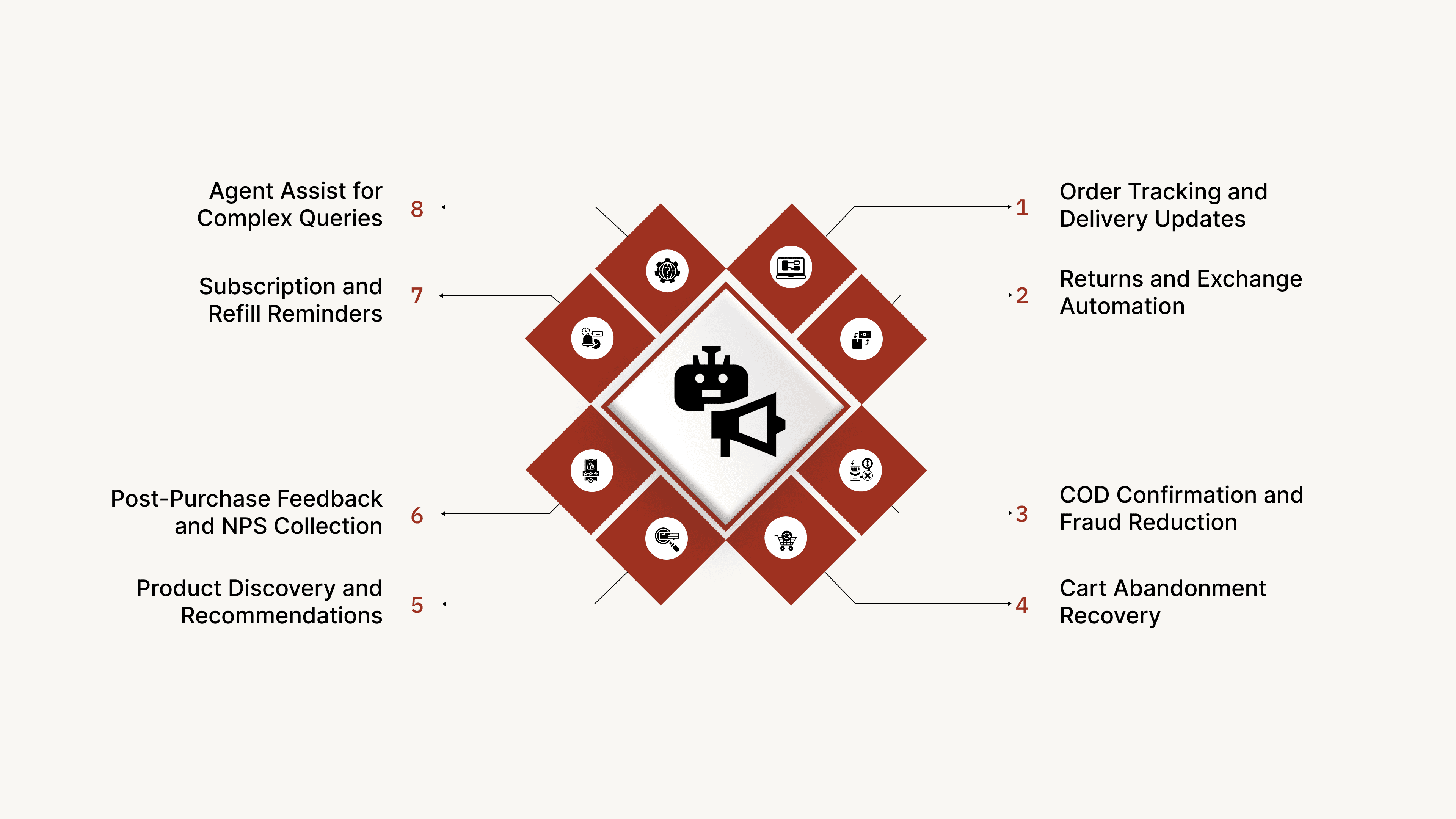
Conversational AI allows eCommerce brands to automate the interactions that generate the highest volume and the most operational friction. These are the workflows shoppers use daily and the ones that typically overwhelm support teams. Here are the areas where conversational AI creates the most impact:
1. Order Tracking and Delivery Updates
The majority of support queries in eCommerce are some version of “Where is my order?” Conversational AI can instantly fetch tracking information, share delivery timelines, notify customers of delays, and offer rescheduling options when needed.
2. Returns and Exchange Automation
Instead of long return forms or manual agent reviews, AI can check return eligibility, confirm pickup slots, explain return policies, and initiate the process in seconds. This speeds up the post-purchase journey and reduces load on human agents.
3. COD Confirmation and Fraud Reduction
Cash-on-delivery orders cause high RTO and fake orders. AI can automatically call or message customers to confirm intent, validate delivery address or availability, and reduce fraudulent or accidental orders before dispatch.
4. Cart Abandonment Recovery
Statista reports that 81% of online shopping carts are abandoned globally before a purchase is completed. Conversational AI helps recover these lost opportunities by following up when shoppers leave items behind.
It can answer product questions, resolve concerns like shipping cost or delivery time, and nudge customers back to checkout with context-aware reminders.
5. Product Discovery and Recommendations
Shoppers often need help choosing the right size, product type, variant, or bundle. AI can guide them the way an in-store assistant would: by asking questions, filtering options, and recommending the most relevant products.
6. Post-Purchase Feedback and NPS Collection
Instead of relying on low-response email surveys, AI can reach out through quick voice or chat interactions to collect ratings, NPS scores, and open-ended feedback immediately after delivery.
7. Subscription and Refill Reminders
For replenishable items, AI can proactively remind customers when it’s time to restock, check if they want to reorder, and complete the purchase flow within the same conversation.
8. Agent Assist for Complex Queries
When a human agent is needed, AI supports them by pulling customer history, summarizing prior interactions, and suggesting next steps. This reduces handling time and ensures more accurate responses.
These use cases represent what eCommerce brands can automate today to reduce operational effort, shorten resolution times, and create smoother, more responsive customer journeys.
Top eCommerce Brands Using Conversational AI
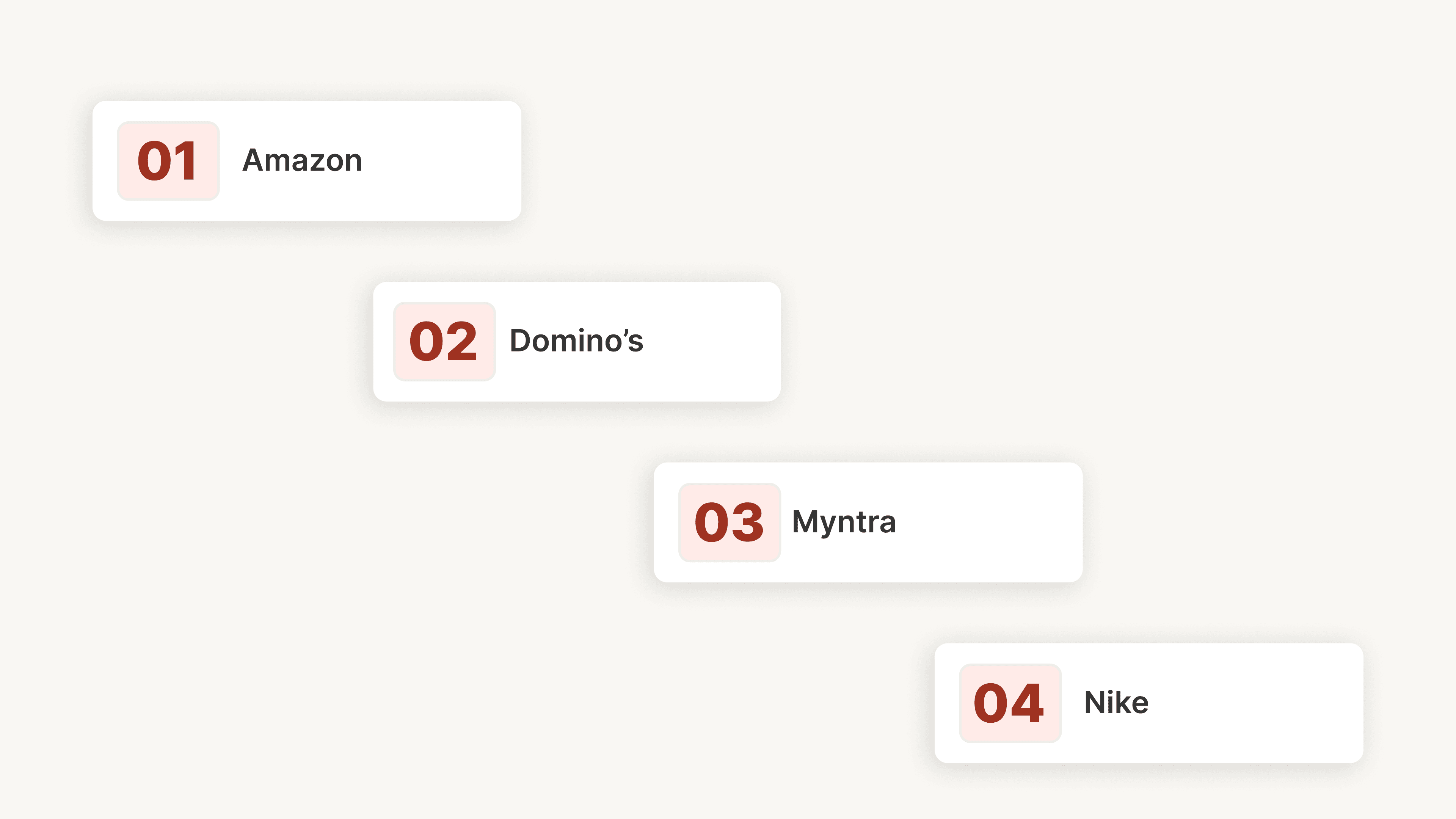
Leading eCommerce companies have already moved beyond basic chatbots and adopted conversational AI to scale support, reduce RTO, and increase conversions.
Here are some notable examples:
1. Amazon
Amazon uses Rufus, a generative AI shopping assistant that lets customers ask natural language questions, get product advice, and receive personalized recommendations directly within the Amazon Shopping app.
2. Domino’s
Domino’s deploys conversational AI-powered ordering systems, allowing customers to place and track orders through natural language conversations across phone, web, and messaging apps.
3. Myntra
Myntra has introduced conversational AI-powered assistants such as Maya, which help customers navigate its fashion catalog, answer queries, and provide customized suggestions in a natural conversational format.
4. Nike
Nike has built AI-driven shopping and support assistants that engage users with personalized product recommendations, interpret natural-language queries, and provide sizing and product information across its digital channels.
Top 5 Conversational AI Tools for eCommerce
With dozens of AI tools in the market, only a few have the depth, integrations, and reliability needed for large-scale eCommerce automation. These five solutions stand out for their eCommerce-focused automation and deep integration capabilities.
1. CubeRoot

CubeRoot is an enterprise-grade conversational AI platform designed to transform customer engagement across voice, chat, WhatsApp, and IVR. Unlike generic assistants, CubeRoot automates high-volume eCommerce interactions while reading from and writing to backend systems such as OMS and CRM, making every interaction actionable.
Key Features:
Human-like Multilingual Conversations: Engages customers naturally in English and regional languages, improving reach and completion rates.
Real-Time CRM and OMS Integration: Fetches order, payment, and support history instantly and updates records without manual effort.
Automated Workflows Across the Purchase Lifecycle: Handles order tracking, returns automation, COD confirmation, shipping updates, and feedback collection.
In-Call/Chat Intelligence: Includes real-time transcription, sentiment detection, and compliance monitoring for consistent experiences.
150+ Out-of-the-Box Integrations: Seamlessly connects with major CRMs, ticketing systems, dialers, and backend platforms for rapid deployment.
Rapid 14-Day Deployment: A structured Build-Train-Integrate-Scale framework enables fast go-live with dedicated success support.
Best Suited For
Mid-to-large eCommerce brands and marketplaces with high call or message volumes
Enterprises needing deep CRM/OMS automation and personalized customer journeys
Teams focused on reducing operating costs while improving conversion and retention
2. Intercom

Intercom is a conversational AI platform that combines live chat, AI-assisted bots, and a unified inbox to automate support and engage customers across web, mobile, and in-app messaging. Its AI assistant Fin helps resolve queries and drive personalized conversations.
Key Features
AI Resolution (Fin): Answers customer questions using intent understanding and knowledge-base content.
Unified Inbox: Centralizes chat, email, and in-app messages for faster team collaboration.
AI-Assisted Replies: Generates response drafts, conversation summaries, and classifications for agents.
Automated Workflows: Targeted messaging and lifecycle automation for support and engagement.
Best Suited For: Growth-stage and mid-enterprises needing a combined chat + support automation platform.
3. Ada
Ada is an omnichannel AI customer experience platform that automates customer support with intelligent AI agents capable of resolving a high percentage of interactions without human intervention. It supports chat, voice, email, and messaging channels.
Key Features
Omnichannel AI Agents: Automates conversations across chat, voice, WhatsApp, and email.
Multilingual Capabilities: Supports global audiences with accurate language models.
Deep System Integrations: Connects with CRMs, OMS, and support tools for real-time actions.
Workflow Playbooks: Build complex resolution paths without engineering dependency.
Best Suited For: Large eCommerce brands needing enterprise-grade automation across global support channels.
4. Verloop.io
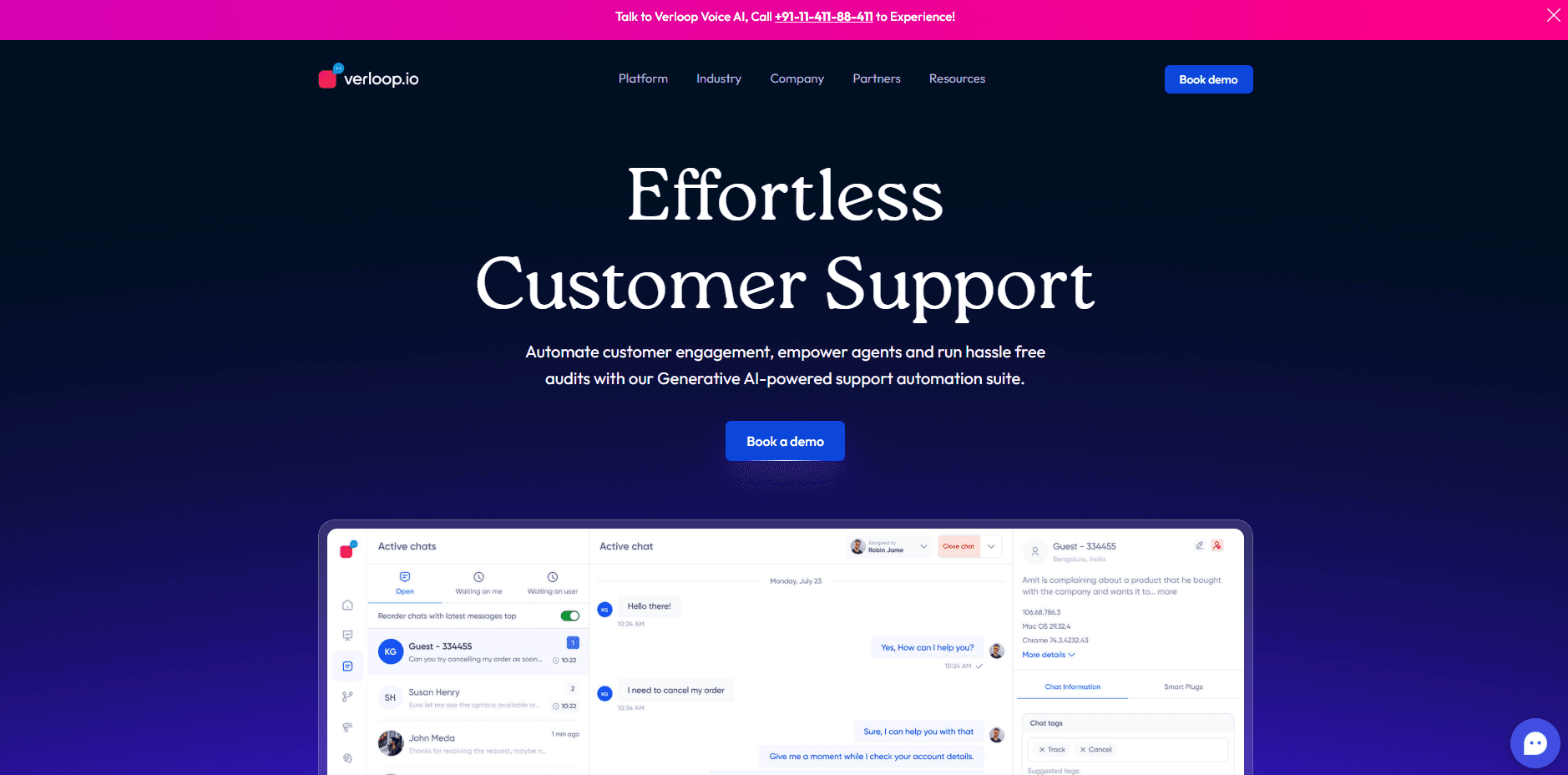
Verloop.io is a conversational AI platform focused on automating customer support and engagement with chat and voice agents that reduce workload and improve response accuracy across sales and service interactions.
Key Features
Chat + Voice Automation: Handles inquiries, follow-ups, and engagement across channels.
No-Code Builder: Create flows and bot logic without technical expertise.
Backend Integrations: Connects with CRMs, payment systems, and order databases.
Multilingual Bots: Supports regional and international audiences.
Best Suited For: Mid-to-large eCommerce teams that need flexible automation with deep backend integration.
5. Gorgias
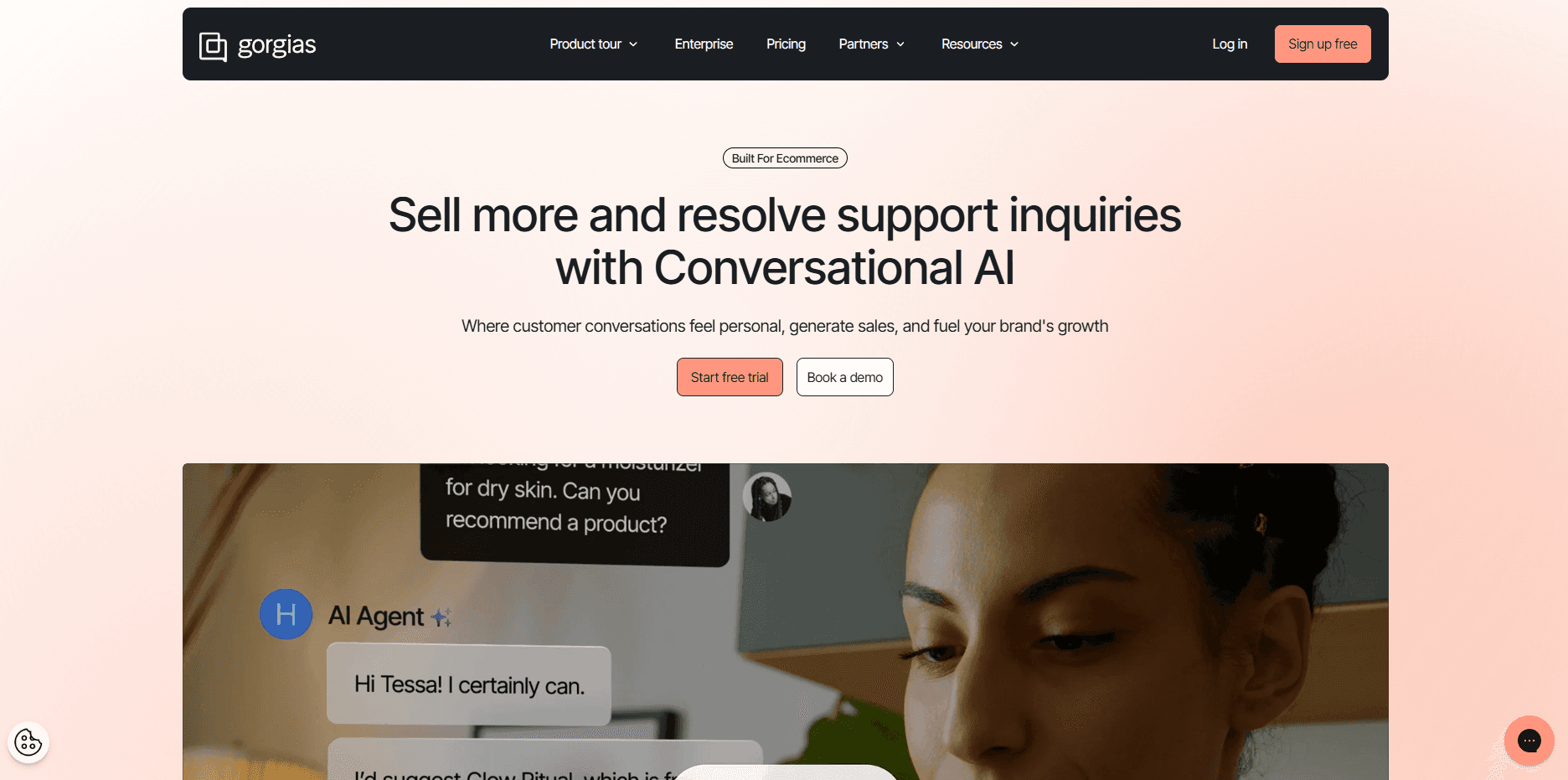
Gorgias is an eCommerce-centric helpdesk with built-in conversational AI that centralizes customer messages from multiple channels and automates routine support tasks while enabling deeper commerce actions.
Key Features
AI Ticket Automation: Instantly resolves common inquiries like WISMO, returns, and replacements.
Store Platform Integrations: Deep Shopify, BigCommerce, and Magento connections.
Unified Support Inbox: Centralizes email, chat, social, and reviews
Commerce Actions in Chat: Refund, reorder, or modify orders without switching tools.
Best Suited For: Shopify and BigCommerce stores that want a single helpdesk with built-in AI automation.
Also read: Conversational AI Examples and Use Cases in Various Industries
How to Pick the Right Conversational AI Tool for Your eCommerce Brand
Choosing the right AI platform comes down to finding a tool that aligns with your workflows, integrates deeply into your tech stack, and delivers measurable business impact. Here’s what to look for:
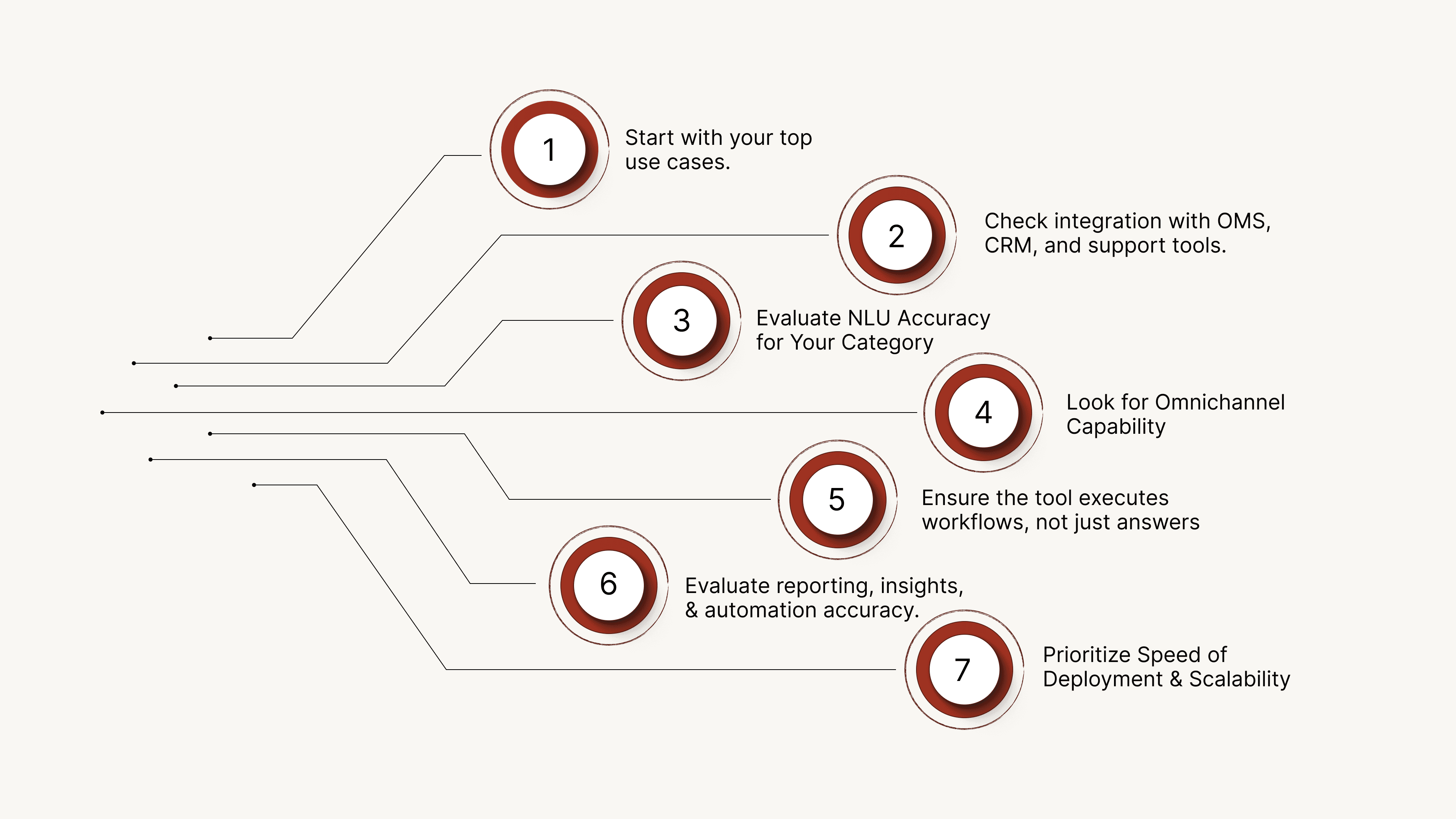
1. Start With Your Highest-Volume Use Cases
Identify the support queries that consume most of your team’s time and ensure the tool can automate them immediately. The right platform should handle order tracking, returns, COD confirmation, product questions, and cart recovery without heavy customization.
2. Check Integration Depth With OMS, CRM, and Support Tools
A strong conversational AI tool must fetch and update real customer data in real time. Look for platforms with native integrations that allow accurate order lookup, status updates, and CRM writebacks instead of generic scripted replies.
3. Evaluate NLU Accuracy for Your Category
Different eCommerce categories require domain-specific understanding. Choose a tool with models trained to recognize your product vocabulary, support multilingual queries, and understand accents and slang for higher intent detection accuracy.
4. Look for Omnichannel Capability
Your customer journeys span multiple touchpoints, so your AI tool should support seamless conversations across chat, WhatsApp, social channels, voice, and in-app messaging. This prevents customers from repeating themselves when switching channels.
5. Confirm the Tool Can Execute Workflows, Not Just Answer Questions
Real eCommerce automation requires action, not just information. Make sure the tool can process returns, initiate cancellations, confirm COD orders, send delivery updates, and trigger backend workflows automatically.
6. Assess Reporting, Insights, and Automation Accuracy
Choose a platform that provides clear visibility into deflection rates, automation accuracy, conversion uplift, and customer sentiment. Strong reporting ensures the AI is improving performance and not simply handling conversations.
7. Prioritize Speed of Deployment and Scalability
Look for platforms that offer prebuilt eCommerce templates and fast onboarding. The tool should scale effortlessly during peak sales periods, festive spikes, and campaign-heavy months without degrading performance.
The right conversational AI tool is the one that supports your real workflows, integrates cleanly, and consistently drives measurable improvements in CX, cost efficiency, and conversions.
Final Thoughts
Conversational AI is now essential for eCommerce brands aiming to scale efficiently. It powers faster support, reduces RTO, boosts conversions, and delivers the seamless experiences customers expect. But real impact comes from choosing a platform that integrates deeply with your OMS and CRM, understands customer intent, and automates workflows end-to-end.
CubeRoot is built for exactly that. Its Voice and Chat AI agents handle order tracking, returns, COD confirmation, delivery updates, and post-purchase engagement with human-like accuracy and real-time system updates.
If you’re ready to improve CX while reducing operational load, CubeRoot gives you the intelligence and automation to scale confidently.
Request a demo and see CubeRoot in action.
FAQs
1. How is conversational AI different from a normal chatbot?
Traditional chatbots follow predefined scripts. Conversational AI understands intent, remembers context, handles complex queries, and performs actions like updating orders or creating tickets, not just answering questions.
2. Which eCommerce tasks can conversational AI automate?
It can automate order tracking, return eligibility checks, delivery updates, COD confirmation, cart recovery, product discovery, subscription reminders, and post-purchase feedback collection.
3. Does conversational AI reduce support costs?
Yes. By deflecting repetitive queries and automating workflows, brands can reduce agent load, lower support costs, and improve response times without hiring more staff.
4. Can conversational AI help reduce RTO for COD orders?
Yes. AI can confirm COD orders proactively, detect risky behaviors, and send follow-ups, which significantly reduces return-to-origin losses.
5. Does conversational AI work with existing eCommerce platforms?
Most conversational AI solutions integrate with Shopify, Magento, WooCommerce, CRMs, and OMS tools through APIs or native connectors. The right platform will fit into your current stack easily.