Jan 13, 2026
AI Voice in Retail: Enhancing the Shopping Experience
The retail industry is undergoing a profound transformation. As customer expectations continue to rise, shoppers now demand faster responses, personalized interactions, and seamless experiences across every touchpoint. Research from PwC indicates that 93% of users who utilize voice assistants for retail tasks report high levels of satisfaction, citing the speed and "hands-free" convenience as primary drivers.
In this environment, AI voice technology is emerging as a powerful tool that bridges the gap between digital convenience and human-like engagement.
Voice interactions are no longer limited to simple commands or novelty use cases. Today, AI-powered voice solutions are redefining how customers search for products, place orders, seek support, and engage with retail brands: both online and offline. From voice-enabled shopping assistants to intelligent customer support agents, AI voice is becoming a critical component of modern retail strategy.
This blog explores how AI voice technology enhances the retail shopping experience, the key use cases driving adoption, and the benefits for both customers and businesses.
Key Takeaways
AI voice is redefining retail engagement by combining digital speed with human-like conversations, making shopping more intuitive, conversational, and accessible across channels.
Voice-driven interactions enhance the entire customer journey - from product discovery and personalized recommendations to seamless ordering and post-purchase support.
Scalability without service compromise is a major advantage, as AI voice systems handle high interaction volumes consistently, even during peak demand periods.
Real-time intelligence matters: integration with inventory, order management, CRM, and ERP systems ensures accurate, context-aware, and trustworthy responses.
Personalization at scale is now achievable, with AI voice using customer data to drive relevant recommendations, repeat purchases, and higher average order values.
Operational efficiency improves significantly, as routine queries are automated, costs are reduced, and human agents are freed to focus on complex issues.
Actionable insights from voice data help retailers optimize marketing, inventory planning, and customer service strategies.
The future of retail voice lies in predictive, omnichannel, and multilingual experiences, bridging digital and physical environments through smart ecosystems.
Understanding AI Voice Technology in Retail
AI voice technology in retail refers to the use of artificial intelligence, natural language processing (NLP), and speech recognition to enable human-like conversations between customers and digital systems. Unlike traditional IVR systems or rigid chatbots, modern AI voice solutions understand intent, context, and conversational flow.
In retail environments, AI voice systems can:
Understand spoken queries in natural language
Respond intelligently and contextually
Access real-time backend data such as inventory, orders, and customer profiles
Carry out actions such as placing orders or initiating returns
These capabilities allow retailers to deliver conversational commerce, where customers interact with brands as naturally as they would with a sales associate.
AI voice technology can be deployed across multiple channels, including:
Phone-based voice bots for customer service
Smart speakers and voice assistants
Mobile apps and websites
In-store kiosks and self-service systems
By unifying these touchpoints, retailers can create consistent, engaging, and frictionless shopping journeys.
Why AI Voice Matters in Modern Retail?
Retailers today face a complex mix of challenges, high competition, rising operational costs, staffing shortages, and customers who expect instant gratification. AI voice technology directly addresses these challenges by enhancing both customer experience and operational efficiency.
This is why AI Voice matters in modern retail:
Meeting Evolving Customer Expectations
Today’s shoppers value:
Speed and convenience
Personalized recommendations
24/7 availability
Minimal friction during purchase and support
AI voice enables retailers to meet these expectations by offering instant, conversational interactions without long wait times or complicated navigation.
Scaling Without Compromising Quality
Human agents alone cannot scale infinitely, especially during peak periods such as festive sales or promotional campaigns. AI voice systems can handle thousands of concurrent interactions while maintaining consistent service quality, ensuring customers are never left waiting.
Also Read: AI Voice Bots for Payment Reminders in Retail
How AI Voice Enhances the Shopping Experience?
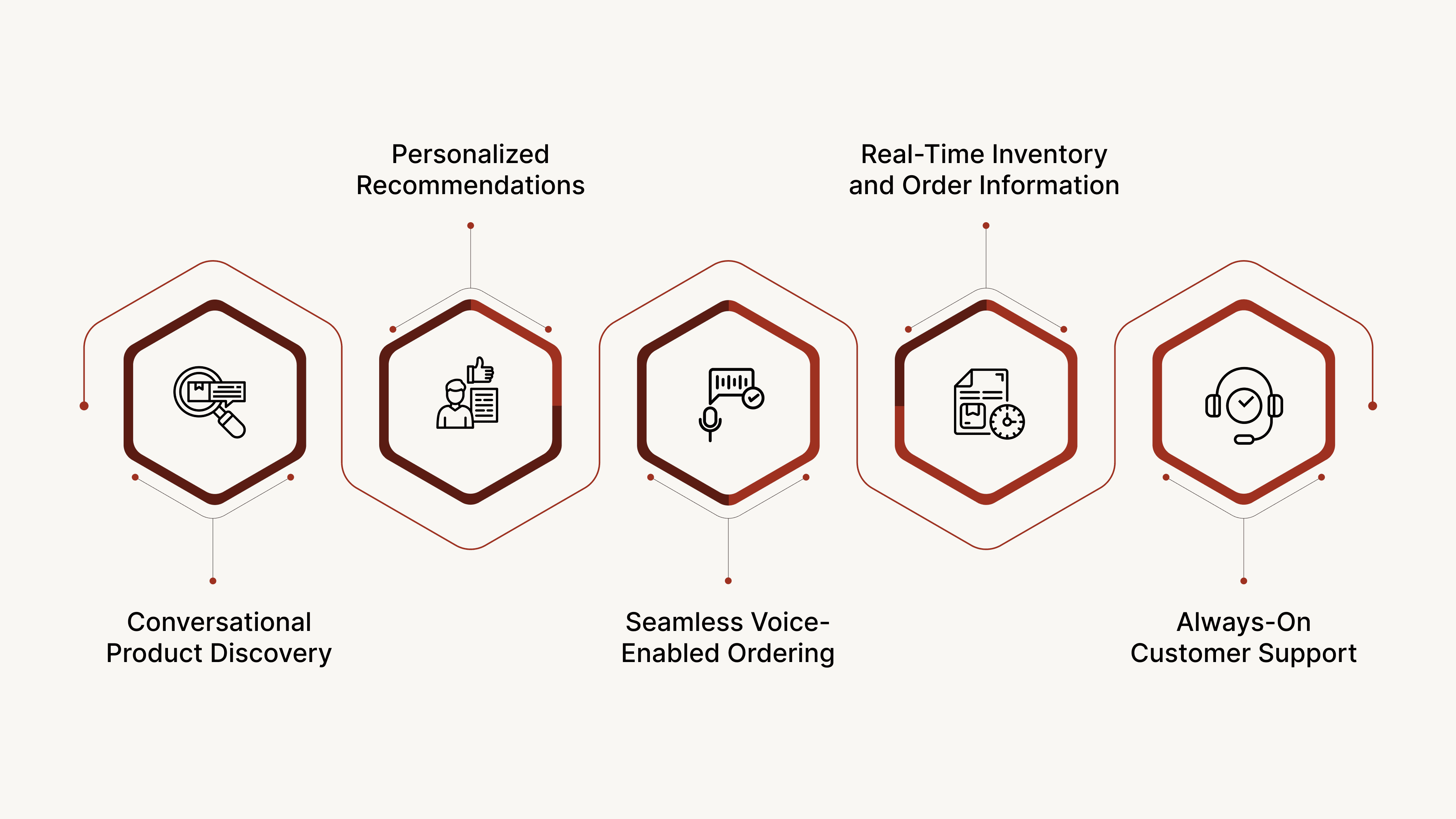
AI voice technology enhances the retail shopping experience by making interactions faster, more intuitive, and highly personalized at every stage of the customer journey. From helping customers discover products through natural conversation to enabling seamless ordering and providing instant post-purchase support, voice AI removes friction across touchpoints.
By combining convenience, intelligence, and human-like engagement, AI voice transforms how customers interact with retail brands - both online and in-store.
Here is how AI Voice enhances the shopping experience:
1. Conversational Product Discovery
Traditional product searches often rely on keywords and filters, which can be limiting or time-consuming. AI voice transforms product discovery into a natural conversation.
Customers can ask questions such as:
“Show me running shoes under ₹5,000.”
“Which smartphones have the best camera?”
“What do you recommend for winter skincare?”
AI voice assistants analyze intent, preferences, and context to provide relevant suggestions. This conversational approach mirrors the experience of speaking with an in-store sales assistant, making shopping more intuitive and enjoyable.
2. Personalized Recommendations at Scale
Personalization is no longer optional; it is expected. AI voice systems use customer data such as purchase history, browsing behavior, and preferences to deliver tailored recommendations in real time.
For example:
Suggesting complementary products (cross-selling)
Recommending upgrades or premium alternatives (upselling)
Reordering frequently purchased items with a single command
Unlike generic promotions, voice-based personalisation feels natural and helpful, increasing customer trust and engagement.
3. Seamless Voice-Enabled Ordering
AI voice technology enables customers to place orders using simple voice commands. Whether it is reordering groceries, booking services, or purchasing fashion items, voice-based ordering removes unnecessary steps from the buying process.
Benefits include:
Faster checkout
Reduced cart abandonment
Hands-free convenience, especially on mobile devices
Voice ordering is particularly valuable for repeat purchases, where customers already know what they want and prefer speed over browsing.
4. Real-Time Inventory and Order Information
One of the most common causes of customer frustration is uncertainty about product availability, delivery timelines, or order status. AI voice systems can instantly access backend systems to provide accurate, real-time information.
Customers can ask:
“Is this item available in my size?”
“When will my order be delivered?”
“Has my return been processed?”
Instant answers reduce frustration, build confidence, and minimize the need for human agent intervention.
5. Always-On Customer Support
Customer support is a critical aspect of the retail experience. AI voice assistants provide 24/7 support, handling routine queries such as:
Order tracking
Return and refund policies
Store hours and locations
Product usage instructions
By resolving common issues automatically, AI voice systems free up human agents to focus on complex or emotionally sensitive interactions, improving overall service quality.
Wondering how an AI voice could work in your retail environment?
CubeRoot’s AI voice platform integrates seamlessly with existing retail systems to deliver intelligent, scalable, and human-like customer interactions without disrupting your operations.
See how CubeRoot enables voice-driven retail experiences at scale.
Real-World Use Cases of AI Voice in Retail
AI voice technology is already delivering tangible value across diverse retail environments. From e-commerce platforms and physical stores to quick-service restaurants and customer support centres, retailers are using voice AI to streamline operations and enhance customer interactions.
These real-world use cases demonstrate how AI voice enables faster service, personalized engagement, and scalable support, helping brands improve efficiency while meeting rising customer expectations across multiple touchpoints.
Here are some of the most common real-world use cases of AI Voice in Retail:
Voice Assistants for E-Commerce: E-commerce platforms use AI voice assistants to help customers search products, place orders, and track deliveries. Voice commerce is particularly effective for repeat purchases and subscription-based models.
In-Store Voice Kiosks: Physical stores deploy voice-enabled kiosks to assist customers with product information, directions, and availability. This reduces dependency on floor staff while maintaining a high level of service.
Quick-Service Restaurants and Food Retail: Voice AI enables faster ordering, customization, and payment, especially during peak hours. Customers benefit from speed, while businesses improve throughput and order accuracy.
Omnichannel Customer Support: Retailers integrate AI voice with call centres to handle high call volumes efficiently. Voice bots can resolve common issues or seamlessly transfer complex cases to human agents with full context.
Also Read: AI Agents in Banking: Boost Efficiency and Customer Experience in 2025
How AI Voice Works Behind the Scenes?
Although AI voice interactions feel effortless to customers, they are powered by a sophisticated combination of technologies working in the background. From accurately converting speech into text to understanding intent, maintaining conversational context, and retrieving real-time data from enterprise systems, AI voice platforms orchestrate multiple processes simultaneously.
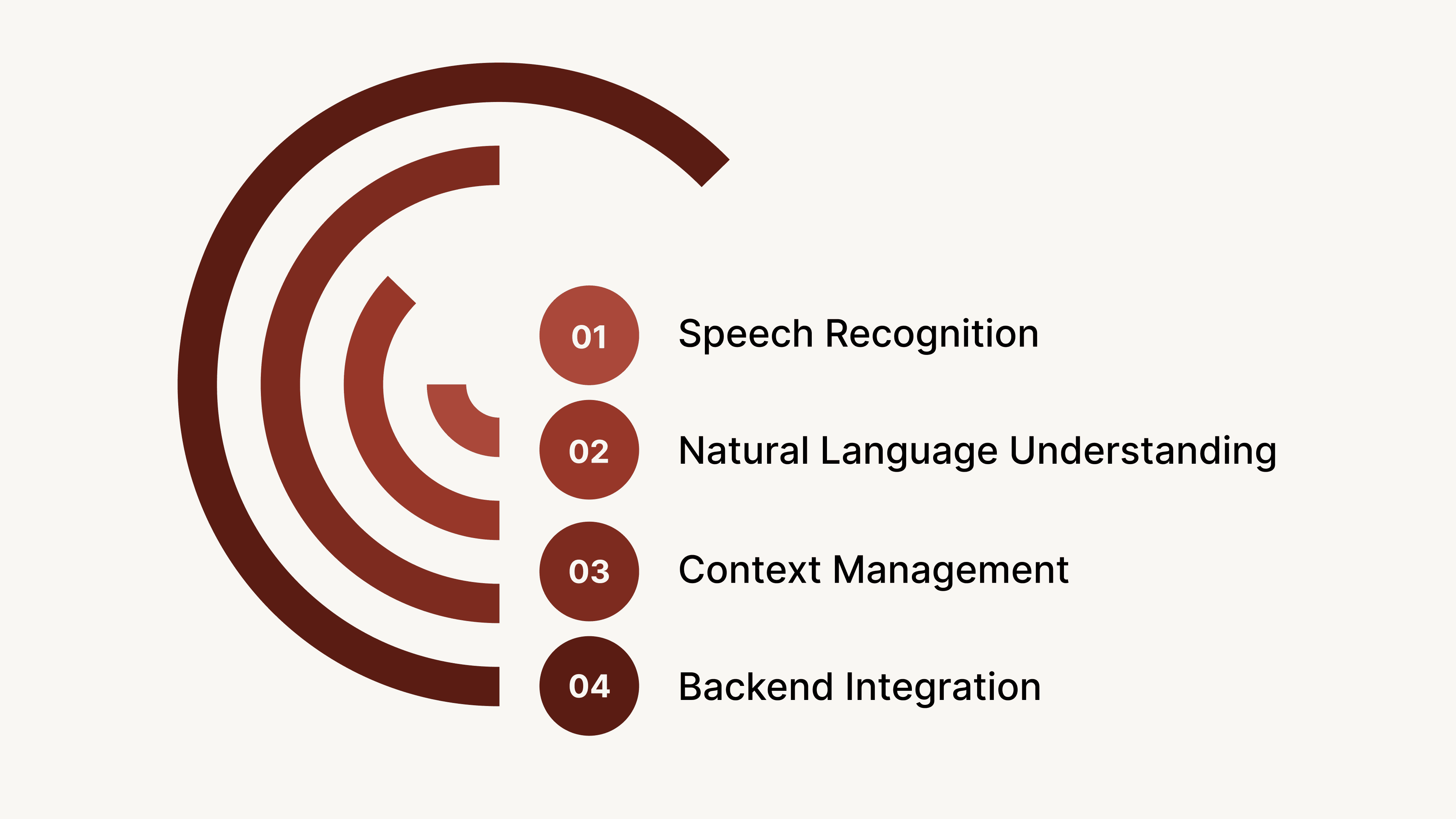
This behind-the-scenes intelligence ensures fast, accurate, and natural conversations. CubeRoot’s AI voice platform brings these technologies together seamlessly, enabling reliable, scalable retail interactions.
These are the BTS of AI Voice:
1. Speech Recognition
Speech recognition is the first step in any AI voice interaction. The system captures spoken input and converts it into text with high accuracy, even in the presence of background noise, varying accents, or different speaking styles. Advanced models are trained on diverse datasets, allowing retailers to serve customers across regions and languages without compromising understanding or performance.
2. Natural Language Understanding (NLU)
Once speech is converted to text, Natural Language Understanding (NLU) interprets the meaning behind the words. Instead of relying on fixed commands, NLU identifies customer intent, extracts key details such as product names or order numbers, and recognizes sentiment. This enables the system to respond appropriately, even when customers phrase the same request in different ways.
3. Context Management
AI voice systems are designed to manage context throughout a conversation. They remember previous questions, responses, and actions, allowing for multi-turn interactions that feel natural and coherent. Customers can refine requests, ask follow-up questions, or change decisions without starting over, resulting in smoother and more human-like conversations.
4. Backend Integration
Integration with backend systems such as CRM, ERP, inventory, and order management platforms allows AI voice systems to deliver accurate, real-time responses. Whether checking stock availability, tracking orders, or accessing customer profiles, seamless integration ensures reliability and relevance.
Business Benefits of AI Voice for Retailers
AI voice technology delivers significant business value that extends well beyond improved customer experience. By automating routine interactions and enabling intelligent, data-driven conversations, retailers can reduce operational costs, increase sales efficiency, and maintain consistent service quality at scale.
Additionally, AI voice systems generate actionable insights from customer interactions, empowering retailers to make informed decisions across marketing, inventory management, and customer support strategies.
Here are some of the benefits of AI Voice:
1. Improved Operational Efficiency
AI voice systems automate high-volume, repetitive customer interactions such as order tracking, store information, and return requests. This reduces dependency on human agents, shortens average handling time, and enables support teams to focus on complex or high-value issues. As a result, retailers can manage peak demand efficiently while significantly lowering customer service and operational costs.
2. Increased Sales and Conversion Rates
By reducing friction in the buying journey, AI voice accelerates purchasing decisions. Customers can search, compare, and order products through natural conversation, leading to faster checkouts and fewer drop-offs. Additionally, AI-driven upselling and cross-selling, based on real-time context and customer preferences, boost average order value while reducing cart abandonment.
3. Consistent Service Quality
Unlike human-led interactions, AI voice systems deliver uniform, brand-aligned responses across all touchpoints. Whether customers engage via call centres, mobile apps, or in-store kiosks, they receive the same accurate information and service standards. This consistency strengthens brand trust and improves overall customer satisfaction.
4. Actionable Insights from Voice Interactions
Every voice interaction generates valuable data. Retailers gain insights into customer intent trends, recurring pain points, and product demand patterns. These insights help optimize marketing campaigns, improve inventory planning, refine product offerings, and enhance service strategies, turning conversations into a powerful source of business intelligence.
Also Read: Voice AI in Real Estate: Transforming Client Engagement
The Future of AI Voice in Retail
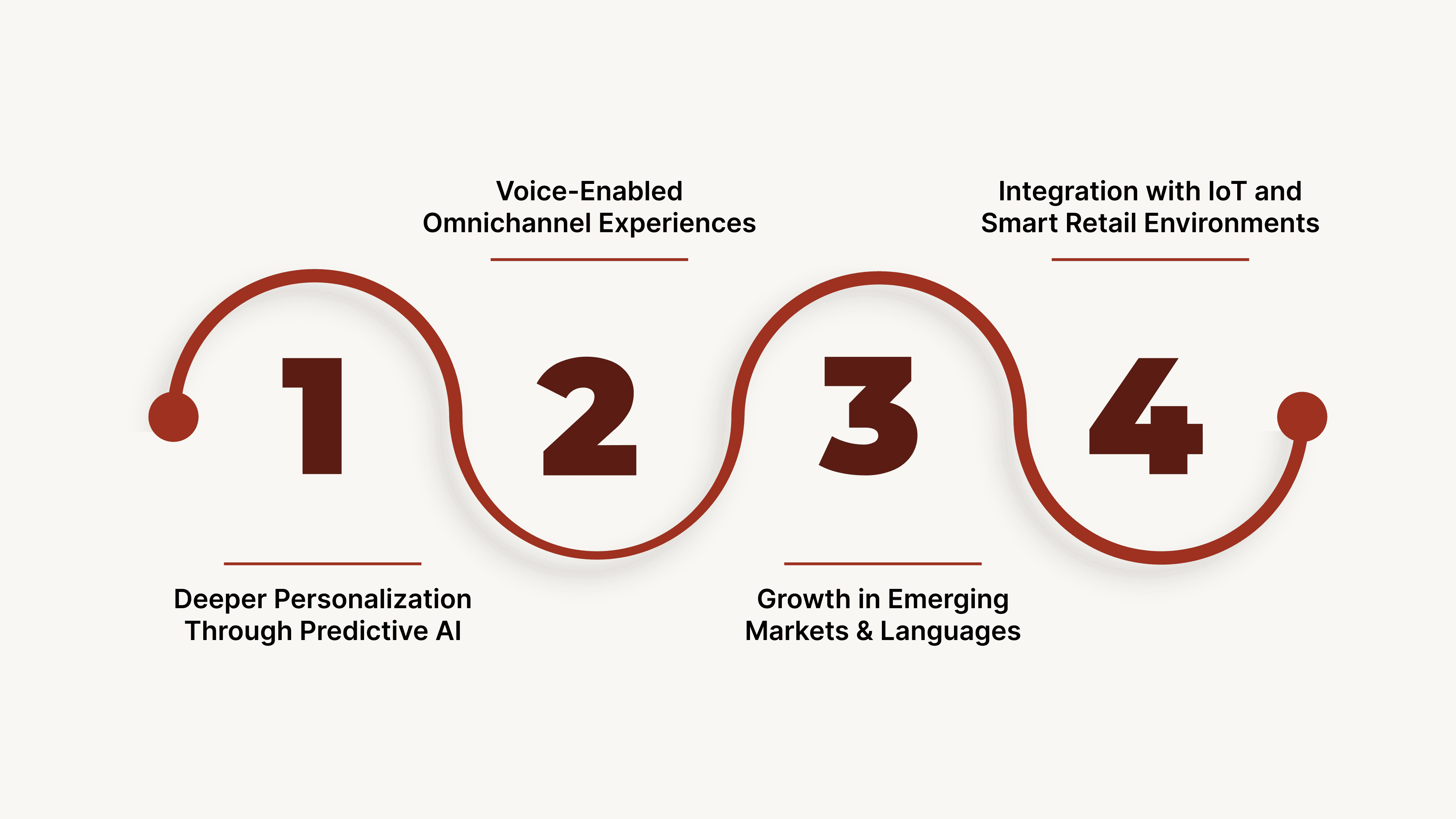
The future of AI voice in retail points towards more intelligent, connected, and personalized customer experiences. As voice technology continues to evolve, it will move beyond basic interactions to become a core part of retail engagement strategies.
Advances in predictive AI, omnichannel integration, multilingual capabilities, and smart retail ecosystems will enable brands to anticipate customer needs, deliver seamless interactions across touchpoints, and make voice a natural, everyday interface for shopping and support.
Prospects of AI Voice in Retail:
1. Deeper Personalization Through Predictive AI
AI voice systems will increasingly shift from reactive responses to predictive engagement. By analyzing past purchases, browsing behavior, and real-time context, voice assistants will proactively suggest products, replenishments, and offers, creating highly personalized, timely interactions that feel intuitive rather than promotional.
2. Voice-Enabled Omnichannel Experiences
Voice will unify retail touchpoints across mobile apps, websites, call centres, and physical stores. Customers will be able to start an interaction on one channel and continue it on another without losing context, ensuring consistent, seamless journeys throughout the buying lifecycle.
3. Increased Adoption in Emerging Markets and Regional Languages
As speech recognition improves, AI voice will support regional languages, dialects, and accents at scale. This will make retail services more accessible, especially in emerging markets where voice-first interactions often outperform text-based interfaces.
4. Integration with IoT and Smart Retail Environments
AI voice will integrate with IoT devices such as smart shelves, connected kiosks, and in-store sensors. Customers will interact with physical retail spaces through voice, enabling real-time assistance, personalized offers, and intelligent store navigation, bridging the gap between digital intelligence and physical shopping environments.
Why CubeRoot is Your Ideal Partner for Conversational AI?
Cuberoot helps enterprises deploy Voice AI agents that handle real-world customer conversations at scale, across both inbound and outbound calls. With 150+ out-of-the-box integrations into CRMs, ticketing systems, and collaboration platforms, teams can plug Voice AI into their existing stack with minimal friction.
As enterprises move toward voice-first, multilingual, and automation-led journeys, they combine technology and implementation support to make these transitions successful.
Voice AI agents for lead qualification, customer support, debt collection, feedback collection, and more, designed for BFSI, NBFCs, consumer durables, and real estate.
Fast deployment with an implementation framework that takes you from build and training to integration and scale in about 14 days.
Deep backend connectivity through 150+ pre-built integrations, so agents can pull data, update records, and complete tasks inside your existing systems.
High-volume handling for outreach, collections, and support, with examples like dialling 10,000+ prospects daily and resolving up to 70% of queries via automation.
Enterprise-grade security with ISO 27001 and SOC 2-ready controls, encrypted call logs, and privacy-first data handling hosted on leading cloud providers in India.
GenAI-powered capabilities, such as a prompt builder, real-time transcription summaries, and in-call sentiment tracking, are designed to improve performance and customer experience.
If you want to see how these capabilities fit your specific use cases, you can connect with the CubeRoot team for a quick walkthrough.
Conclusion
AI voice technology is reshaping the retail market by making shopping faster, smarter, and more human-like. From conversational product discovery to seamless ordering and always-on customer support, AI voice enhances every stage of the shopping experience.
For retailers looking to differentiate themselves, improve efficiency, and meet rising customer expectations, AI voice is no longer a luxury. Instead, it is a necessity now. With the right technology partner, such as CubeRoot, businesses can harness the power of AI voice to deliver meaningful, scalable, and future-ready retail experiences.
Ready to transform retail interactions with AI voice? Explore CubeRoot’s AI Voice Solutions and future-proof your retail engagement today.
FAQs
1. What is AI voice technology in retail?
AI voice technology in retail uses conversational AI and natural language processing (NLP) to allow customers to interact with brands through spoken commands. It enables voice-based product search, order placement, customer support, and personalized recommendations across online and in-store channels.
2. How does AI voice improve the shopping experience for customers?
AI voice enhances convenience by offering hands-free, instant assistance. Customers can quickly find products, check availability, track orders, or get recommendations without navigating complex menus, resulting in faster, more intuitive shopping journeys.
3. Can AI voice solutions integrate with existing retail systems?
Yes. Modern AI voice platforms, such as CubeRoot’s voice AI solutions, integrate seamlessly with existing CRM, ERP, inventory management, and payment systems. This ensures real-time data access, accurate responses, and personalized customer interactions.
4. Is AI voice technology secure for retail transactions?
AI voice systems are designed with enterprise-grade security, including encrypted data handling, secure authentication, and compliance with privacy regulations. When implemented correctly, they provide safe and reliable support for customer interactions and transactions.
5. What types of retailers benefit most from AI voice solutions?
AI voice technology benefits a wide range of retailers, including e-commerce platforms, large retail chains, quick-service restaurants, and omnichannel brands. Any business handling high customer interaction volumes can use voice AI to improve efficiency, scalability, and customer satisfaction.