Dec 5, 2025

Voice AI in Real Estate: Transforming Client Engagement
The real estate industry is one of the most competitive and fast-paced sectors, requiring constant engagement with clients, efficient management of property listings, and timely responses to customer inquiries. However, with the increasing volume of transactions and inquiries, providing prompt and personalized service has become a significant challenge.
This is where voicebots are stepping in, offering real estate businesses an innovative way to manage client interactions, improve service delivery, and increase operational efficiency. By using the power of artificial intelligence (AI), these bots not only answer queries but can also assist in scheduling viewings, providing property details, and even helping clients complete transactions.
In this blog, we’ll explore the various ways voicebots are being used in real estate, the benefits they offer, and how they are transforming the way businesses interact with clients in this sector.
Key Takeaways
24/7 Customer Engagement: Voicebots are always available, offering potential clients round-the-clock access to property information, pricing details, and appointment scheduling.
Enhanced Efficiency: Automating repetitive tasks such as property inquiries and follow-ups frees up agents to focus on more high-value activities.
Personalized Client Interactions: By leveraging AI and machine learning, voicebots can offer customized recommendations and respond to queries based on individual client preferences.
Lead Generation and Qualification: Voicebots can assist in gathering essential information from leads, qualifying them, and passing them along to human agents when necessary.
Seamless Integration: Voicebots integrate smoothly with CRM and property management systems, ensuring accurate, real-time updates on listings and client interactions.
Why AI Voicebots Are Crucial for Real Estate in 2025?
The real estate industry faces growing demands for faster, more efficient customer interactions. Traditional methods can’t keep up with the growing volume of inquiries or the need for personalized, immediate responses.
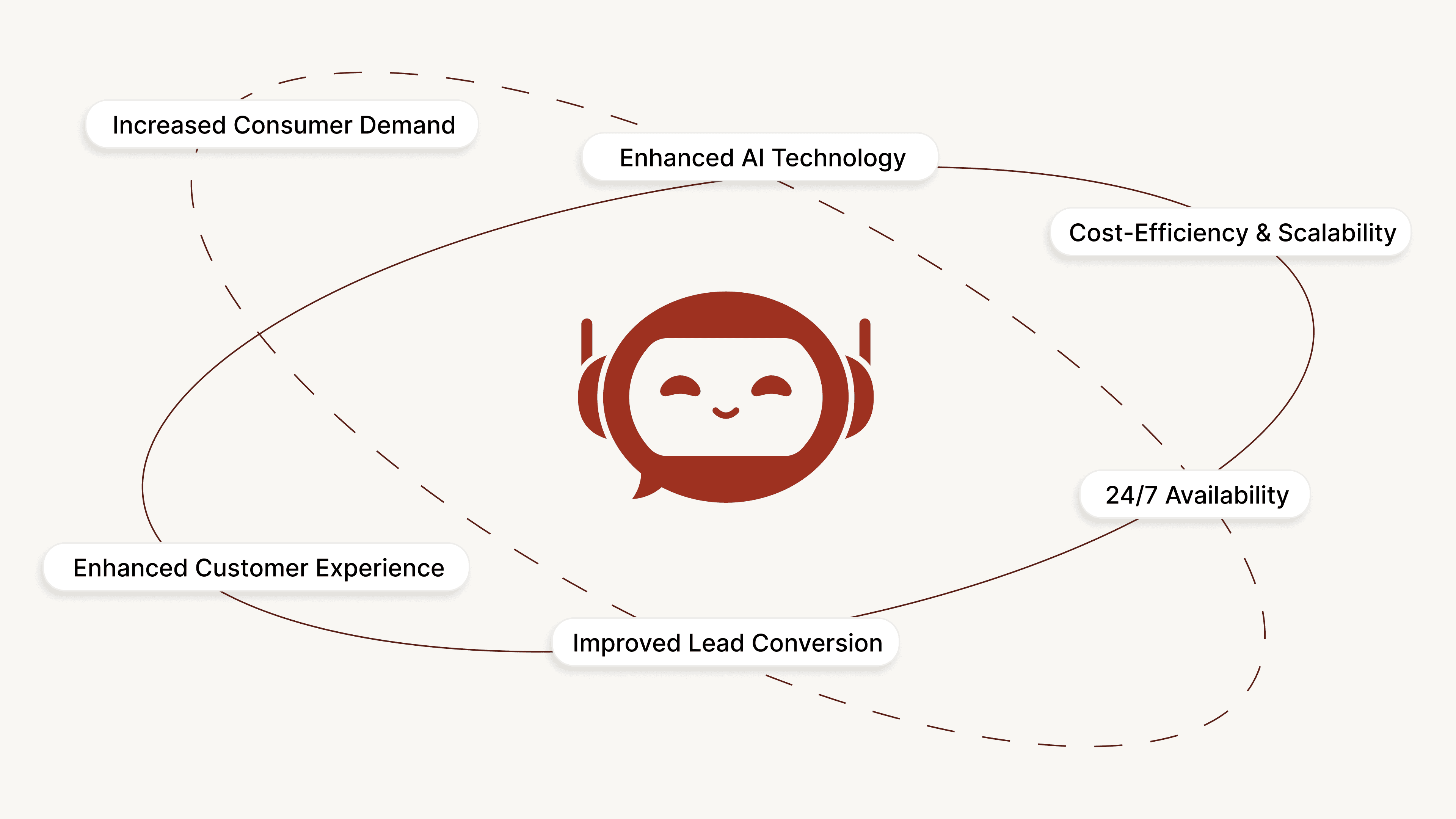
Key factors driving this change include:
Increased Consumer Demand: As virtual assistants like Siri, Alexa, and Google Assistant gain popularity, consumers now expect immediate, voice-driven responses in various industries, including real estate. This shift is compelling real estate businesses to adopt voice AI to meet client expectations for fast, seamless interactions.
Enhanced AI Technology: Advances in Natural Language Processing (NLP), machine learning, and speech recognition have made voice AI more capable of handling complex, real estate-specific inquiries. These improvements allow voicebots to offer intelligent, human-like conversations, making them more efficient and effective in assisting customers.
Cost-Efficiency and Scalability: With voice AI handling common inquiries and administrative tasks, real estate businesses can lower operational costs. This scalability means firms can handle more clients without significantly increasing resources, improving both cost-effectiveness and efficiency.
24/7 Availability: Voice AI allows businesses to provide around-the-clock service without the need for overtime or extra staffing. Clients can inquire about property details, pricing, or availability at any time, boosting engagement and client satisfaction.
Improved Lead Conversion: By automating the initial stages of lead qualification and nurturing, voicebots can help filter high-quality leads, allowing human agents to focus on more complex, high-value interactions. This improves conversion rates and helps businesses grow faster.
Enhanced Customer Experience: Voice AI offers personalized, real-time interactions based on client preferences, previous inquiries, and browsing history. This creates a more engaging and tailored experience that can lead to increased client retention and loyalty.
Next, let’s explore how AI voicebots are transforming core real estate processes like lead qualification and property inquiries.
How AI Voicebots Transform Real Estate Operations?
AI voicebots are reshaping the real estate industry by automating routine tasks and enhancing operational efficiency. Here’s how voice AI is transforming key real estate processes:
1. Lead Qualification
Automates Initial Interaction: Voicebots engage with leads, asking questions about budget, preferences, and desired property features.
Qualifies Leads: Based on responses, voicebots assess lead quality and forward high-potential leads to agents.
Speeds Up Response Times: Voicebots ensure leads receive instant attention, preventing delays and improving conversion chances.
2. 24/7 Property Information Center
Around-the-Clock Availability: Clients can get instant property details, pricing, and availability at any time.
Accurate, Real-Time Responses: Voicebots pull from up-to-date listings, ensuring information is accurate and timely.
Increases Engagement: Offering constant access ensures no potential leads are missed outside business hours.
3. Automated Showing Scheduling
Simplifies Appointment Booking: Voicebots automatically schedule property viewings by integrating with agents' calendars.
Reduces Back-and-Forth: Eliminates manual scheduling, saving time for both clients and agents.
Maximizes Agent Efficiency: Agents spend less time on logistics and more on client interactions and deal negotiations.
4. Intelligent Follow-up Sequences
Automates Follow-Ups: Voicebots follow up with leads automatically, reminding them of properties they’ve shown interest in.
Provides Relevant Suggestions: Offers additional property recommendations based on client preferences.
Increases Lead Conversion: Consistent communication boosts the likelihood of turning leads into clients.
Now, let’s look at the top AI voicebot tools available for real estate businesses.
Also Read: What Is Customer Satisfaction And How To Improve It?
Top 5 AI Voicebot Tools for Real Estate
Choosing the right AI voicebot for your real estate business requires evaluating key features, integrations, and scalability. Here’s a comparison of the top 5 AI voicebot tools to help streamline operations and enhance client engagement.
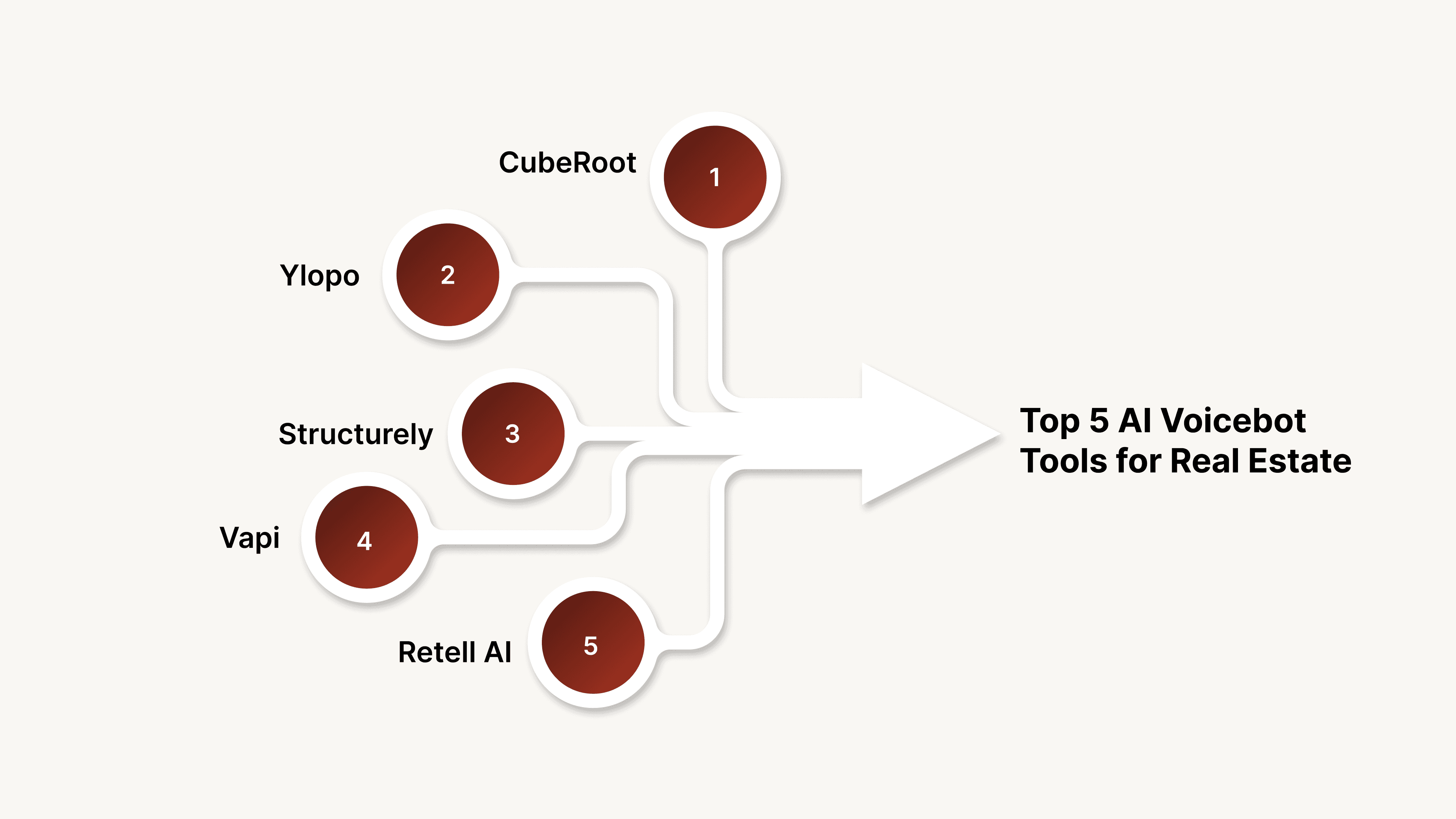
1. CubeRoot
Features:
Customizable voicebot solutions tailored to real estate needs.
Real-time property updates pulled directly from MLS or internal databases.
Seamless integration with CRM, email marketing tools, and property management platforms.
Automates lead qualification, scheduling, and follow-ups.
AI-driven personalization to respond to customer queries based on past interactions.
Advanced reporting and analytics to track performance and optimize lead conversion.
Best For: Real estate businesses looking for an all-in-one solution to streamline customer support, automate lead qualification, and enhance engagement with intelligent voice interactions.
2. Ylopo
Features:
AI-driven lead engagement and nurturing across multiple channels.
Personalized property recommendations based on client behavior and preferences.
Automated follow-ups and drip campaigns designed for maximum lead conversion.
Seamless CRM integration for real-time client data synchronization.
Analytics dashboard to track engagement, lead status, and conversion rates.
Best For: Real estate agencies that want a marketing-focused voicebot platform to increase lead generation, automate client nurturing, and enhance online engagement.
3. Structurely
Features:
Advanced AI conversational capabilities for lead qualification and nurturing.
Integration with top real estate CRMs like Zillow, Redfin, and Realtor.com.
Multi-channel communication support (text, email, voice) for consistent client interactions.
Real-time, personalized responses based on client data and interaction history.
Provides detailed reporting to track lead progress, interaction quality, and ROI.
Best For: Agencies looking to automate lead qualification, follow-ups, and initial client communications with a platform that specializes in AI-driven interactions.
4. Vapi
Features:
Customizable voicebot SDK for developers to build and integrate voice solutions.
Integration with property databases, CRM, and appointment scheduling tools.
Supports multi-channel engagement, including voice, text, and email.
Real-time property availability updates, client interactions, and personalized messaging.
Easily scalable to handle increased client interactions during high-demand periods.
Best For: Real estate developers and tech teams looking for a highly customizable, developer-friendly platform that can be tailored to specific business requirements.
5. Retell AI
Features:
Deep learning and NLP to improve conversation quality and response accuracy.
Handles complex queries related to property details, availability, and scheduling.
Multi-language support makes it ideal for businesses serving diverse markets.
Advanced analytics to optimize customer engagement and measure bot performance.
Seamless integration with existing CRM, property management, and lead generation tools.
Best For: Real estate businesses seeking a high-quality, reliable voicebot solution with a focus on conversation depth and customer satisfaction.
Also Read: Everything You Need To Know About AI Assistants
What Steps Should You Take to Implement AI Voicebots Successfully?
A well-planned strategy, proper setup, and continuous optimization are essential for success. Here’s what you need to know to ensure a smooth integration of voice AI.
1. Choose the Right Platform and Customize It
Select a platform that integrates with your CRM and property management systems. Customize the bot to handle real estate-specific queries, including property details, pricing, and scheduling.
Example: CubeRoot’s voicebot was integrated with a real estate agency’s CRM and MLS system, automating real-time property inquiries and scheduling, improving client engagement.
2. Train Your Team
Ensure your team understands the bot’s functionality, how to troubleshoot, and how to use data from the bot to prioritize leads.
Example: Structurely’s chatbot helped agents qualify leads automatically, allowing them to focus on high-potential clients and improve conversion rates.
3. Test and Refine the Bot
Before full deployment, test the bot’s ability to handle real estate inquiries. Refine its NLP capabilities based on feedback and real-world use.
Example: Retell AI’s bot was tested internally for two weeks. After identifying issues with certain property queries, they fine-tuned the NLP model for better accuracy.
4. Gradual Integration and Scaling
Start by deploying the bot on a few key platforms. Monitor performance before scaling it across all channels.
Example: Ylopo first integrated their bot on their website and social media. Once lead qualification was automated successfully, they expanded to email and SMS.
5. Continuous Monitoring and Optimization
Monitor performance and use analytics to identify areas for improvement. Continuously optimize the bot’s functionality.
Example: Vapi used performance data to identify gaps in financial query handling, then added follow-up features to connect leads with agents for specific questions.
Now, let’s look at the common mistakes that can hinder success.
Also Read: How To Handle Customer Complaints Effectively?
Pitfalls to Avoid When Implementing Voice AI in Real Estate
Here’s a guide to the most frequent issues and how to avoid them, ensuring your voice AI integration delivers maximum results.
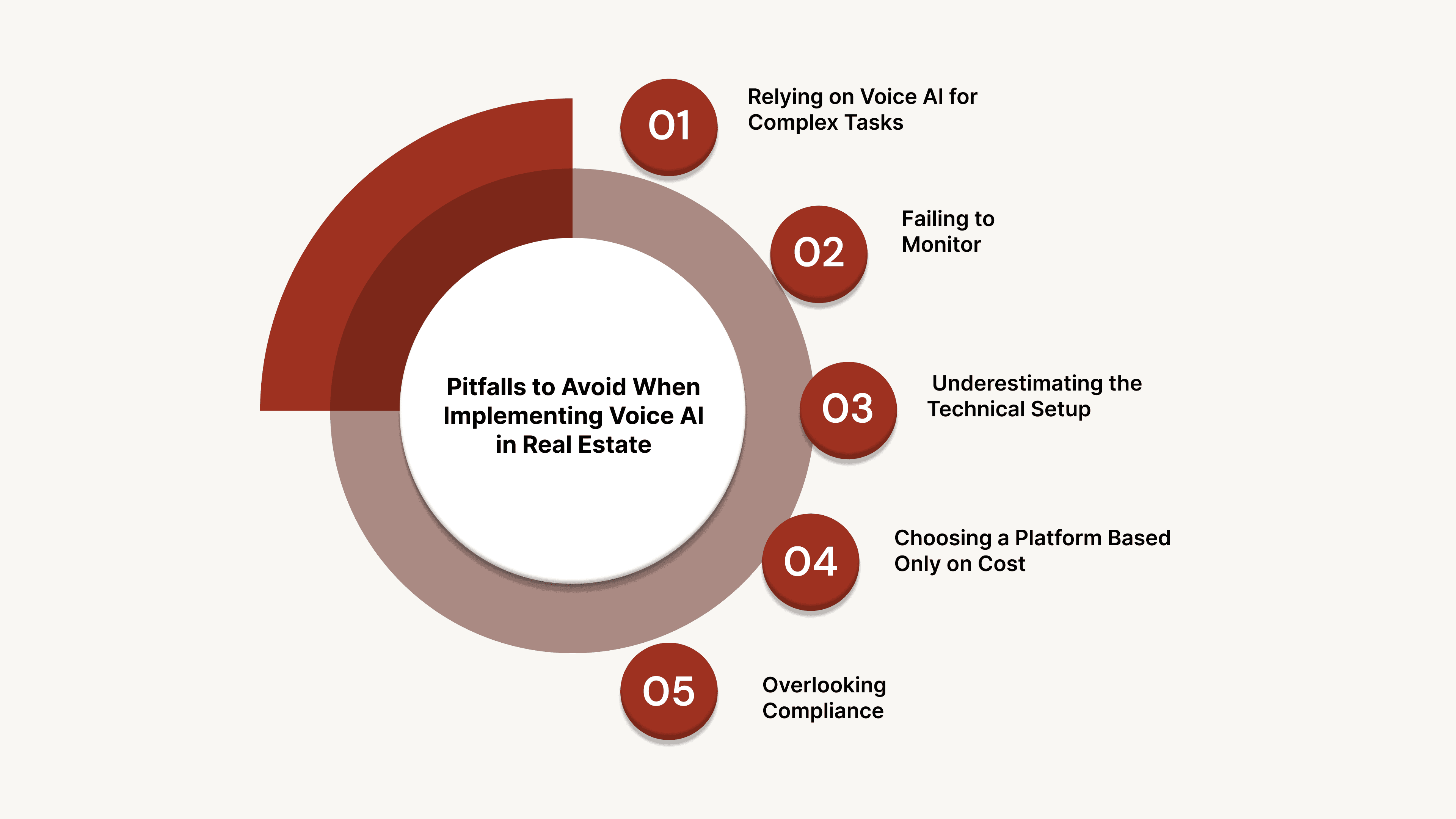
1. Relying on Voice AI for Complex Tasks Too Early
While voicebots are effective for handling simple tasks like property inquiries and lead qualification, they are not yet equipped to manage more complex tasks that require deep expertise or emotional intelligence, such as contract negotiations.
Solution: Use voicebots for basic tasks and ensure they escalate complex queries to human agents. This allows for a smooth interaction, ensuring that clients get the personalized service they need for more complicated issues.
2. Failing to Monitor and Improve Conversation Quality
Voicebots can misinterpret complex or unclear inquiries. Without regular monitoring, these issues can go unnoticed, resulting in poor customer experiences.
Solution: Continuously monitor voicebot interactions to identify areas of improvement. Fine-tune its language processing and responses based on real-world feedback to ensure accuracy and quality in every interaction.
3. Underestimating the Technical Setup and Integration Complexity
Implementing voice AI often requires significant setup time, especially when integrating with existing CRM systems, property databases, and other software.
Solution: Plan the integration process thoroughly. Allocate sufficient resources for testing and work closely with technical teams to address any compatibility issues before deployment.
4. Choosing a Platform Based Only on Cost
Focusing solely on cost when choosing a voicebot platform can lead to selecting a solution that doesn’t meet your business needs or provide long-term value.
Solution: Consider the overall value of the platform. Evaluate features like customization, scalability, support, and integration capabilities. A higher-priced tool may deliver better performance and save money in the long term by offering more functionality.
5. Overlooking Compliance and Data Privacy Requirements
Voicebots process sensitive client data, and failure to comply with data privacy regulations like GDPR and CCPA can lead to legal issues and damage your reputation.
Solution: Ensure the voicebot complies with all relevant privacy regulations. Implement proper encryption, secure data storage, and obtain clear user consent to protect customer information.
Recognizing these common mistakes will help you implement voice AI in real estate successfully. Let’s now look at the future of voice AI in real estate.
The Future of Voice AI in Real Estate
Voice AI is reshaping real estate by improving efficiency and enhancing customer experiences. Here’s how it will evolve:
More Automation: Automating routine tasks like property inquiries, lead qualification, and appointment scheduling will allow agents to focus on high-value tasks like negotiations and closing deals, boosting overall productivity.
Smarter Personalization: By analyzing client behavior, voice AI can provide tailored property recommendations, ensuring more relevant suggestions that improve lead conversion and client satisfaction.
IoT Integration: As smart home technology grows, voice AI will connect with devices like thermostats and security systems, allowing clients to access property details and schedule viewings through voice commands, offering a seamless, hands-free experience.
Multilingual Support: Voicebots will cater to a diverse, global audience by providing services in multiple languages, increasing your reach in international markets, and improving accessibility for non-native speakers.
Full Omnichannel Integration: Voice AI will provide a consistent experience across websites, apps, phones, and messaging platforms, ensuring clients have a seamless journey regardless of how they choose to interact.
Conclusion
Voice AI is transforming how real estate businesses handle client interactions. By automating tasks, providing personalized experiences, and improving efficiency, AI voicebots help real estate agencies manage inquiries, qualify leads, and enhance customer satisfaction.
Real estate companies that embrace voice AI can stay ahead of the competition, offering more efficient, scalable, and personalized services. CubeRoot’s solutions make this possible today, enabling real estate businesses to automate key processes and drive better customer engagement.
For real estate firms looking to streamline operations and improve client experiences, the time to invest in voice AI technology is now.
Book a demo with CubeRoot today to automate property inquiries, improve lead qualification, and deliver a seamless, personalized experience for your clients. |
FAQs
Q: Can voice AI handle all types of real estate inquiries?
A: Voice AI is excellent for handling routine inquiries such as property availability, pricing, and general information about listings. However, for more complex or specialized requests like contract negotiations or specific client concerns, it’s best to have human agents involved. Voice AI works best when automating routine tasks and escalating complex matters to agents.
Q: How secure is the data shared with voice AI bots in real estate?
A: Voice AI platforms prioritize security, using encryption and adhering to data protection regulations like GDPR and CCPA. Reputable platforms, such as CubeRoot, ensure that customer data is securely handled during interactions, maintaining privacy and security throughout.
Q: Can voice AI bots support multiple languages?
A: Yes, many AI voicebot platforms, including CubeRoot, support multiple languages, which is especially helpful for businesses with a diverse client base. This feature ensures that clients who speak different languages can still have personalized interactions with the bot.
Q: What are the costs associated with using voice AI in real estate?
A: Costs typically depend on the platform’s pricing model, which may include subscription fees, usage-based charges, or both. While there may be initial setup and integration costs, the long-term benefits, such as reduced operational costs and improved efficiency, can make the investment worthwhile.
Q: How do I measure the success of implementing a voice AI bot in my real estate business?
A: Success can be measured through various metrics, including lead conversion rates, customer satisfaction, operational efficiency, and cost savings. Most platforms provide detailed analytics that help track performance and evaluate the impact of the voice AI bot on your business.