Dec 31, 2025

Top 12 Yellow.ai Alternatives for Enterprises in 2026
Yellow.ai is one of the most recognized platforms in conversational AI, known for its chatbots, voice bots, and CX automation capabilities.
But as teams scale, many begin searching for alternatives that offer deeper integrations, stronger voice automation, better pricing flexibility, or industry-specific workflows that Yellow.ai doesn’t fully address.
If you’re evaluating the best Yellow.ai competitors, this guide breaks down the leading platforms, their strengths, ideal use cases, and how they compare on automation depth, accuracy, and deployment speed.
At a glance:
Teams explore Yellow.ai alternatives when they need deeper backend integrations, stronger voice automation, simpler deployment, or better regional language accuracy.
Voice capability matters independently; platforms that excel at chat may not deliver human-like voice, sentiment handling, or real-time system actions.
Different alternatives excel in different areas: CubeRoot is strong in enterprise voice automation and deep CRM/OMS integrations, Intercom performs well for chat-first support, and Kore.ai or Ada suit large enterprises needing advanced orchestration.
Choose a platform based on your primary use cases, integration depth, language needs, deployment speed, pricing model, and analytics capabilities.
Why Teams Look for Yellow.ai Alternatives
Brands don’t switch platforms without reason. Most teams explore Yellow.ai competitors because they need capabilities tailored to their specific workflows, scale, or tech stack.
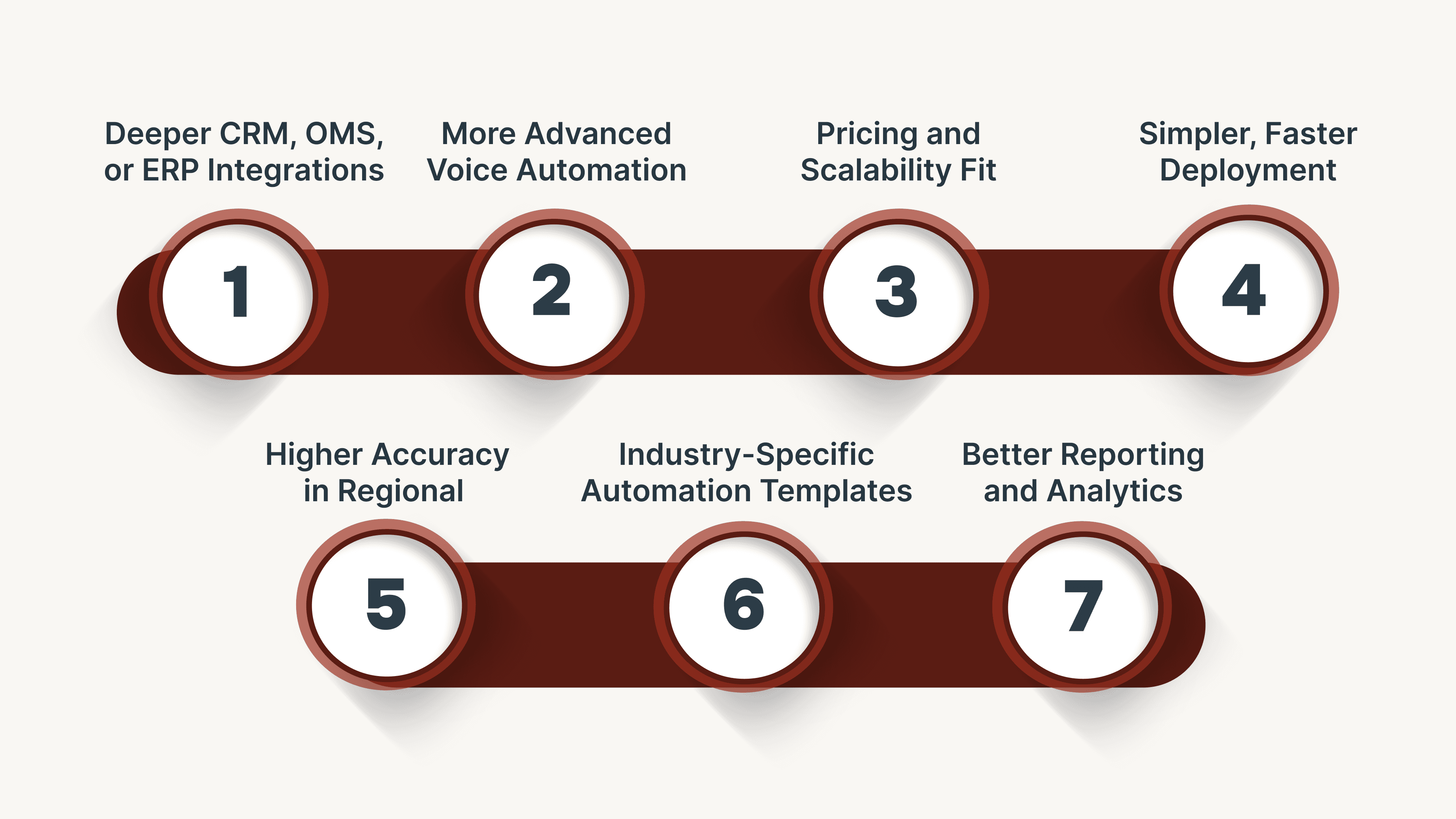
The most common reasons include:
1. Deeper CRM, OMS, or ERP Integrations
Some companies require tighter read/write integrations with systems like Salesforce, SAP, Leadsquared, Shopify, or custom OMS platforms to automate complex workflows end-to-end.
2. More Advanced Voice Automation
As voice becomes a major CX channel, teams may seek platforms with stronger voice AI, sentiment detection, natural prosody, and real-time action execution.
3. Pricing and Scalability Fit
Mid-market and fast-growing businesses sometimes need more flexible pricing or more cost-efficient scaling during peak seasons.
4. Simpler, Faster Deployment
Teams with lean tech resources often prefer no-code or low-code platforms that reduce setup time and eliminate heavy engineering dependence.
5. Higher Accuracy in Regional or Multilingual Conversations
Industries operating in India, APAC, or MENA may look for platforms with stronger support for Hindi, Tamil, Kannada, Arabic, and other regional languages.
6. Industry-Specific Automation Templates
BFSI, eCommerce, logistics, healthcare, and D2C brands often need domain-trained workflows such as KYC, COD confirmation, returns automation, policy queries, or payment reminders.
7. Better Reporting and Analytics
Some companies need more transparent insights into bot performance, automation accuracy, drop-off points, and operational impact to optimize CX strategies.
These needs shape the criteria companies use when comparing Yellow.ai with competing platforms.
12 Best Yellow.ai Alternatives to Consider in 2025
Different businesses need different capabilities. Whether you prioritise deep CRM/OMS integrations, stronger voice AI, omnichannel messaging, or no-code automation, these platforms offer compelling alternatives to Yellow.ai.
1. CubeRoot
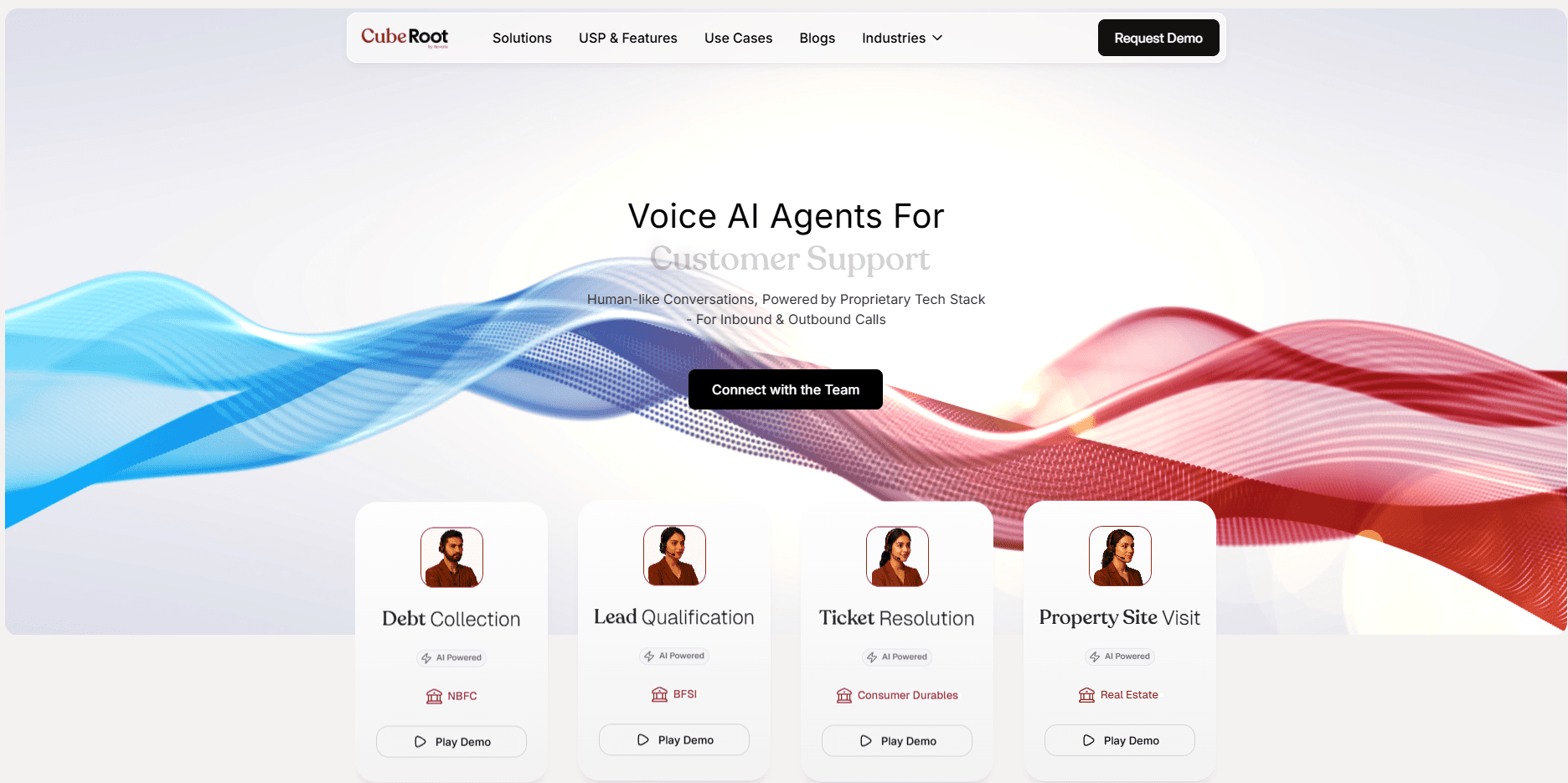
CubeRoot is an enterprise-grade voice and chat automation platform built for high-volume customer interactions across eCommerce, BFSI, fintech, real estate, and consumer durables.
Unlike generic conversational AI tools, CubeRoot specializes in deep CRM/OMS integrations, real-time workflow execution, and human-like voice automation at scale. It is designed for teams that need fast deployment, multilingual accuracy, and actionable automation across the entire customer lifecycle.
Key Features:
Human-Like Voice AI Agents: Natural, sentiment-aware conversations across English and major Indian languages.
Deep CRM/OMS Integrations: Reads and writes data in real time across 150+ systems, including Salesforce, Zoho, Leadsquared, Freshdesk, and custom backends.
End-to-End Workflow Automation: Automates high-volume tasks such as refund status, returns, COD confirmations, EMI reminders, lead qualification, and ticket resolution.
GenAI-Powered Prompt Builder: Deploy and refine conversational flows quickly without heavy engineering involvement.
Real-Time Transcription & Sentiment Analysis: Enhances accuracy, compliance, and agent assist for complex interactions.
14-Day Go-Live Framework: A structured Build–Train–Integrate–Scale model for rapid deployment with dedicated success support.
Best Suited For: Enterprises and fast-growing brands that need advanced voice automation, deep backend integrations, and high-volume CX workflows across eCommerce, BFSI, D2C, and healthcare.
2. Intercom
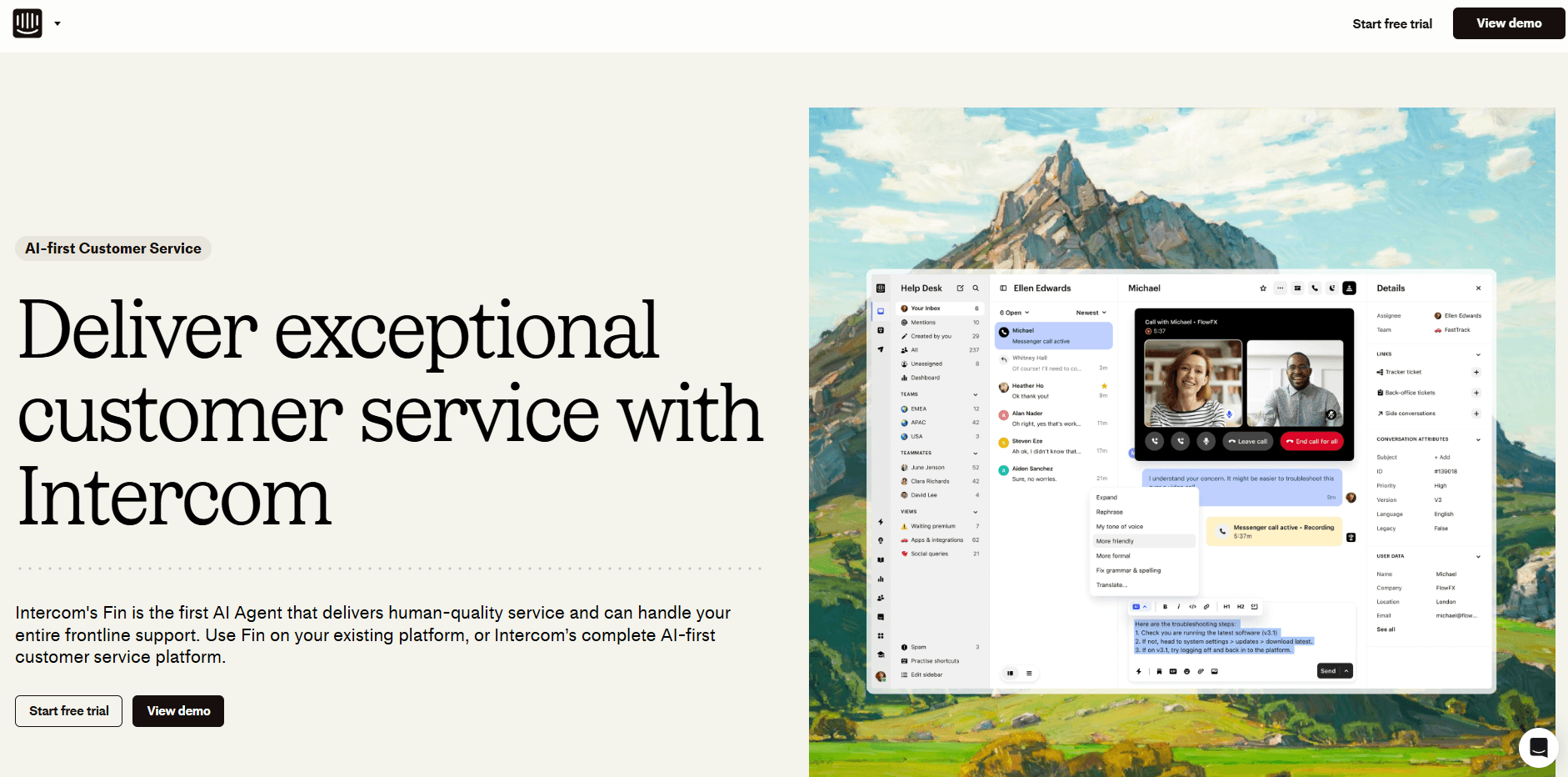
Intercom is a customer communication platform that blends AI chatbots, live chat, and a unified inbox to streamline support and customer engagement. Its AI agent, Fin, helps resolve queries using knowledge-base content and automated workflows.
Key Features:
AI Resolution (Fin): Answers complex questions using intent understanding + knowledge articles
Unified Inbox: Centralizes chat, email, and messaging channels
Proactive Messaging: Targeted in-app and onsite engagement
Automation Builder: No-code workflows for support and onboarding
AI-Assisted Replies: Drafts responses and summarizes conversations for agents
Best Suited For: Growth-stage SaaS and eCommerce teams that need unified chat automation with human handoff.
3. Ada
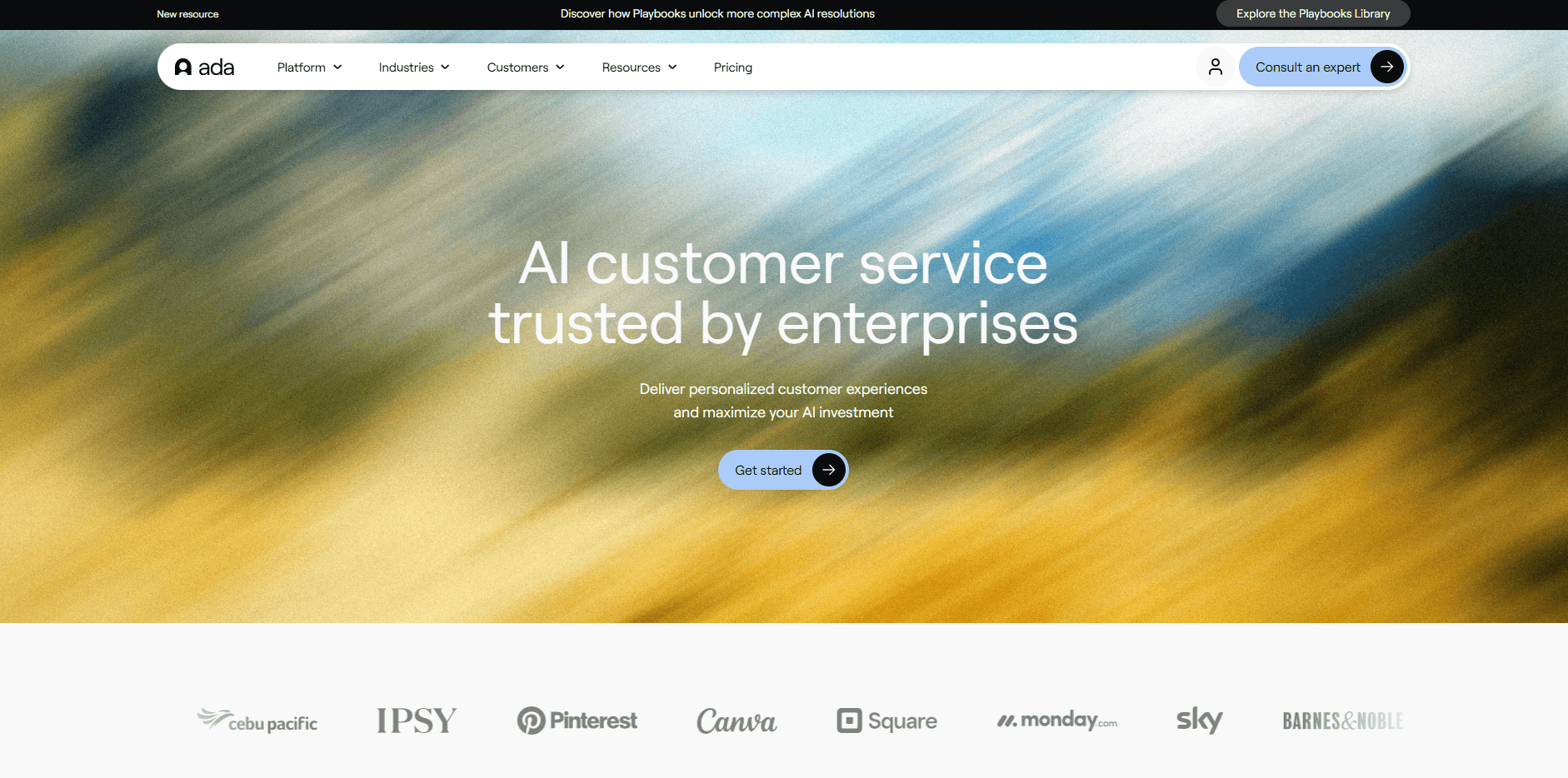
Ada is an enterprise conversational AI platform focused on automating high-volume customer support across chat, voice, and messaging channels. It delivers strong multilingual capabilities and scalable automation.
Key Features:
Omnichannel AI Agents: Automates conversations across chat, voice, SMS, and WhatsApp
Deep Integrations: Connects with CRMs, OMS, and support platforms for workflow execution
No-Code Builder: Create and update automation flows without engineering
Multilingual NLP: Supports large global audiences
Advanced Analytics: Tracks intent, automation accuracy, and performance metrics
Best Suited For: Large enterprises needing global-scale automation with strong multilingual support.
4. Gupshup
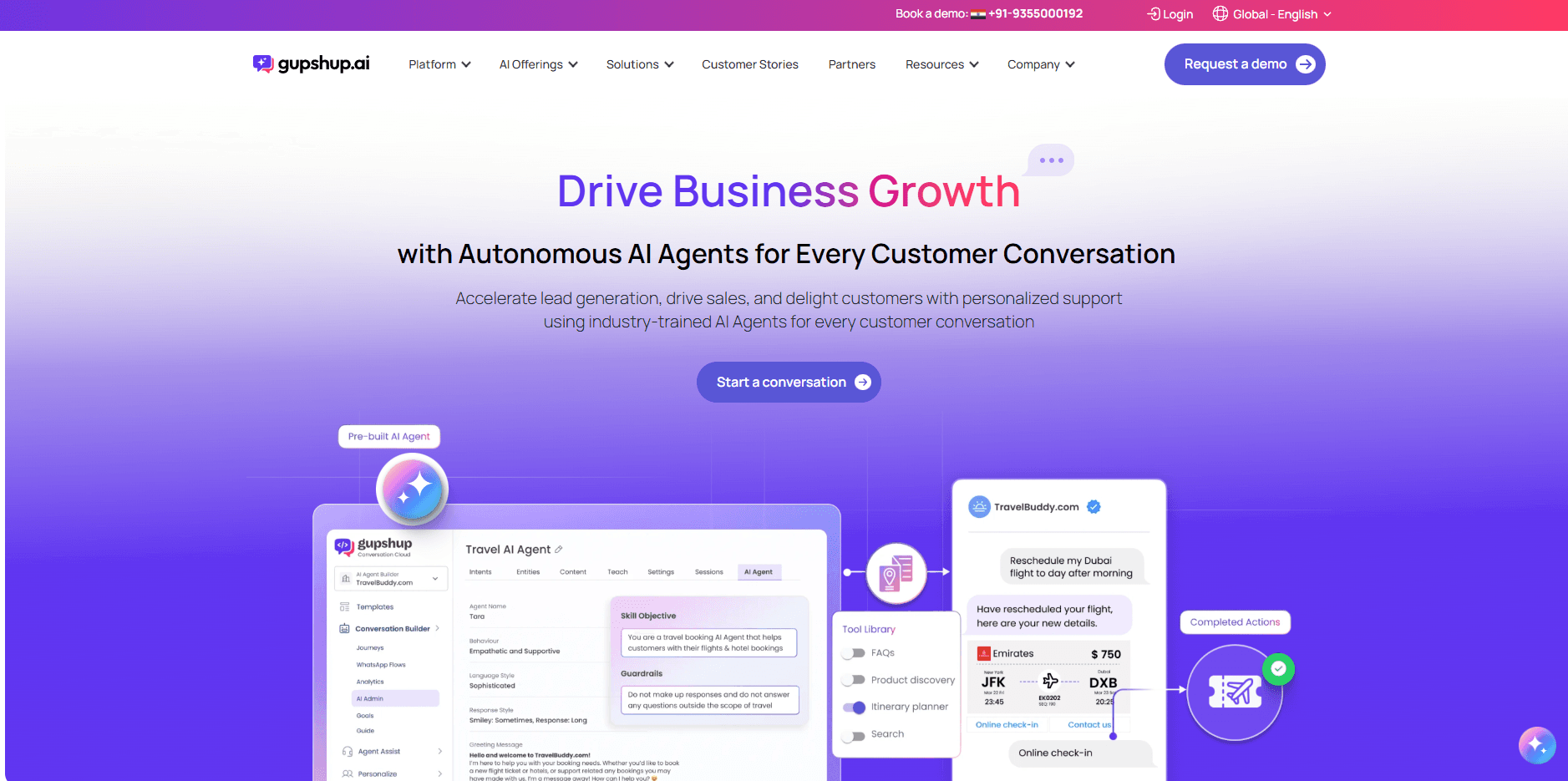
Gupshup is a messaging-first conversational automation platform known for its WhatsApp, SMS, and social messaging capabilities. It offers chatbots, marketing automation, and customer service flows.
Key Features:
Strong WhatsApp Automation: Templates, campaigns, and conversational flows
Bot Builder: No-code and pro-code options for rapid deployment
API-First Messaging: Supports SMS, RCS, social channels, and app messaging
Commerce Integrations: Product catalogs, payments, and commerce workflows
AI Chatbots: Intent-driven support for common queries
Best Suited For: Brands prioritizing WhatsApp-led engagement, marketing automation, and conversational commerce.
5. Kore.ai
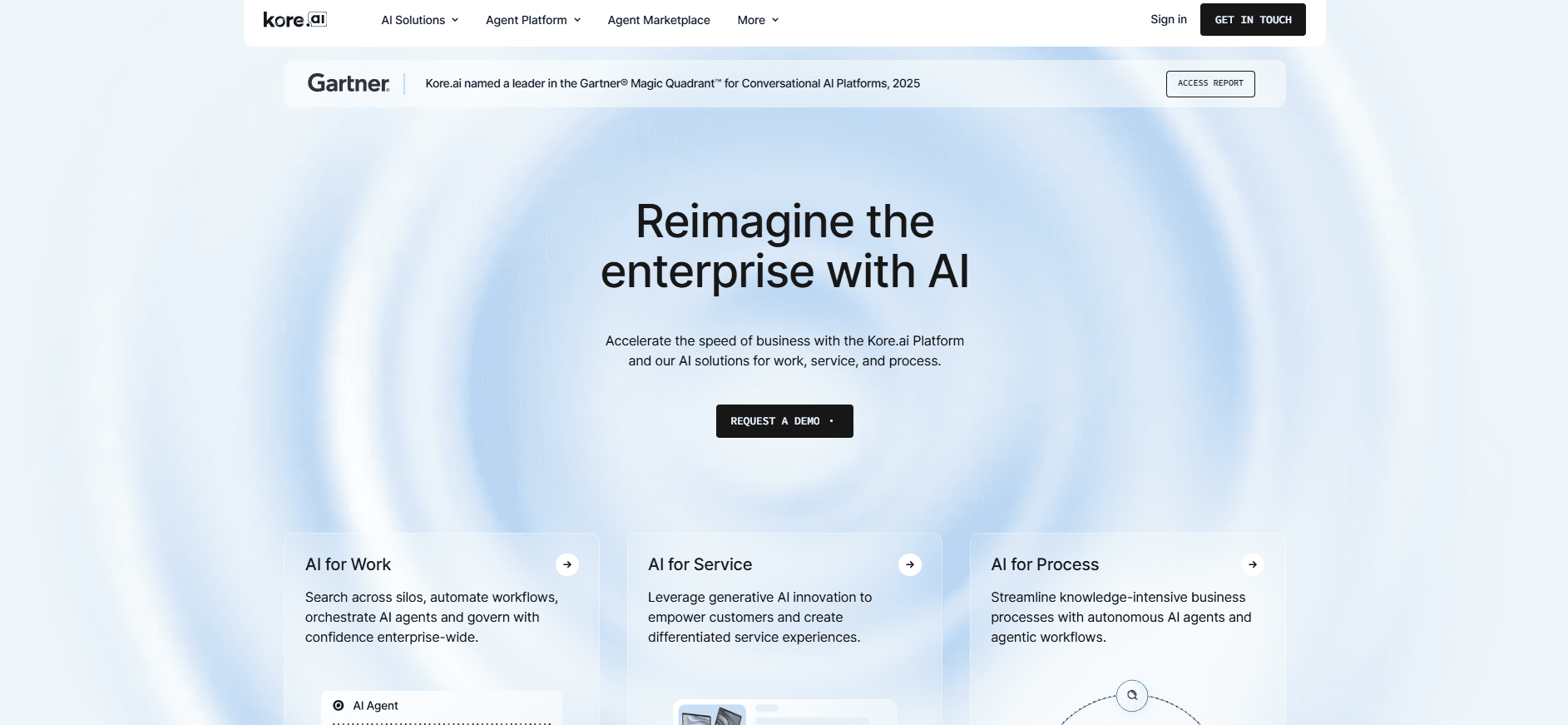
Kore.ai is an enterprise conversational AI suite offering advanced chat and voice bots with strong AI orchestration capabilities. It serves banks, healthcare, telecom, and large enterprises with strict compliance requirements.
Key Features:
Advanced NLU: Deep intent detection and multilayer NLP
Omnichannel Automation: Chat + voice + IVR + mobile apps
Process Automation: Automates end-to-end workflows with low-code tools
Enterprise Security & Compliance: SOC 2, HIPAA, GDPR readiness
AI-Assisted Contact Center: Agent assist, call summarization, and routing
Best Suited For: Enterprises that require secure, compliant, and highly customizable AI automation.
6. Haptik
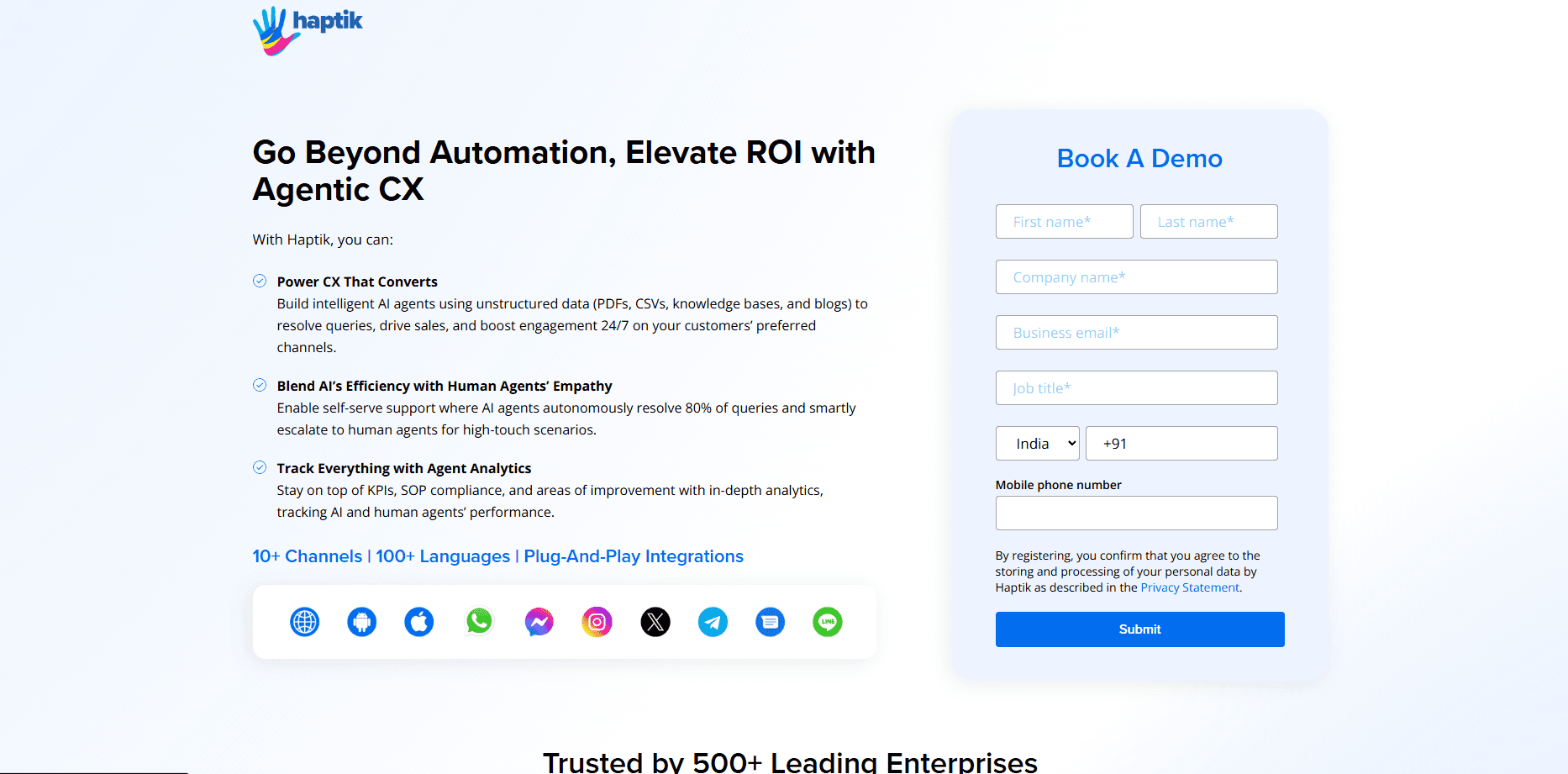
Haptik focuses on conversational AI for commerce, customer care, and lead generation across chat and WhatsApp. It provides industry-specific templates for retail, eCommerce, BFSI, and travel.
Key Features:
Commerce Flows: Product discovery, catalog search, and guided shopping
WhatsApp Commerce: Payments, order updates, cart recovery
AI Support Automation: Handles FAQs, order tracking, and returns
Analytics Dashboard: Tracks customer behavior and bot performance
Multilingual Chatbots: Supports regional and global languages
Best Suited For: Brands looking to automate sales and support on chat and WhatsApp with prebuilt commerce templates.
7. Verloop.io
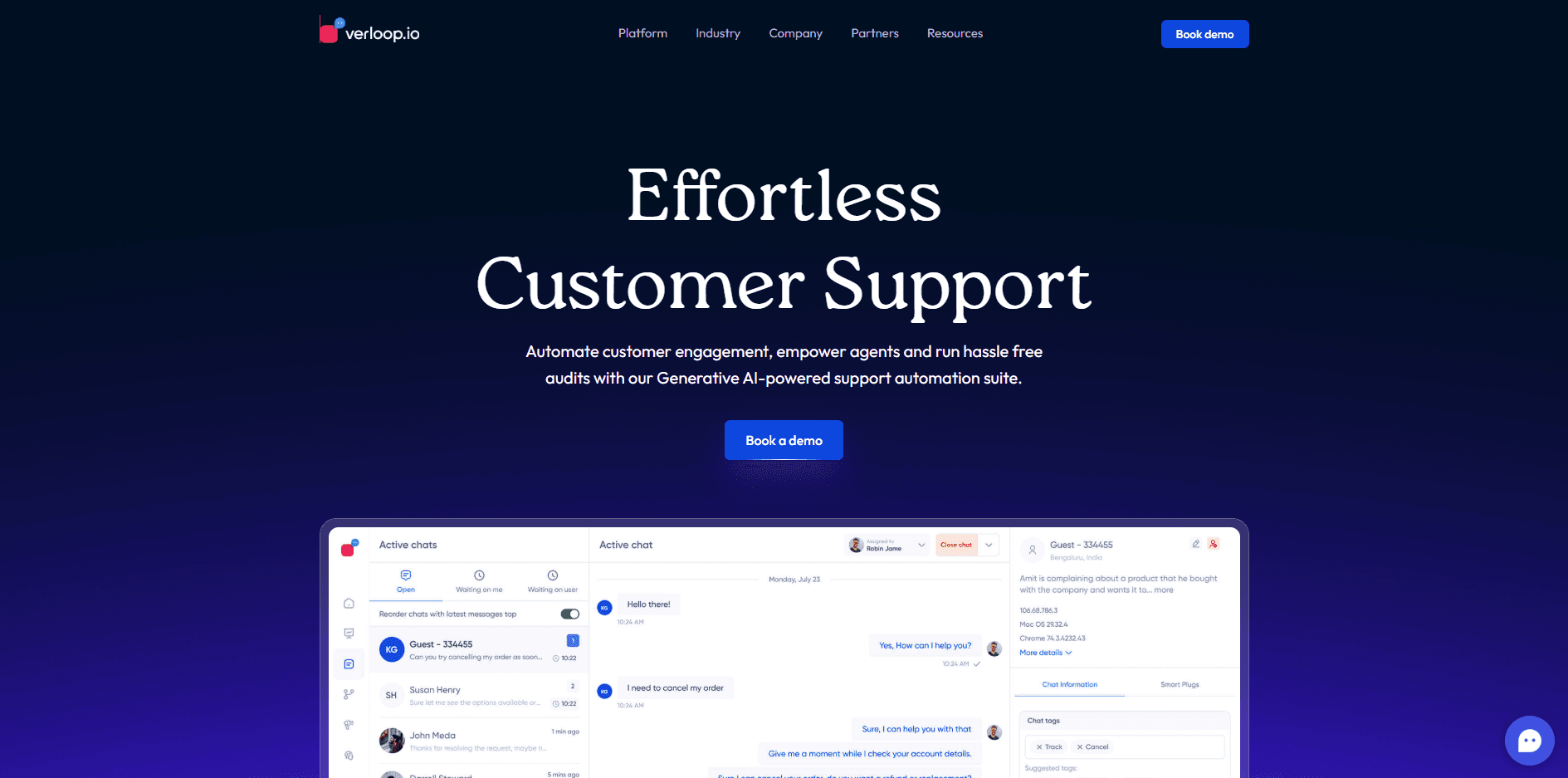
Verloop.io provides conversational automation for support and sales, with a strong focus on chat, WhatsApp, and voice automation. It is widely used in eCommerce, BFSI, and internet businesses.
Key Features:
Chat + Voice Automation: Handles inbound and outbound workflows
No-Code Flow Builder: Create bot journeys easily
Backend Integrations: Connects with CRMs, payment systems, and OMS
Multilingual Bots: Supports regional languages for Indian markets
Agent Assist: AI suggests responses and summarizes chats
Best Suited For: Mid-to-large businesses seeking flexible chat and voice support automation.
8. Freshchat (Freshworks)
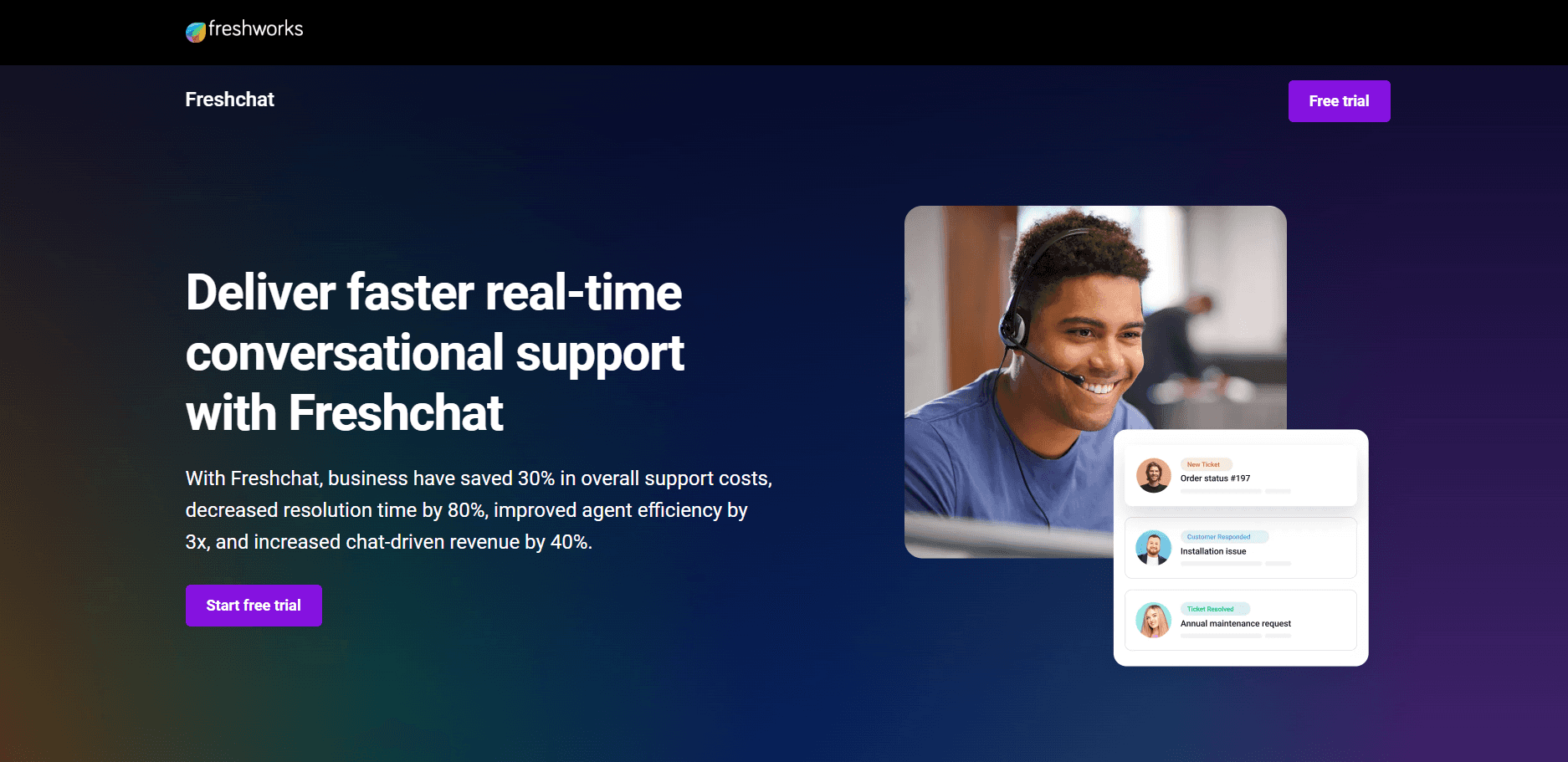
Freshchat is a modern messaging and support platform designed for omnichannel customer engagement with AI-powered bots and seamless agent handoff.
Key Features:
Freddy AI: Automates FAQs, intent-based responses, and ticket deflection
Omnichannel Inbox: Chat, email, social, web, and mobile in one place
Proactive Campaigns: Personalized outreach and engagement
Workflow Automation: Rule-based routing and escalation
CRM + Helpdesk Integrations: Works natively with the Freshworks suite and external CRMs
Best Suited For: Teams already on Freshworks or those needing a chat-first support platform with strong agent tooling.
9. Genesys Cloud CX
Genesys Cloud CX is an enterprise contact-center platform offering AI-powered voice automation, digital bots, routing, and agent assist capabilities. It is designed for large-scale customer experience operations that require deep telephony, IVR, and analytics capabilities.
Key Features:
AI Voice & Chat Bots: Automate conversations across voice, chat, messaging, and IVR
Predictive Routing: Routes customers to the best agent or workflow based on intent and context
Advanced Contact-Center Analytics: Real-time dashboards for performance, sentiment, and forecasting
Agent Assist: AI-driven prompts, summaries, and next-best actions
Enterprise-Grade Telephony: Carrier-level reliability with global calling infrastructure
Best Suited For: Large enterprises running full-scale contact centers that need voice-led automation and deep analytics.
10. Twilio
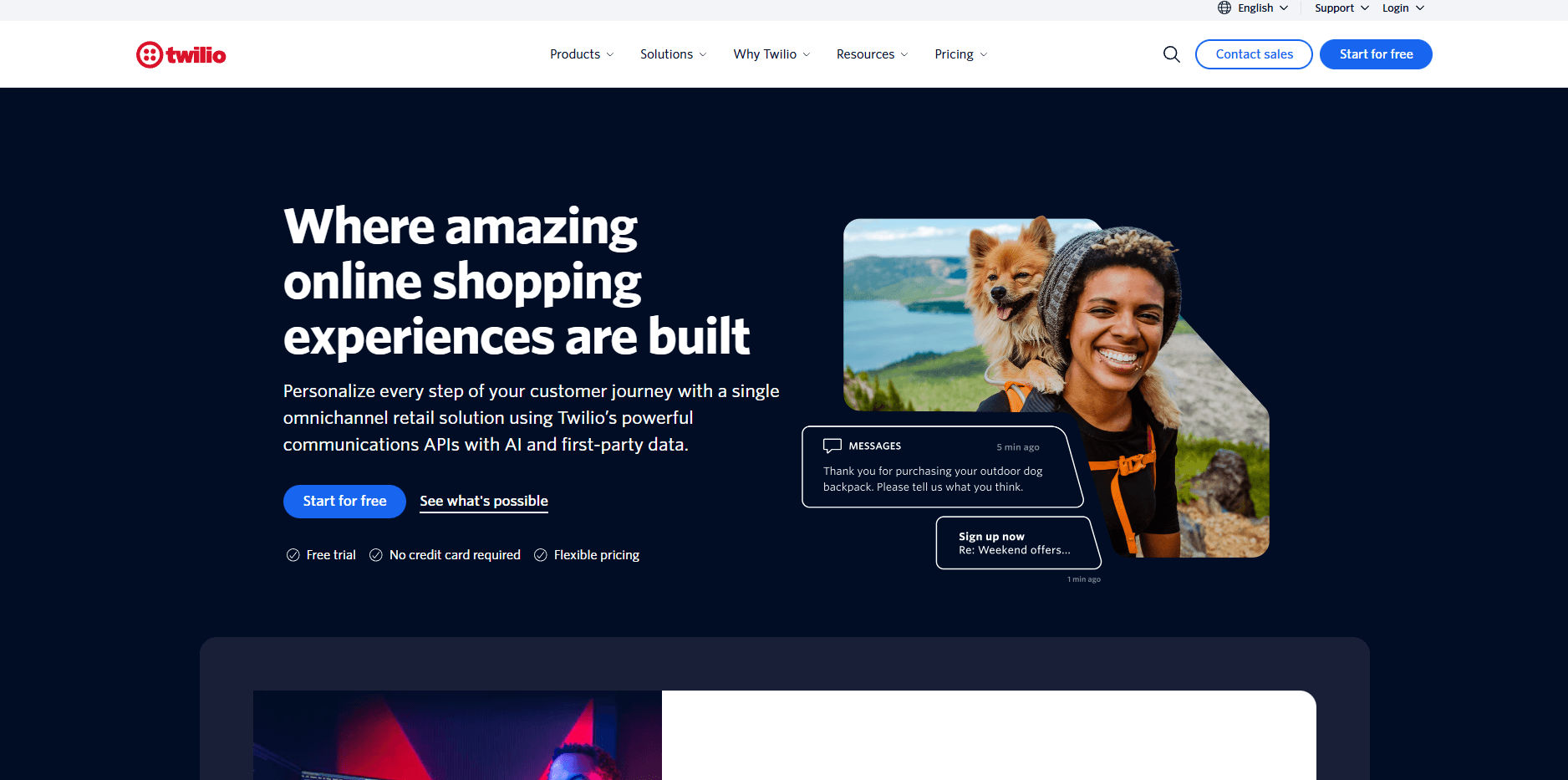
Twilio offers programmable communication APIs for building custom voice, messaging, WhatsApp, and IVR automation. Instead of being a ready-made AI bot platform, Twilio gives teams the building blocks to create tailored conversational workflows.
Key Features:
Programmable Voice & Messaging APIs: Build fully customized voice and chat automation
Twilio Flex: A customizable contact-center platform with embedded AI
Global Telephony Infrastructure: High-quality voice calling and compliance across regions
AI Assistants: Support for conversational AI integrations using OpenAI or custom models
End-to-End Workflow Orchestration: Connect with CRMs, databases, payment systems, and custom apps
Best Suited For: Technical teams and enterprises that need highly customized conversational solutions built on APIs.
11. Rasa
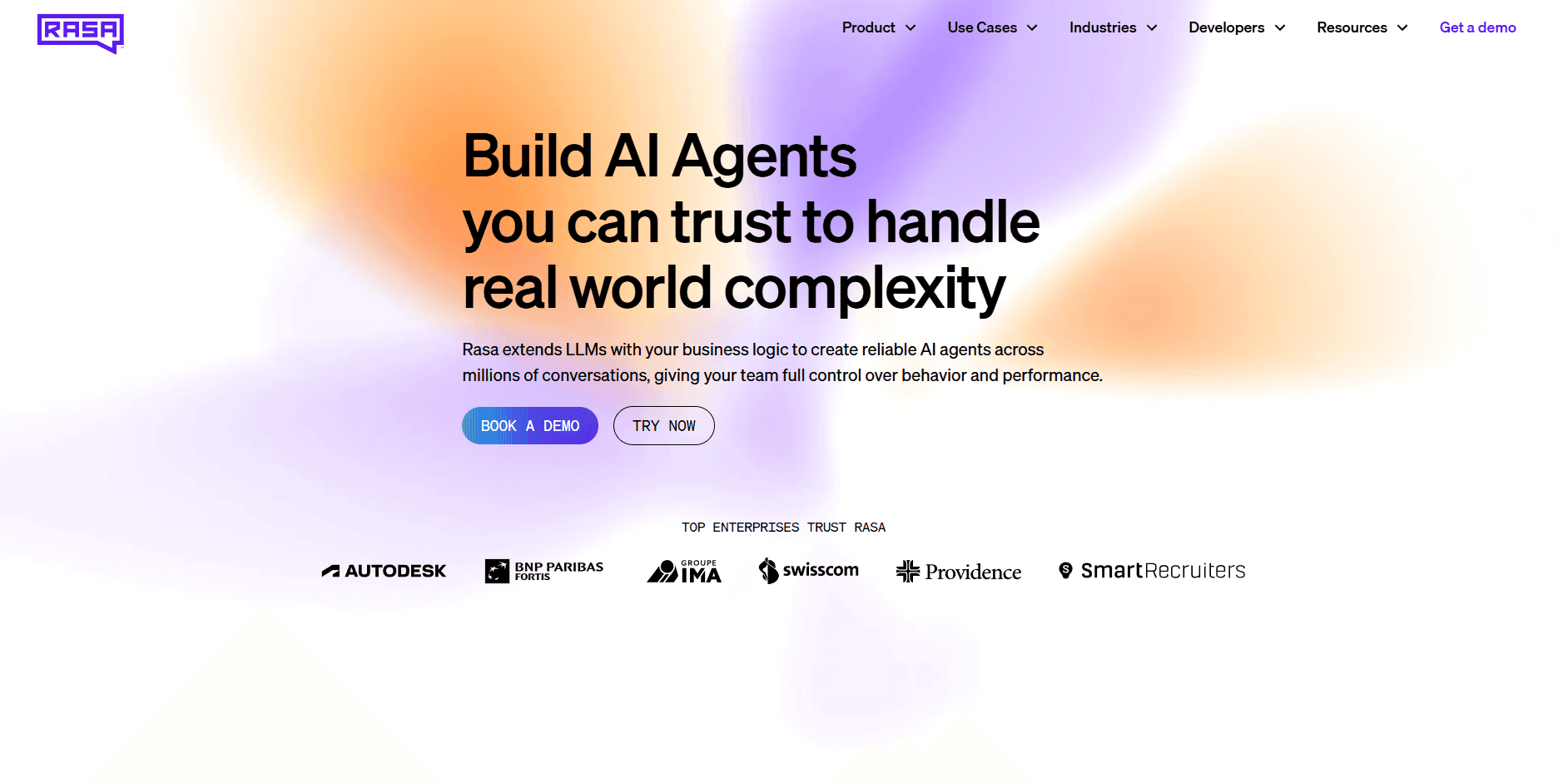
Rasa is an open-source conversational AI framework used to build fully custom voice or chat assistants with complete control over NLP, data, and integrations. It is favored by teams that want to own their AI models and avoid vendor lock-in.
Key Features:
Open-Source NLU/NLP Engine: Build domain-specific intent models with full customizability
Custom Workflows & Policies: Tailor every part of the conversation logic
On-Premise or Private Cloud Deployment: Strong control for security & compliance-heavy industries
Flexible Integrations: Connect to CRMs, ERPs, OMS, and contact-center tools through APIs
Community & Ecosystem: Large developer community with extensions, connectors, and templates
Best Suited For: Technical organizations that need complete control over conversational AI models and prefer open-source flexibility.
12. Trengo
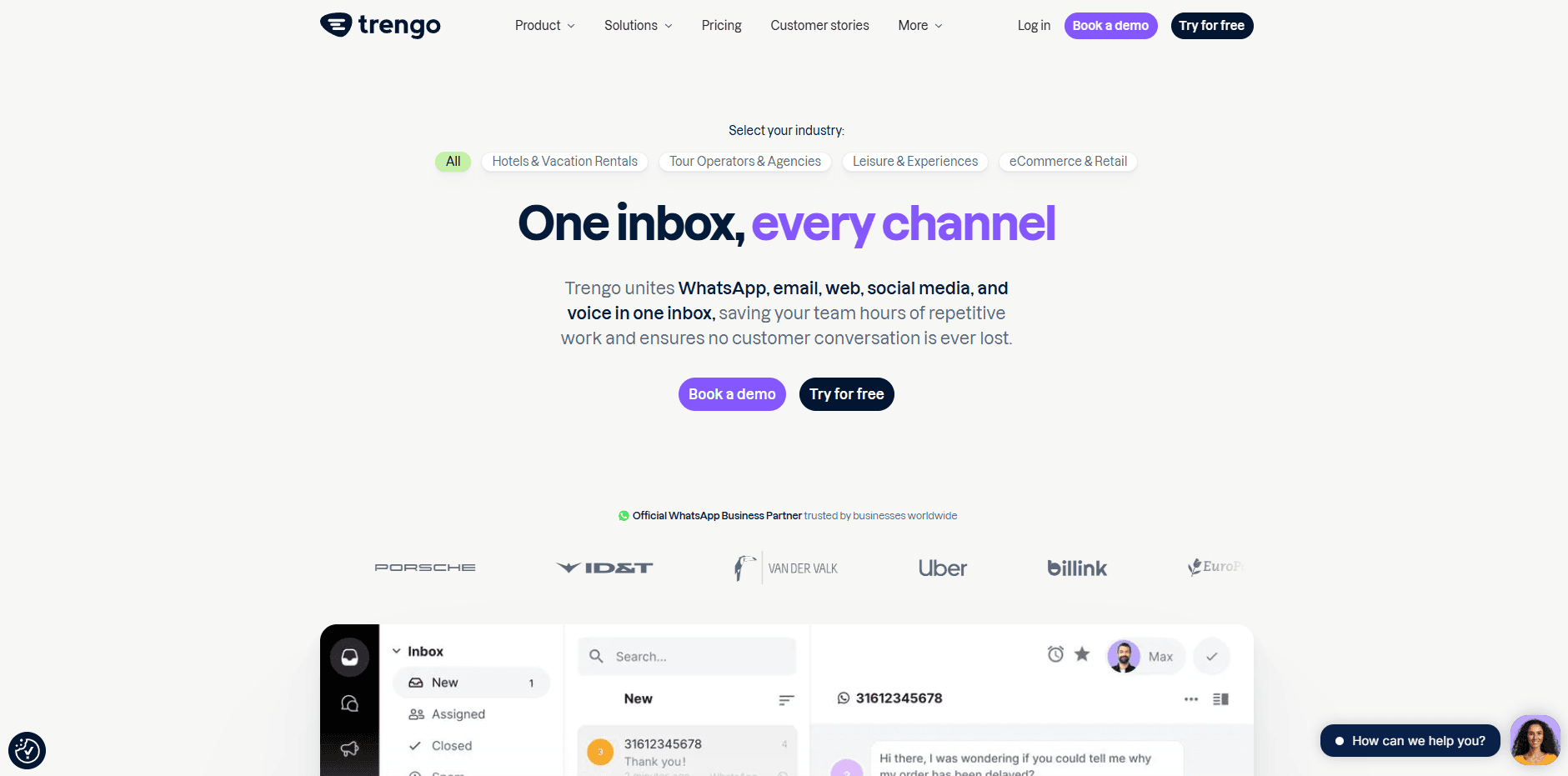
Trengo is an omnichannel customer engagement platform that unifies WhatsApp, email, chat, social media, and voice into one inbox. It includes AI-powered automation for support workflows, chatbots, and team collaboration, making it popular with fast-growing digital brands.
Key Features:
Unified Inbox: Centralizes WhatsApp, email, chat, and social channels for streamlined support
AI Chatbots: Automates common queries and routes conversations to the right teams
WhatsApp Business API Support: Strong native capabilities for commerce and customer service
Workflow Automation: Auto-assign, tag, and escalate conversations based on rules
Team Collaboration Tools: Shared notes, assignments, and internal messaging
Best Suited For: Growing eCommerce and D2C brands needing simple omnichannel support automation and strong WhatsApp capabilities.
Also read: Conversational AI for Customer Service: Benefits and How It Works
How to Pick the Right Yellow.ai Alternative (With Depth)
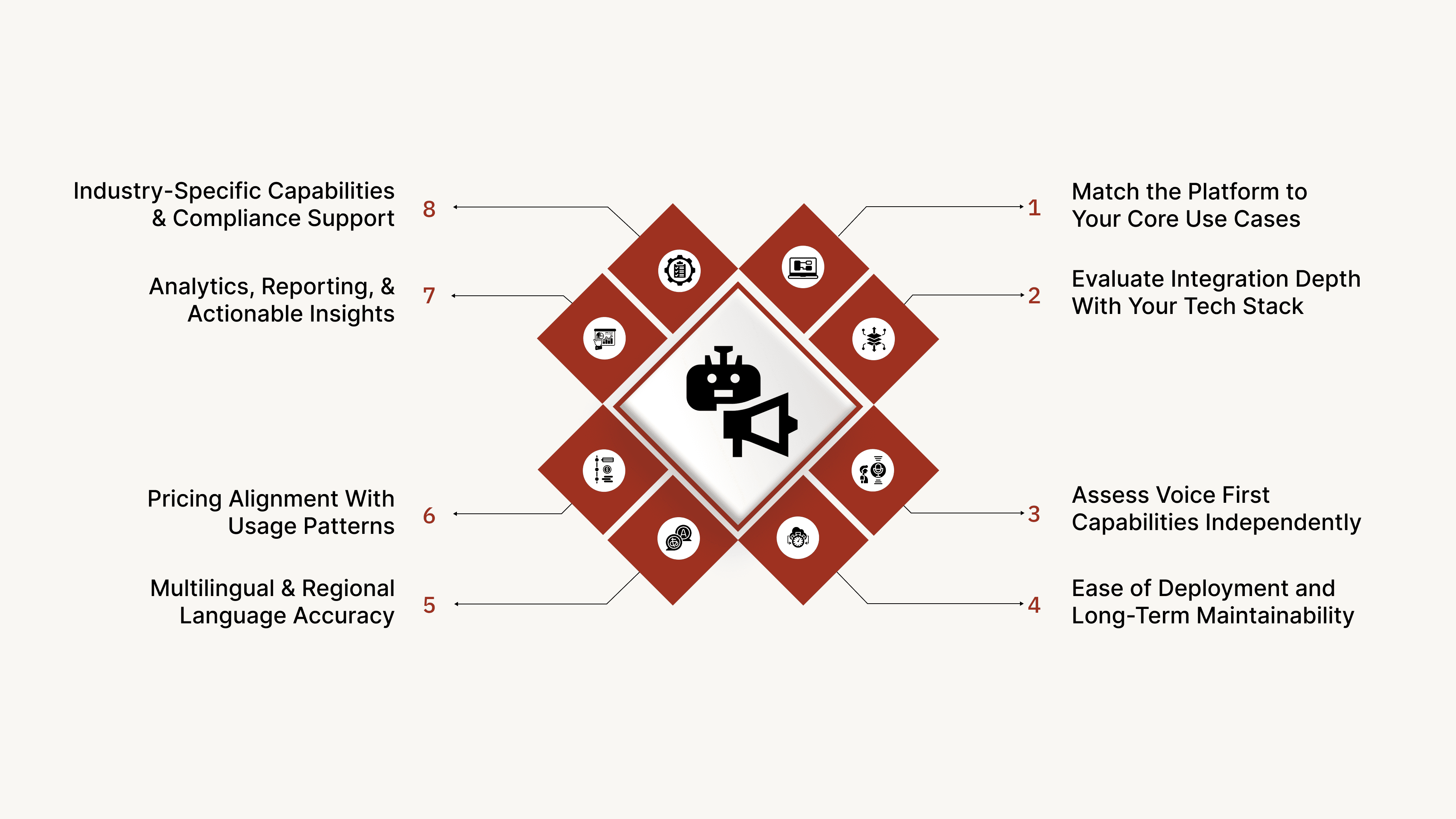
Selecting the right conversational AI platform goes beyond brand names. It means aligning the solution with your use cases, existing systems, support model, and long-term automation goals.
Below are some criteria to help you evaluate alternatives effectively:
1. Match the Platform to Your Core Use Cases
Start by listing the workflows you want to automate. Common automation needs include: refund and order status checks, lead qualification, appointment scheduling, collections, FAQs, and intent-driven routing.
Choose a platform that supports your primary use cases natively instead of relying on custom scripting or workarounds.
2. Evaluate Integration Depth With Your Tech Stack
A tool is only as valuable as its ability to connect with your systems. Look for platforms that offer:
Bi-directional CRM access (read and write)
OMS and ERP integrations for accurate order/refund workflows
Support ticketing system sync for seamless escalation
Payment gateway data pulls for refunds and billing status
Shallow connectors that only push notifications limit automation and personalization.
3. Assess Voice First Capabilities Independently
If voice automation is a priority, don’t assume all platforms perform equally. Evaluate:
Natural language understanding with local accents
Real-time intent extraction
Context and sentiment detection
Voice bot handoff to live agents without context loss
Real-time system execution (e.g., refund lookup, policy statuses)
Platforms that excel in chat may not deliver the same experience for voice.
4. Ease of Deployment and Long-Term Maintainability
Time to go-live matters. Consider whether the platform provides:
No-code or low-code builders
Prebuilt industry workflows (e.g., eCommerce, BFSI, D2C)
Sandbox testing environments
Role-based access and version control
The less engineering overhead required, the faster you can scale and iterate automation.
5. Multilingual and Regional Language Accuracy
Especially for India, APAC, and global markets, conversational AI must go beyond English. Evaluate support for:
Hindi, Tamil, Telugu, Kannada
Hinglish or mixed-language queries
Non-Latin script recognition
Industry-specific jargon
Platforms with solid multilingual NLU deliver higher accuracy, greater adoption, and fewer false intents.
6. Pricing Alignment With Usage Patterns
Conversational AI pricing varies widely — per conversation, per active user, per bot, or consumption-based. Ask:
How do peak seasons affect pricing?
Are tests and staging included?
Are integrations charged separately?
Are bot upgrades or new intents extra cost?
Choose a pricing model that matches your volume and expected ROI.
7. Analytics, Reporting, and Actionable Insights
Beyond automation, your platform should help you improve performance. Look for:
Intent heatmaps
Automation accuracy trends
Drop-off and re-route analytics
Customer sentiment tracking
Workflow performance benchmarks
These insights inform optimizations and justify investment to stakeholders.
8. Industry-Specific Capabilities and Compliance Support
Some platforms deliver templates and workflows tailored for verticals such as:
BFSI (KYC, collections, EMI reminders)
eCommerce (order tracking, returns, COD)
Healthcare (appointment reminders, patient follow-ups)
D2C and logistics (shipment updates, delivery ETAs)
Also evaluate security and compliance requirements (e.g., ISO 27001, SOC 2, HIPAA) for regulated industries.
Also read: Conversational AI Examples and Use Cases in Various Industries
No single platform is universally “best.” The right choice depends on your workflows, integration needs, deployment speed, language requirements, pricing constraints, and vertical specialization. Use this framework to compare alternatives with precision and confidence.
Wrapping Up
The conversational AI market has evolved rapidly, and teams today need platforms that go beyond basic chat automation. While Yellow.ai remains a strong player, many businesses look for alternatives that offer deeper CRM and OMS integrations, stronger voice automation, simpler deployment, better pricing flexibility, and more industry-specific workflows.
The competitors listed in this guide cover a wide range of needs — from enterprise voice automation to omnichannel CX platforms and developer-first frameworks.
If your priority is high-accuracy voice automation, real-time backend integrations, and fast enterprise deployment, CubeRoot stands out as the strongest alternative.
Its domain-trained voice agents, 150+ integrations, multilingual capabilities, and 14-day implementation framework make it ideal for BFSI, eCommerce, D2C, NBFC, and large support operations. Book your demo now.
FAQs
1. Why do companies look for Yellow.ai competitors?
Teams often want deeper backend integrations, stronger voice automation, faster deployment, more transparent pricing, or region-specific language accuracy — areas where another platform may be a better fit.
2. Do these Yellow.ai competitors support multilingual conversations?
Most mid-market and enterprise platforms do, but CubeRoot, Haptik, and Kore.ai consistently rank higher for Indian regional languages and mixed-language inputs.
3. Can Yellow.ai alternatives integrate with CRM and OMS systems?
Yes. Tools like CubeRoot, Kore.ai, Ada, and Intercom support deep integrations with Salesforce, Zendesk, Zoho, Shopify, Magento, custom OMS, and payment systems.
4. How do I choose the right Yellow.ai alternative for my business?
Evaluate your automation use cases, required integrations, language needs, expected scale, and internal resources. The best platform is the one that aligns directly with your workflows and delivers measurable ROI.