Dec 5, 2025
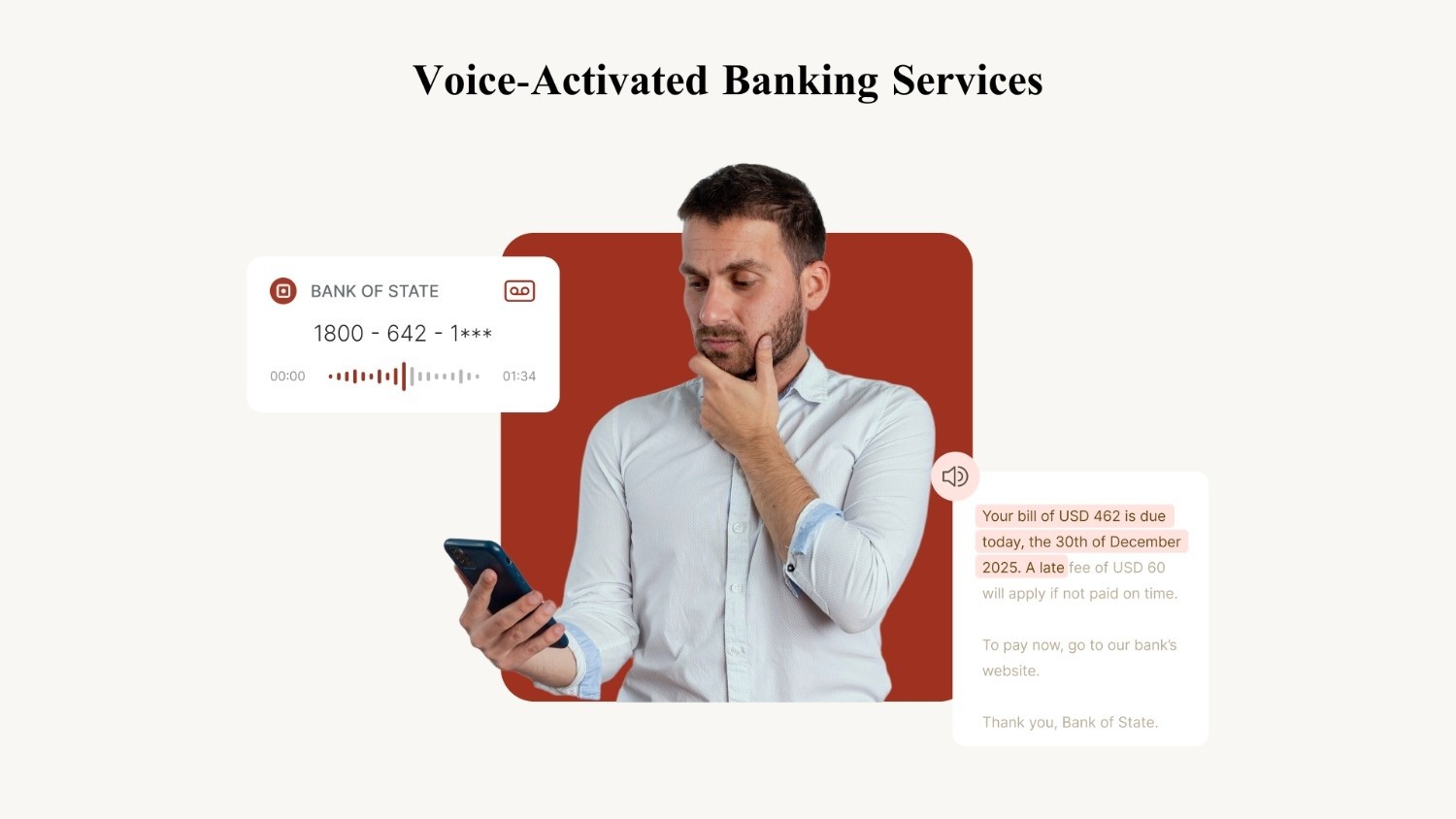
Voice-Activated Banking Services: Technology, Use Cases and Benefits for BFSI
Indian banks and NBFCs are pressed by rising call volumes, compliance demands, and customers who want quick resolutions. Voice technology offers a practical solution to these challenges. According to Maximize Market Research, the global voice banking market reached USD 1.64 billion in 2024 and is projected to grow at a CAGR of 10.81 percent from 2025 to 2032.
Customers in India often prefer speaking over typing to check balances, confirm transactions, or resolve card issues, using blended languages and expecting quick answers. Traditional IVR systems struggle with such requests, while human agents cannot consistently handle peak-hour spikes.
Voice-enabled banking lets your institution automate high-volume tasks such as balance checks, EMI reminders, and card queries. Human agents stay available for complex or sensitive cases. This reduces repeat calls, creating a solid service foundation for both retail banking and lending.
Key Takeaways
Voice-activated banking helps Indian BFSI teams manage rising call volumes with faster, natural customer interactions.
AI-driven voice workflows automate tasks such as balance checks, EMI updates, and card queries at scale.
Blended-language understanding is essential for serving India’s multilingual banking customers effectively.
Deep system integrations allow voice assistants to complete tasks, not just answer questions.
Voice interactions improve completion rates, especially in Tier 2 and Tier 3 markets where customers prefer speaking.
Compliance-ready voice systems support secure authentication, audit trails, and RBI-aligned communication.
CubeRoot provides a multilingual voice AI platform tailored for banking, offering advanced accuracy, secure integrations, and scalable automation for BFSI operations.
What Are Voice-Enabled Banking Services
Voice-enabled banking services let customers complete financial tasks by speaking naturally. These systems connect with core banking, LOS, and CRM platforms. Customers can get information or take action without navigating menus.
They do more than answer questions. They can retrieve account information, validate customer details, confirm suspicious transactions, and guide borrowers through loans or EMI workflows. A strong voice interface understands blended languages and extracts dates, account numbers, and reference IDs accurately, without repeated prompts.
Common examples include:
Checking account or card balances
Confirming or declining suspicious transactions
Sharing loan status and required documents
Requesting checkbooks or updating account information
Providing policy and premium details
Supporting credit card queries such as limits, due dates or payments
By streamlining daily operations and reducing the manual load on customer support teams, these services improve efficiency throughout your organization.
Also read: Importance of Customer Service: Key Reasons and Benefits
How Voice Assistants Work in Financial Services
A banking voice assistant follows a sequence: it understands the customer’s request, verifies identity if needed, and completes tasks using your internal systems. Each step is designed for the complexity of financial workflows and the variability of live conversations.
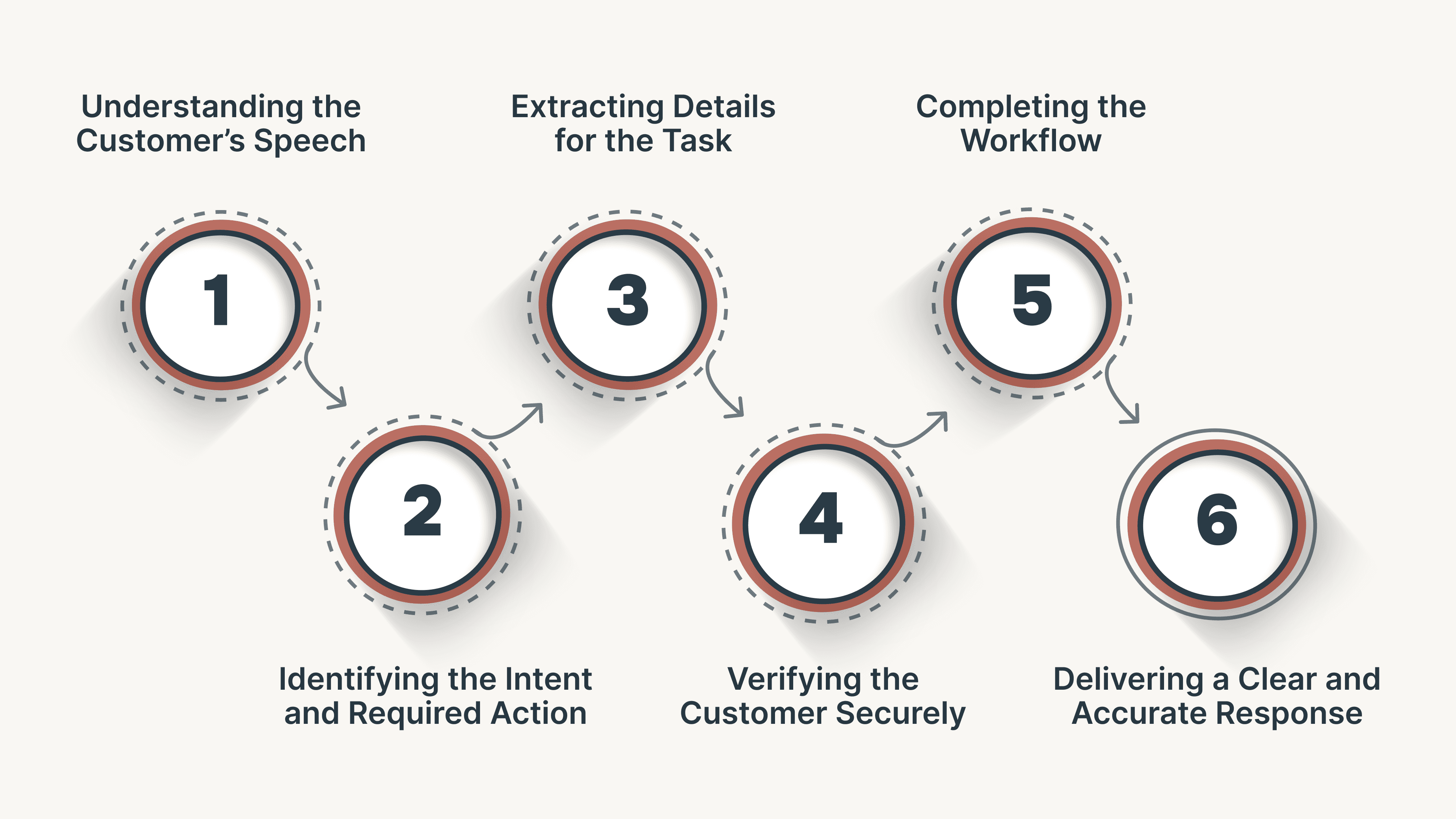
Step 1. Understanding the Customer’s Speech
The interaction starts with speech recognition that turns the customer’s voice into text. This step must handle Indian accents, background noise, and blended-language phrases. Customers often switch between English and regional languages when describing a transaction or issue.
Step 2. Identifying the Intent and Required Action
After converting speech to text, the system decides what the customer wants to do. It may identify tasks like checking a balance, confirming a transaction, asking for EMI details, or updating contact data. Models trained on banking data understand phrases common in finance, which improves accuracy.
Step 3. Extracting Details for the Task
The assistant pulls key information from the conversation. These may include dates, transaction amounts, account digits, or the customer’s mobile number. In India, customers often give incomplete details, so the system must fill in gaps without asking for extra clarification repeatedly.
Step 4. Verifying the Customer Securely
Before completing any sensitive action, the assistant verifies the customer. It may use OTP confirmation, security questions, or match information against your core system. This ensures the customer’s identity is validated according to your institution’s policies.
Step 5. Completing the Workflow Through System Integrations
The assistant connects to core banking platforms, loan origination systems, CRM, or card management systems to execute the request. It can fetch balances, close tickets, update information, or log payments. This is where the assistant moves from conversation to action.
Step 6. Delivering a Clear and Accurate Response
After completing the workflow, the system gives the customer a clear spoken answer. Tone, pacing, and clarity matter. Callers make decisions based on how confidently and precisely information is shared.
This process lets your bank or NBFC manage thousands of requests daily with accuracy. It also frees up agents from routine queries. They can then focus on sensitive or high-value cases. The next section looks at the specific benefits financial institutions gain from voice assistants at scale.
Suggested read: Everything You Need to Know About AI Assistants
Key Benefits for Banks and NBFCs
Voice assistants deliver meaningful operational improvements when they connect directly to real banking and lending workflows. They help you manage high-volume tasks, strengthen compliance, and improve service quality across customer segments.
Faster Handling of High-Volume Requests
Banks and NBFCs receive a high volume of inquiries for balance checks, EMI queries, card issues, and loan updates. A voice assistant resolves these requests instantly, reducing queues and improving customer experience during peak hours.
Higher Accuracy in Blended-Language Conversations
Customers often switch between English, Hindi, and regional languages. A well-trained voice system understands these shifts and interprets intent accurately, which reduces repeat calls and increases first-attempt completion.
Improved Efficiency Through Automation
Tasks such as verification, payment reminders, and account inquiries consume significant agent time. Automating these interactions frees your teams to focus on fraud cases, delinquency, and complex servicing issues.
Lower Operational Cost Per Conversation
Automated voice workflows reduce the cost per interaction by handling predictable queries at scale. As adoption grows, institutions can manage rising volumes without expanding agent capacity.
Stronger Compliance and Better Audit Support
Voice workflows follow consistent scripts and log every action. This reduces communication risk, supports regulatory reviews, and simplifies audit preparation for your compliance teams.
Consistent Experience Across All Markets
Customers in metros and regional markets expect the same service quality. Voice assistants deliver clear, structured responses regardless of language or location, which improves trust in financial communication.
Continuous Availability
Customers contact banks at all hours for tasks such as confirming transactions or checking due dates. Voice assistants operate throughout the day and night, eliminating wait times and reducing pressure on service teams.
To take advantage of these benefits, evaluate how voice assistants can address your institution’s unique needs and contact us to explore how our solutions can drive customer satisfaction and operational efficiency for your banking services.
High-Impact Use Cases in Banking and Lending
Voice assistants create the strongest value when they automate tasks that consistently drive call volume across branches and contact centers. The use cases below reflect real workflows in Indian banks, NBFCs, and digital lenders where accuracy and compliance are essential.
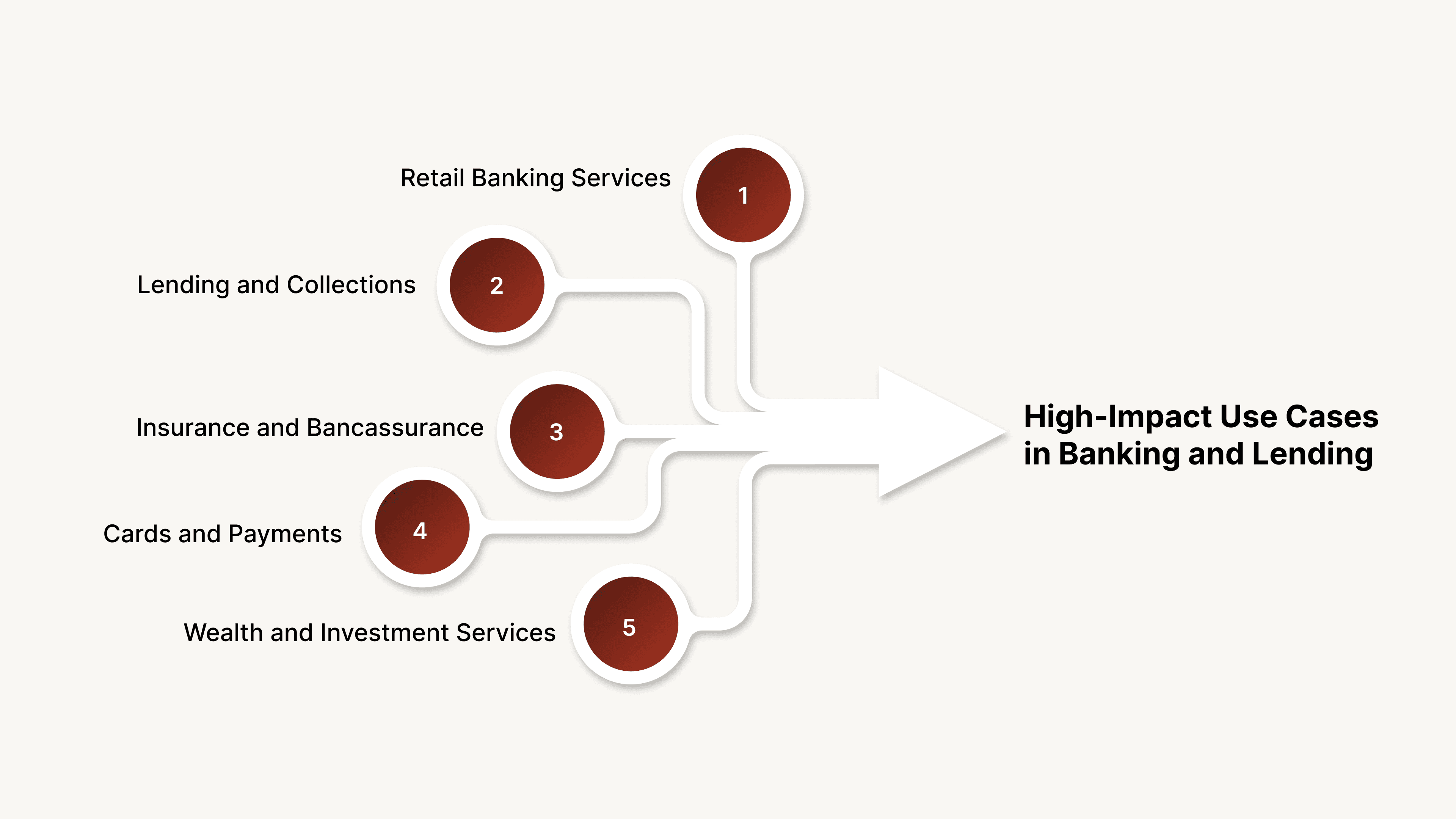
Retail Banking Services
Retail banking involves frequent information requests and confirmations. Voice assistants handle these tasks instantly and reduce agent transfers.
Checking savings or current account balances
Sharing recent transactions
Confirming or rejecting suspicious activity
Providing credit card limits, due dates, or reward details
Supporting service requests such as chequebook issuance
These interactions account for a large share of daily calls and are ideal for automation.
Lending and Collections
Lending teams manage repeated follow-ups and verification steps. Voice assistants help streamline these processes.
Collecting applicant details and validating them with the LOS
Sharing loan status and required documents
Delivering EMI reminders and recording commitments
Guiding customers through pre-closure calculations
Handling questions related to interest rates, tenure or repayment
These workflows reduce pressure on loan officers and create a smoother borrower experience.
Insurance and Bancassurance
Banks often receive insurance-related queries that require clear and consistent information. Voice assistants support:
Premium reminders and policy summaries
Claim status updates
Advisor callback scheduling
Renewal and add-on cover guidance
These calls rely on accuracy, which makes them suitable for automated flows.
Cards and Payments
Card-related issues are time sensitive and often create customer anxiety. Voice assistants address many of them immediately.
Activating or reissuing cards
Providing payment confirmation and past due reminders
Sharing reward points, offers and spend summaries
Supporting failed transaction queries
Faster clarity builds customer trust and reduces repeat calls.
Wealth and Investment Services
Wealth customers expect timely, relevant updates. Voice assistants support:
Portfolio summaries
Market alerts and NAV updates
Advisory callback scheduling
SIP contribution and redemption tracking
Automation improves turnaround time while maintaining personalization for high-value customers.
Security and Compliance in Voice-Based Banking
Voice-based banking only works when every interaction is secure, authenticated, and aligned with regulatory expectations. Banks and NBFCs manage sensitive financial data, so voice systems must operate with strict security controls and full traceability.
Secure Customer Authentication
The system verifies identity before sharing any account information. Methods include OTP checks, knowledge-based questions, or data matching with your core systems. This ensures that sensitive tasks are completed only after the customer is authenticated.
Encrypted Data Flow Across All Channels
All voice, text, and metadata pass through encrypted channels. This protects account numbers, PAN information, and transaction details during processing and prevents exposure of sensitive data.
Alignment With RBI and Industry Regulations
Voice workflows follow consistent scripts and avoid unauthorized statements. Every interaction is logged, which supports compliance with RBI guidelines and internal risk policies.
Full Audit Trails for Every Interaction
Calls are recorded with time stamps, extracted data, and workflow steps. These logs make it easier for compliance teams to review conversations and prepare for audits without depending on manual notes.
Fraud Detection Through Behavioral Patterns
Voice systems can flag unusual or risky behavior, such as repeated authentication failures or inconsistent answers. These indicators help identify potential fraud earlier and route calls to specialised teams.
Controlled Access to Sensitive Information
The assistant retrieves only the data needed for the active workflow. It does not access unrelated customer information, which supports role-based access practices and reduces exposure risks.
By maintaining these security layers, voice-enabled banking systems deliver safe, compliant, and consistent interactions across all financial workflows.
Voice Assistants vs Chatbots vs IVR: Which Works Best for BFSI Workflows
Banks and NBFCs often group these technologies together, but each one solves a different problem. Understanding their differences helps you choose the right tool for specific workloads and customer expectations.
How Traditional IVR Performs in Banking
IVR works for simple routing but struggles with natural speech, blended languages, and callers who skip menu steps. Customers often abandon calls because navigating numbered options takes time and does not align with their preferred communication style. IVR cannot interpret intent or extract details from conversational input.
How Chatbots Support Digital Channels
Chatbots perform well on websites and apps where customers prefer typing. They answer FAQs and assist with structured tasks. However, they depend on typed inputs and cannot handle blended-language voice queries or secure workflows that require authentication or system updates.
How Voice Assistants Deliver Higher Impact
Voice assistants understand natural speech, extract banking-specific details, and complete tasks through deep integrations. They are effective for high-volume workflows such as loan servicing, collections, and account support. In India, where many customers rely on phone calls for clarity, voice assistants provide faster and more intuitive experiences.
Voice assistants stand out because they combine speech understanding, workflow execution, and identity verification in a single system. This makes them more suitable for the operational demands of modern Indian financial institutions.
Essential Features to Look For in a Banking-Ready Voice AI Platform
A banking voice AI platform must align with regulatory expectations, support operational complexity, and integrate with existing systems. Leading institutions evaluate the following capabilities before deployment.
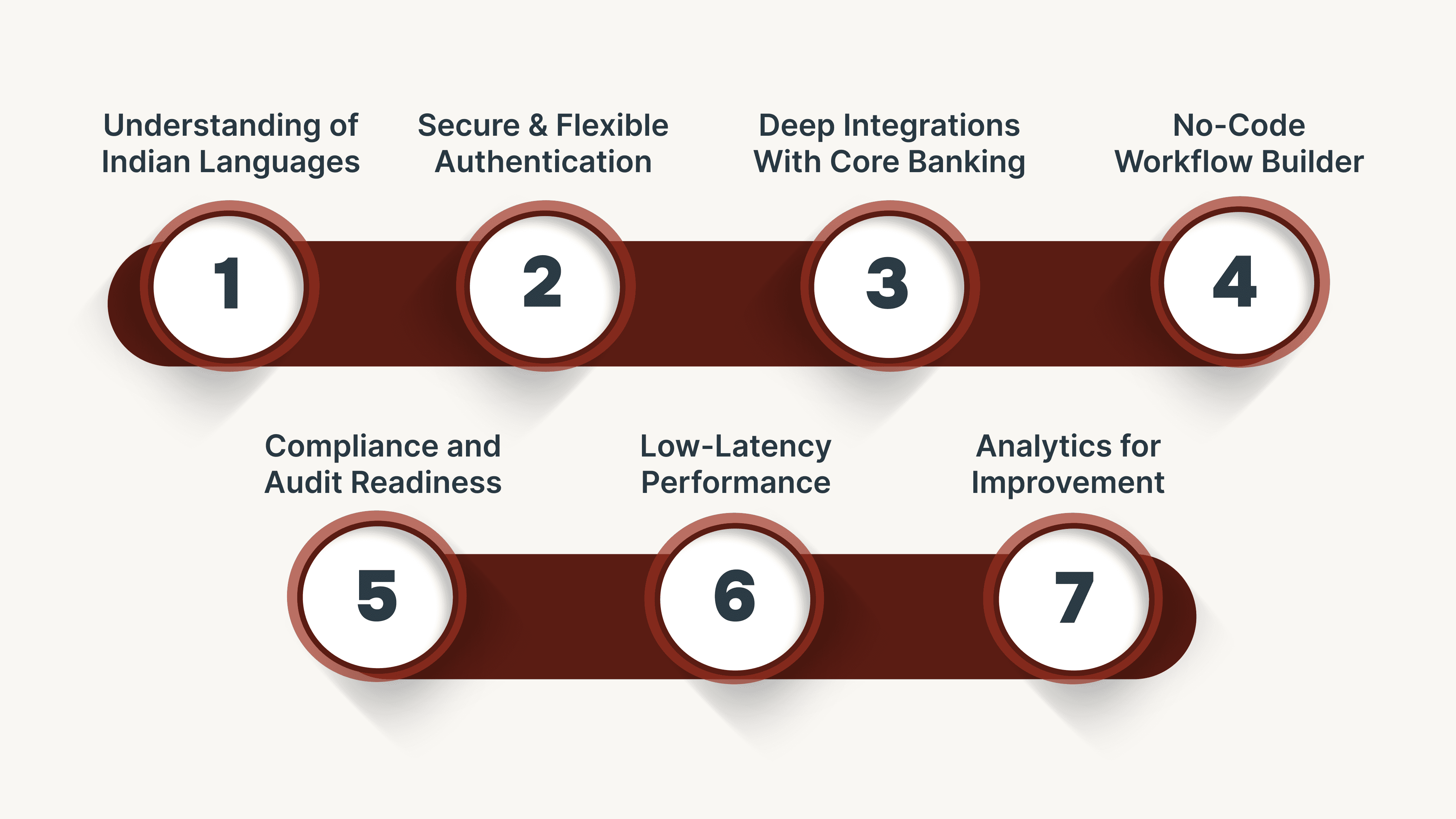
Accurate Understanding of Indian Languages
The platform should handle blended languages, regional accents, and numeric details without losing context. This accuracy directly affects call completion rates and customer satisfaction.
Secure and Flexible Authentication
The system must support OTP checks, knowledge-based questions, and data matching. These verification steps protect sensitive tasks and ensure customers are authenticated before information is shared.
Deep Integrations With Core Banking and LOS Systems
The platform should integrate with core banking, LOS, CRM and card systems. These connections enable actions such as retrieving balances, updating records and logging payment commitments.
No-Code Workflow Builder
Banks frequently update processes due to regulatory requirements and product changes. A no-code workflow builder allows operations teams to adjust flows without engineering support.
Compliance and Audit Readiness
A banking-ready platform logs every interaction with time stamps, extracted details and workflow outcomes. This structure supports audits and reduces compliance risk.
Low-Latency Performance
Financial tasks require real-time responses. Low-latency interactions maintain customer engagement and prevent frustration during tasks such as payment confirmation or EMI guidance.
Analytics for Continuous Improvement
Clear insights into call patterns, failure points and completion rates help operations teams refine workflows and improve accuracy over time.
These capabilities ensure that your voice AI system is secure, scalable and aligned with the realities of modern BFSI operations.
Must read: 10 Proven Ways to Improve Customer Experience Management in Banking
Why Voice Matters for Financial Inclusion in India
Voice remains one of the most accessible channels for banking in India because it removes barriers that prevent many customers from using digital services.
Reaches Customers With Limited Digital Literacy: Many users are comfortable with smartphones but not with typing or navigating apps. Voice lets them access account information without having to interpret complex menus.
Supports Regional Language Communication: Customers frequently switch between English, Hindi, and local languages. Voice systems allow them to communicate naturally without adjusting their speaking style.
Reduces Effort for Important Tasks: Urgent tasks such as confirming EMIs, checking loan status or reporting unauthorized activity are completed faster through spoken interaction.
Improves Access Across Tier 2 and Tier 3 Markets: Voice helps customers in smaller cities receive immediate assistance without relying on advanced digital skills or high-end devices.
Builds Trust Through Clear Communication: Customers often trust spoken information because it is easier to understand. Clear voice responses help improve confidence in financial decisions.
These advantages make voice a crucial channel for serving diverse customer groups nationwide.
How CubeRoot Powers Secure Voice-Enabled Banking
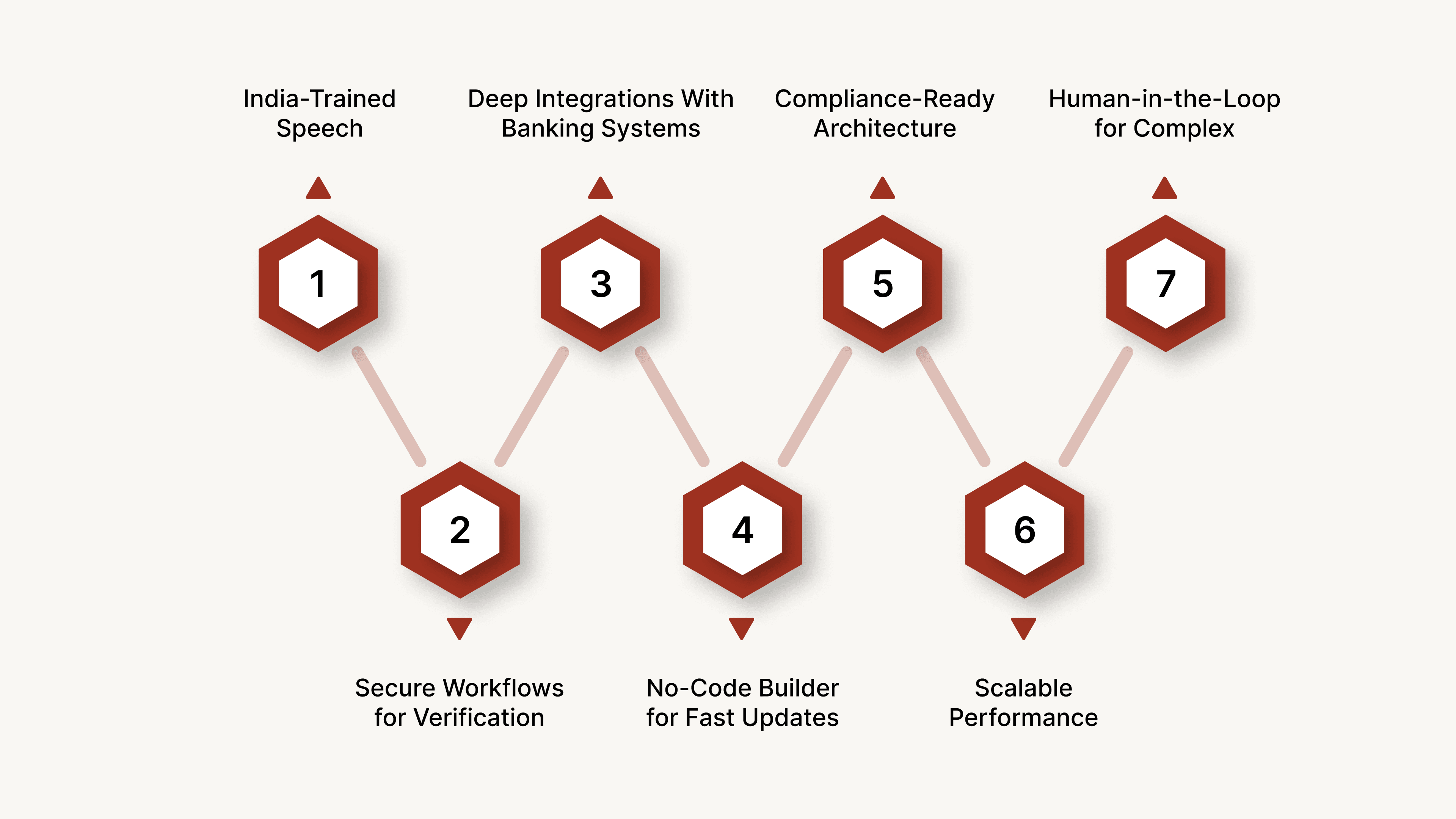
CubeRoot is designed for real banking and lending workflows and focuses on accuracy, security and operational depth.
India-Trained Speech and Language Models: CubeRoot understands Indian accents, blended-language inputs and financial terminology, which improves intent accuracy during balance checks, loan queries and card-related calls.
Secure Workflows for Verification and Transactions: The platform supports OTP checks, knowledge-based questions and data matching to ensure secure completion of sensitive tasks.
Deep Integrations With Banking Systems: CubeRoot connects with core banking, LOS, LMS, CRM and card platforms to retrieve balances, log commitments, update records and process service requests.
No-Code Builder for Fast Updates: Operations teams can launch or update workflows quickly, which helps them adapt to new regulations or product changes.
Compliance-Ready Architecture: CubeRoot maintains detailed call logs with extracted details and workflow steps, supporting RBI-aligned communication practices.
Scalable Performance for High Volumes: The platform handles seasonal spikes and campaign-driven surges without affecting accuracy or response time.
Human-in-the-Loop for Complex Cases: Calls that require human intervention are handed over with full context, which reduces customer friction and improves resolution quality.
These capabilities allow CubeRoot to support secure, multilingual and workflow-rich automation across retail banking, lending, insurance and payments.
Conclusion
Voice-enabled banking is moving from experimentation to mainstream adoption as banks and NBFCs look for practical ways to manage rising volumes and deliver faster, clearer customer support. Customers increasingly prefer speaking to a system that understands their intent, language patterns and urgency, especially for tasks such as balance checks, EMI queries and transaction confirmations. This shift is redefining how financial institutions think about accessibility, convenience and service consistency.
A strong voice solution helps you automate predictable interactions, reduce pressure on service teams and maintain accurate communication across all hours of the day. It brings structure to routine workflows, lowers the cost per conversation and supports compliance by maintaining unified scripts and complete audit trails. These operational gains matter in a landscape where customer patience is low and expectations are high.
Financial institutions that act early on voice adoption build stronger, more scalable service foundations. They reduce call congestion, improve completion rates and deliver a more intuitive experience across regions and customer segments. Voice is becoming a strategic asset for institutions that want to stay ahead of evolving customer behavior while keeping operational efficiency in focus.
Ready to Modernise Your Banking Workflows? Book a quick CubeRoot demo to see how secure voice automation improves customer experience and strengthens your BFSI operations.
FAQs
Q: Is voice-enabled banking secure enough for sensitive customer information?
A: Voice-enabled workflows follow strict authentication steps such as OTP verification and data matching. All data is encrypted in transit and at rest, and every interaction is logged for audit and compliance review.
Q: Can a voice assistant handle blended-language conversations common in India?
A: Yes. Banking-focused voice systems are trained to understand customers who switch between English, Hindi and regional languages during the same call. This reduces repeat questions and improves call completion rates.
Q: How quickly can a bank or NBFC deploy voice automation?
A: Most teams begin with a single workflow, such as balance checks or EMI reminders, and go live within a short deployment period. Additional use cases can be added once integrations and routing rules are in place.
Q: What types of banking tasks can be automated through voice?
A: Banks use voice for balance inquiries, loan status updates, EMI reminders, transaction confirmation, card activation, payment queries and policy information. These workflows cover a significant share of daily call volume.
Q: Does voice automation reduce call center costs?
A: Yes. Automating repetitive interactions lowers the cost per conversation and reduces the number of agents required for routine tasks. Human agents can then focus on fraud cases, delinquency and complex service issues.
Q: Can a voice assistant support regulatory compliance?
A: Voice systems maintain consistent scripts, track every interaction and store structured logs. These features support RBI-aligned communication practices and simplify internal compliance checks.
Q: Will voice automation replace human agents?
A: Voice systems handle predictable and high-volume tasks, not complex or emotional situations. Human agents remain essential for escalations, sensitive requests and judgment-driven decisions.