Dec 26, 2025
How Conversational AI in Insurance Is Transforming Customer Service
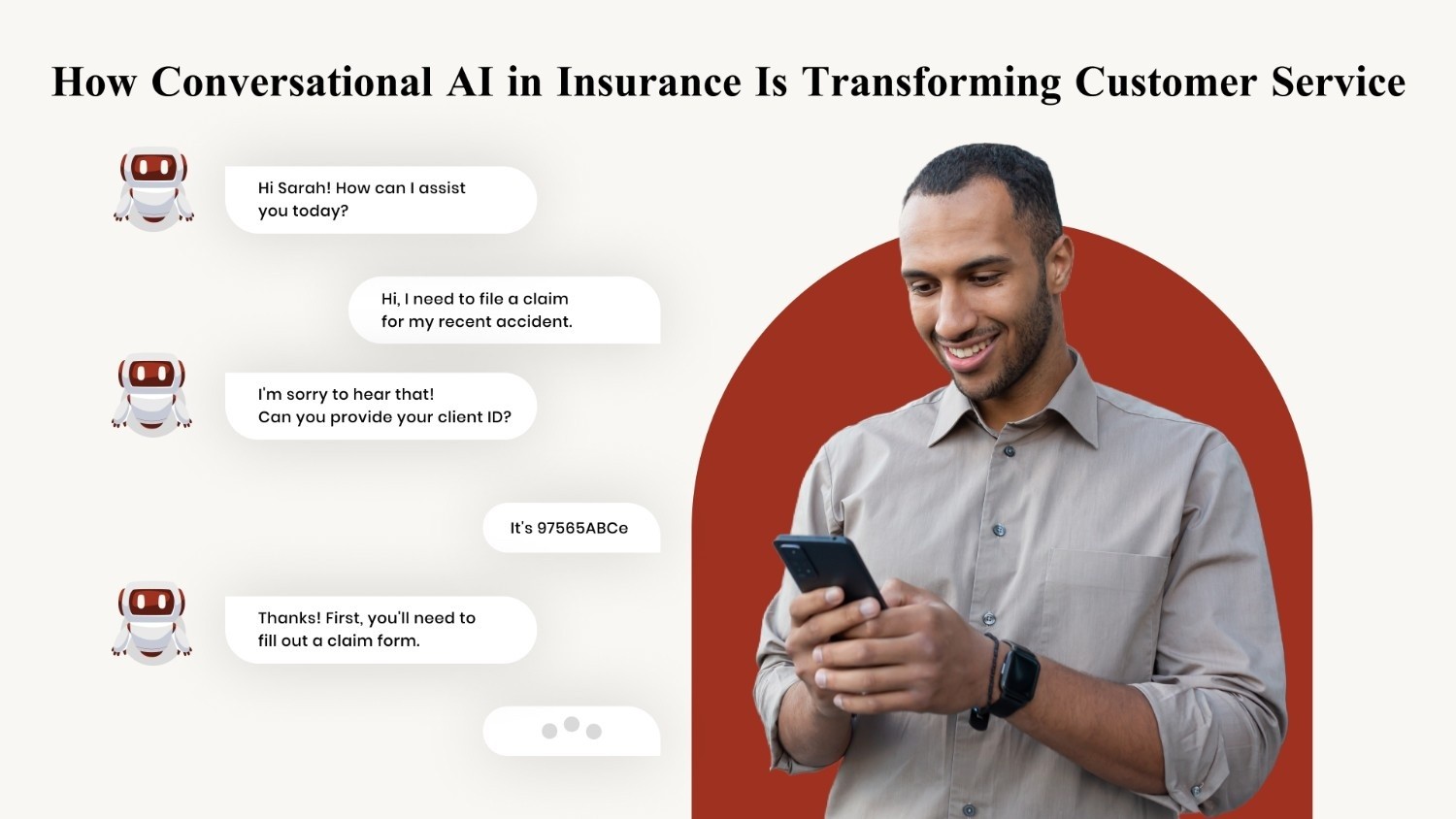
How can insurance companies improve customer satisfaction while reducing operational costs? In an industry where client interactions and claims processing are critical, the answer lies in conversational AI.
The insurance sector faces challenges like long wait times, inefficient claims handling, and poor personalization. Conversational AI, through tools like chatbots and virtual assistants, is transforming how insurers engage with customers. It’s streamlining operations, offering 24/7 support, and making interactions more personalized and efficient, ultimately changing the way insurers do business.
This blog will explore how conversational AI is reshaping customer experience and claims management in the insurance industry, driving greater efficiency and improving client retention.
Key Takeaways
Enhanced Customer Experience: Conversational AI provides instant, personalized responses to clients, improving engagement and satisfaction.
Reduced Operational Costs: Automation of routine tasks like claims inquiries and policy updates lowers the need for human agents, saving insurers time and money.
24/7 Availability: Voice bots and chatbots ensure that customers can get assistance any time, day or night, improving service availability.
Improved Claims Processing: AI-driven tools can automate parts of the claims process, speeding up resolutions and reducing human errors.
Better Data Insights: Conversational AI collects valuable customer data, helping insurers identify trends, predict customer needs, and improve decision-making.
What Is Conversational AI in Insurance?
Conversational AI encompasses technologies that enable machines to communicate with humans in a natural, conversational way. In the insurance industry, this includes AI-powered chatbots, voice assistants, and virtual agents that help manage customer interactions, automate routine tasks, and improve service delivery. Using natural language processing (NLP) and machine learning, these tools understand and respond to customer queries in real time.
In insurance, conversational AI streamlines everything from policy inquiries to claims processing, providing customers with immediate, accurate information. By automating repetitive tasks, AI allows human agents to focus on more complex issues, enhancing both efficiency and cost-effectiveness.
These AI solutions not only respond to queries but also personalize interactions, analyze customer data, and offer proactive support, leading to a more engaging and seamless customer experience.
With a clear understanding of conversational AI, let’s explore the key challenges in the insurance industry that AI can solve.
What Are the Biggest Obstacles in the Insurance Industry Today?
The insurance industry faces a number of persistent challenges that affect customer satisfaction and operational efficiency. These hurdles make it difficult for insurers to provide timely, personalized service while maintaining cost-effectiveness. Here are some of the key challenges insurers face:
High No-Show and Missed Payments: Customers often fail to show up for appointments or miss premium payments, disrupting schedules and revenue flow.
Long Wait Times for Customers: Insurance companies often struggle with long wait times, particularly during peak periods, leading to frustrated customers and lost opportunities.
Complicated Claims Processing: The claims process can be slow, error-prone, and difficult to navigate, leading to customer dissatisfaction and operational inefficiencies.
Lack of Personalization: Insurance providers sometimes struggle to offer personalized experiences, leading to customer frustration and reduced engagement.
Operational Costs: Managing high volumes of customer inquiries, claims, and support requests can be resource-heavy, leading to inflated costs for insurance companies.
Inconsistent Communication: Ensuring customers receive timely, accurate information across various communication channels remains a challenge for insurers, resulting in confusion and frustration.
Now that we've outlined the challenges, let's take a look at how conversational AI can help insurers tackle these issues and transform the industry.
How Conversational AI Can Improve Customer Experience in Insurance?
Conversational AI has the potential to significantly improve the customer experience in the insurance industry by providing faster, more personalized service. Here’s how:
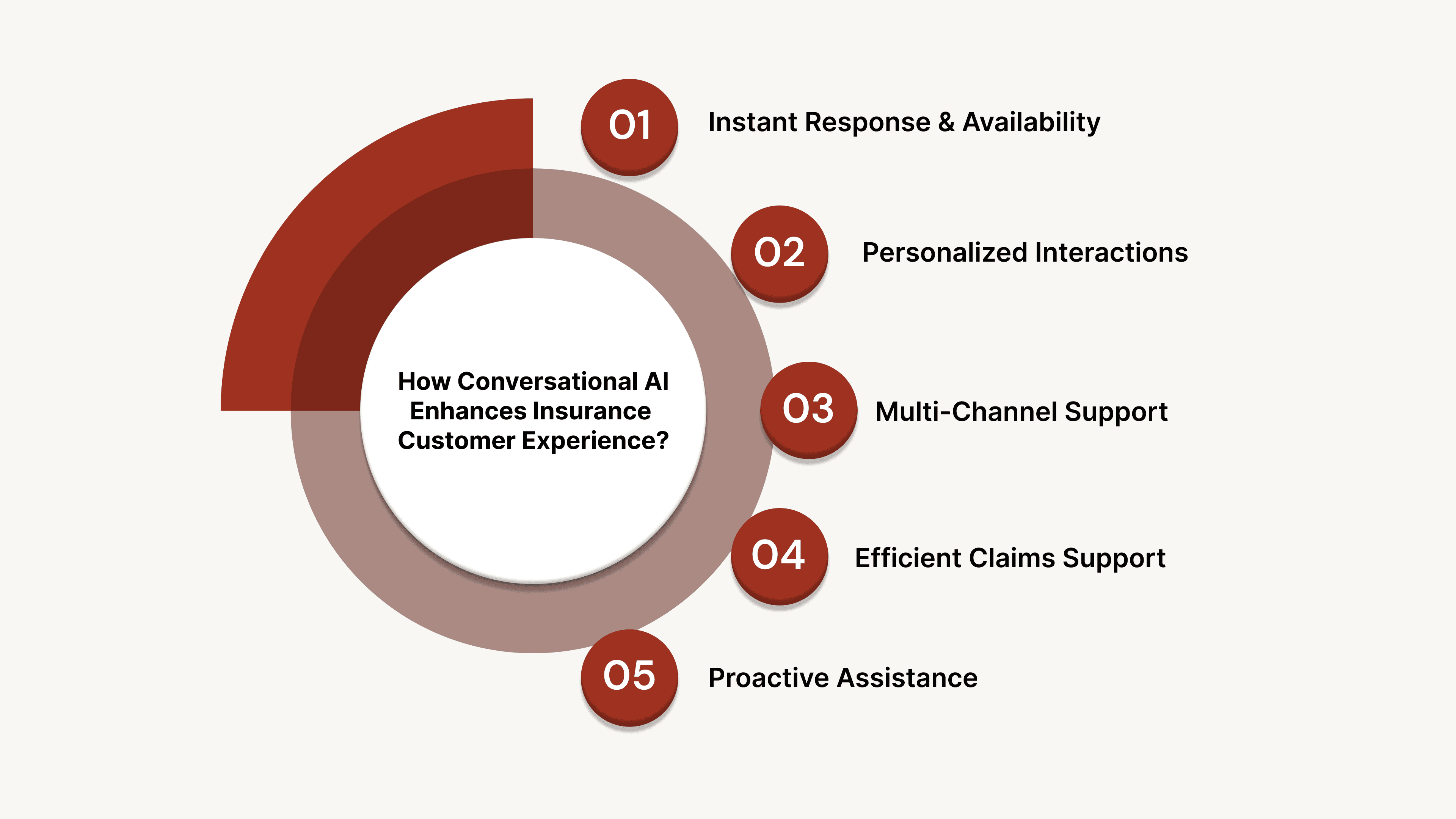
Instant Response and Availability: Conversational AI provides immediate responses to customer inquiries, reducing wait times and ensuring that customers can get assistance anytime, day or night.
Personalized Interactions: AI-driven bots can access customer data and offer tailored solutions based on a customer’s history, preferences, and needs, creating a more engaging and relevant experience.
Multi-Channel Support: Conversational AI can engage customers across multiple channels, including phone, chat, and email, providing a seamless experience regardless of the platform.
Efficient Claims Support: With AI handling routine inquiries about claims, policies, and coverage, customers can receive quick answers without the need to wait for a human agent.
Proactive Assistance: AI can anticipate customer needs by offering reminders for policy renewals, payment due dates, or even suggesting new coverage options based on customer profiles.
By integrating conversational AI, insurers can provide seamless, personalized service that drives loyalty. Now, let’s explore how AI is transforming claims processing in the insurance industry.
Also Read: Everything You Need To Know About AI Assistants
How Can Conversational AI Streamline Claims Processing in Insurance?
Claims processing is often slow and cumbersome, but conversational AI is revolutionizing the way insurance companies handle this critical function. By automating key aspects, AI is speeding up the process, reducing errors, and improving overall efficiency. Here’s how:
Automated Claim Status Updates: Voice bots and chatbots provide real-time claim updates, allowing customers to check the status without waiting on hold, reducing frustration and wait times.
Efficient Document Handling: AI automatically extracts and processes data from documents, streamlining the review process and minimizing manual data entry errors.
Smart Claims Verification: AI cross-references claims with policy data and other documents, identifying discrepancies early and reducing the chance of errors in claim approvals.
Consistent Communication: Conversational AI ensures clear, accurate, and consistent communication with customers, handling routine queries and keeping them informed throughout the process.
Faster Decision-Making: AI quickly analyzes claims data, enabling insurers to make faster, more accurate decisions and provide quicker resolutions to customers.
Next, Let’s now explore the broader benefits for insurance companies.
Unique Benefits of Conversational AI for Insurance Companies
In addition to improving customer experience and claims processing, conversational AI brings several unique advantages to insurance companies. Here’s how it can drive growth and innovation:
Faster Onboarding and Policy Enrollment: Conversational AI can guide potential customers through the policy enrollment process, answer questions, and help them select the right plans, accelerating the customer onboarding process.
Enhanced Fraud Detection: AI can assist in detecting inconsistencies or suspicious patterns in claims, flagging potential fraud early by cross-checking data across various databases.
Proactive Policy Management: AI can remind customers about upcoming premium payments, renewals, or coverage changes, leading to a more engaged customer base that stays on top of their policies.
Customizable AI Solutions: Conversational AI platforms can be tailored to meet the specific needs of different insurance providers, whether for health, auto, or life insurance, making the technology highly adaptable.
Improved Compliance and Risk Management: AI systems can help ensure that customer interactions adhere to industry regulations, automatically tracking compliance and reducing risk exposure.
Also Read: Understanding Customer Value: Definition, Impact, Trends & Strategies
How CubeRoot is Transforming Insurance with Conversational AI?
CubeRoot offers an AI-powered solution tailored to the needs of the insurance industry, helping companies streamline operations, improve customer service, and reduce costs. Here’s how CubeRoot transforms insurance services with conversational AI:
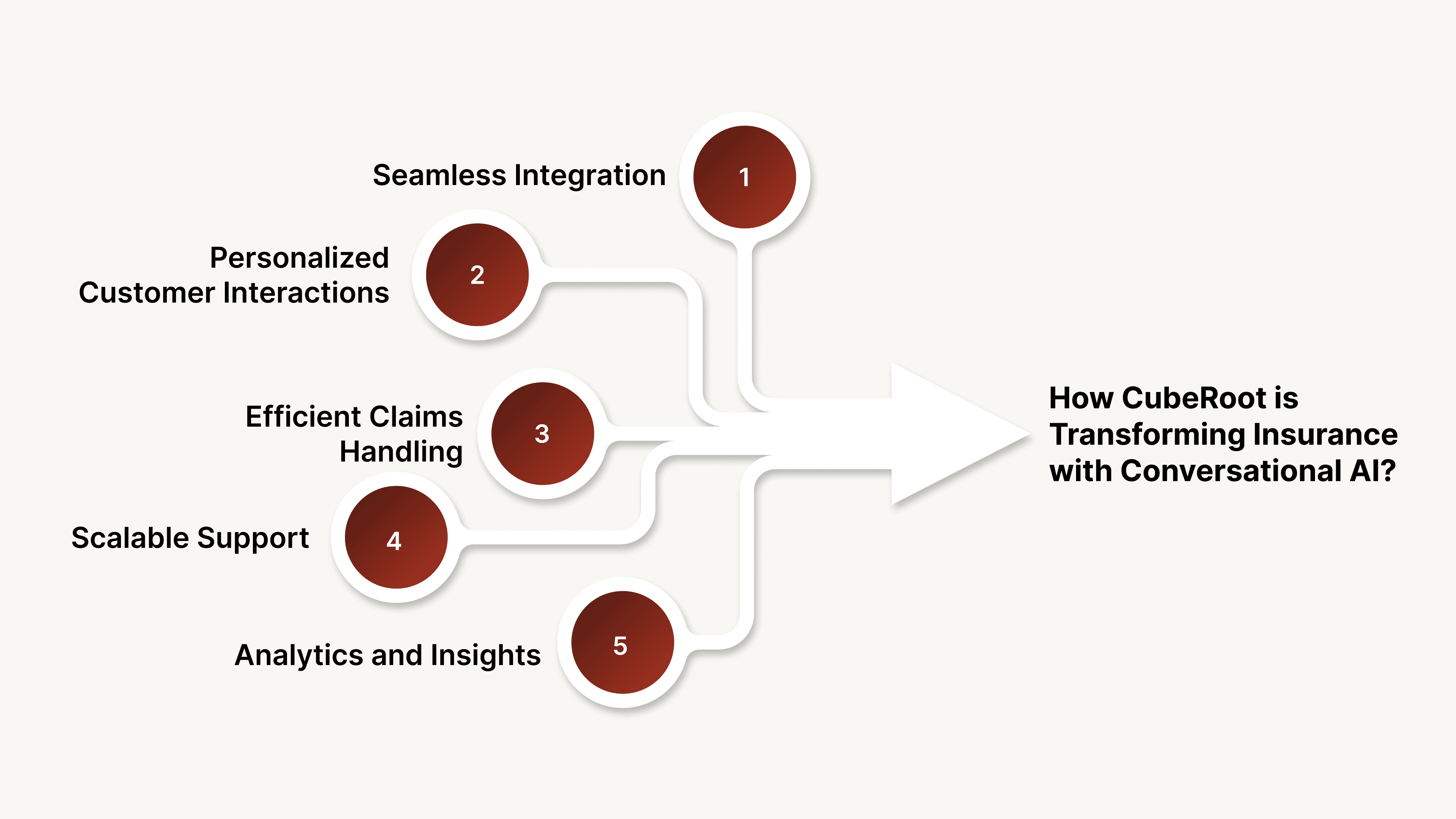
Seamless Integration: CubeRoot integrates with existing insurance systems like CRM, claims processing, and policy management platforms, allowing smooth data exchange and real-time updates.
Personalized Customer Interactions: CubeRoot’s voice and chatbots are powered by advanced AI, providing personalized, context-aware interactions based on customer history and preferences, improving engagement and satisfaction.
Efficient Claims Handling: CubeRoot automates routine claims inquiries, status updates, and verification, speeding up the process and reducing the administrative burden on human agents.
Scalable Support: Whether it’s handling routine customer inquiries or managing surges during claim seasons, CubeRoot’s AI can scale to meet the demands of high-volume customer interactions.
Analytics and Insights: CubeRoot provides insurers with actionable insights from customer interactions, helping companies refine their service strategies, improve decision-making, and increase operational efficiency.
CubeRoot empowers insurers to deliver better service, increase efficiency, and reduce costs. Let’s now explore the future of conversational AI in insurance.
Future Trends in Conversational AI for Insurance
The role of conversational AI in the insurance industry is only set to expand as technology continues to evolve. Here are the key trends we can expect to shape the future of AI-driven solutions in insurance:
AI-Driven Predictive Analytics: In the future, AI will be able to analyze historical customer data and predict future behavior, allowing insurers to offer proactive services such as policy renewals, claim predictions, and personalized product recommendations.
Smarter Automation: AI will handle increasingly complex tasks, including fully automated claims processing and underwriting, which will speed up decision-making and improve the accuracy of insurance operations.
Integration with IoT: As IoT devices become more common, conversational AI will integrate with them to provide real-time data to insurers, allowing for smarter claims handling, real-time risk assessments, and personalized customer service.
Omnichannel Engagement: Conversational AI will support seamless engagement across multiple channels, from voice assistants to messaging platforms, ensuring a consistent experience no matter how customers reach out.
Voice AI for Personalized Experiences: With advancements in voice recognition and sentiment analysis, AI-driven voice assistants will deliver even more personalized interactions, understanding the tone and context of customer conversations to provide tailored support.
Conclusion
Conversational AI is transforming the insurance industry, offering companies a powerful tool to improve customer engagement, automate processes, and reduce operational costs. By providing instant, personalized responses, AI is enhancing the customer experience and streamlining operations from policy inquiries to claims processing.
With solutions like CubeRoot, insurers can integrate AI seamlessly into their existing systems, delivering real-time support and actionable insights. As AI continues to advance, the future of insurance will be defined by smarter automation, predictive analytics, and more personalized, efficient service.
For insurance companies looking to stay ahead of the curve, investing in conversational AI is no longer optional, it’s essential.
Book a demo with CubeRoot today to boost your insurance services with AI-driven solutions. |
FAQs
Q: How does conversational AI improve customer experience in insurance?
A: Conversational AI improves customer experience by providing instant responses, personalized interactions, and 24/7 availability, ensuring customers get timely support without long wait times.
Q: Can conversational AI replace human agents in insurance?
A: While conversational AI handles routine tasks efficiently, human agents are still essential for complex cases and providing emotional intelligence. AI assists by automating repetitive work, freeing agents to focus on higher-value interactions.
Q: How secure is conversational AI in handling sensitive insurance data?
A: Conversational AI systems like CubeRoot comply with industry standards and regulations such as GDPR and HIPAA, ensuring sensitive customer data is encrypted and protected against breaches.
Q: How does conversational AI automate claims processing?
A: Conversational AI automates tasks such as claim status updates, document verification, and routine inquiries, speeding up the claims process and reducing human errors, leading to faster resolutions.
Q: What are the benefits of conversational AI for insurance companies?
A: Benefits include cost savings, improved operational efficiency, enhanced customer satisfaction, reduced manual errors, and the ability to handle high volumes of customer interactions with scalability.
Q: Can conversational AI be integrated with existing insurance systems?
A: Yes, CubeRoot and similar AI solutions integrate seamlessly with existing insurance systems, such as CRM, claims management, and policy administration platforms, ensuring smooth data flow and real-time updates.