Dec 26, 2025

What is Average Handle Time and How to Improve
Every extra minute an agent spends on a customer interaction costs money, time, and sometimes, customer loyalty. Average Handle Time (AHT) isn’t just a call center metric; it directly impacts revenue, customer satisfaction, and operational efficiency.
Multilingual support, regulatory obligations, and seasonal spikes make balancing speed and quality critical. Leaders need strategies that reduce handle time without compromising the customer experience or compliance.
This blog breaks down the AHT full form, components, benchmarks, and the factors that influence it, while offering practical ways to optimize it across sectors.
You’ll also see how AI-powered solutions like CubeRoot help enterprises scale efficiently, resolve routine queries instantly, and free human agents to focus on complex, high-value interactions.
Key Takeaways
AHT is a critical KPI for measuring efficiency, agent productivity, and operational health in BPO operations.
Reducing AHT alone isn’t enough; balancing handle time with customer satisfaction is essential.
AI and automation can optimize AHT without compromising quality, enhance resolution rates, and lower costs.
Multilingual, compliance-ready workflows have a direct impact on AHT performance in India’s diverse markets.
Data-driven AHT monitoring enables enterprises to optimize workforce allocation, enhance first-call resolution, and improve customer satisfaction.
What is AHT? Full Form and Definition
AHT stands for Average Handle Time, a critical metric in BPO and enterprise contact center operations. It measures the average duration an agent spends resolving a customer interaction, including the time on the call, any hold time, and after-call work.
AHT Formula
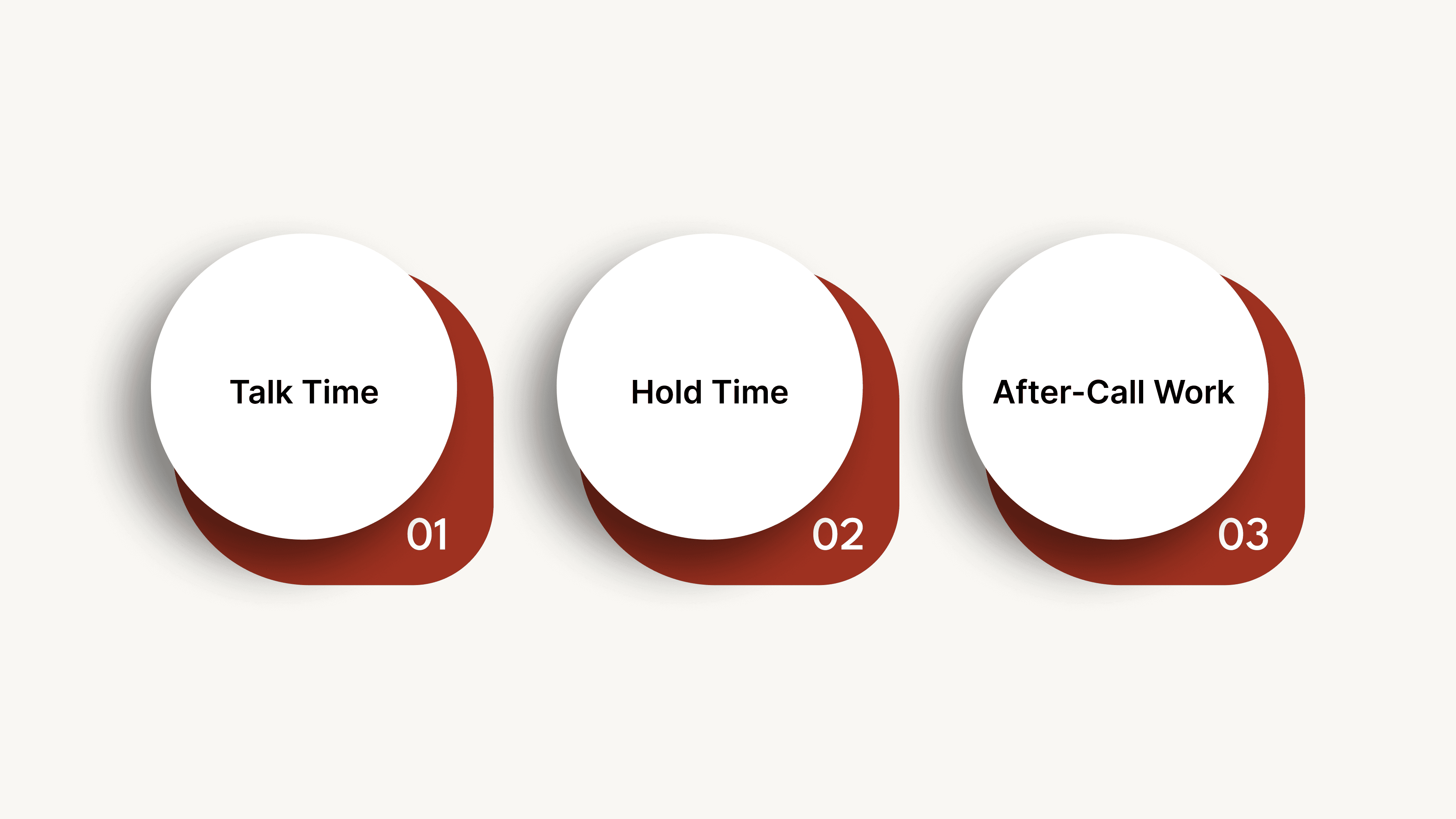
AHT = (Talk Time + Hold Time + After-Call Work) ÷ Number of Calls
Next, we can move on to “Components of AHT”, breaking down each element in detail and linking it to real-world enterprise impacts.
Components of AHT and Their Impact on Enterprise Operations
Understanding AHT requires a closer examination of its three core components: Talk Time, Hold Time, and After-Call Work (ACW). Each element influences costs, agent productivity, and customer experience in different ways.
1. Talk Time
Definition: Time spent by the agent actively communicating with the customer.
Enterprise Impact:
Longer talk time can indicate complex issues or insufficient knowledge resources.
Shorter talk time may improve efficiency, but it also risks reducing first-call resolution and customer satisfaction.
In BFSI, detailed loan explanations or compliance disclosures increase talk time; in Retail/eCommerce, order queries and return processes can lengthen calls.
2. Hold Time
Definition: The Time a customer spends on hold or waiting to be transferred to another agent or department.
Enterprise Impact:
Excessive hold times reduce customer satisfaction and increase repeat calls.
Inefficient routing or limited agent availability often increases hold time.
Sectors such as healthcare or BFSI require multi-department escalation, making intelligent routing and proactive AI support critical to minimizing hold times.
3. After-Call Work (ACW)
Definition: Time spent by agents on follow-up tasks after the call, such as updating records, logging notes, or scheduling appointments.
Enterprise Impact:
High ACW extends total handle time and affects SLA compliance.
Automating routine ACW tasks through AI or integrated CRM systems can significantly reduce AHT without impacting quality.
In SaaS or EdTech, ACW often involves updating tickets or confirming enrollments; in Retail/eCommerce, it may include logging refunds or processing returns.
Next, we’ll examine why AHT matters for enterprises, highlighting the direct link between handle time, operational cost, customer satisfaction, and first-call resolution.
Also Read: What Is Customer Satisfaction And How To Improve It?
Why AHT Matters for Enterprises?
Average Handle Time (AHT) has a direct impact on productivity, cost, and customer experience. In high-volume sectors such as BFSI, Retail, SaaS, D2C, EdTech, and Healthcare, even small inefficiencies can scale quickly, impacting compliance and operational outcomes.
Key Business Insights from AHT
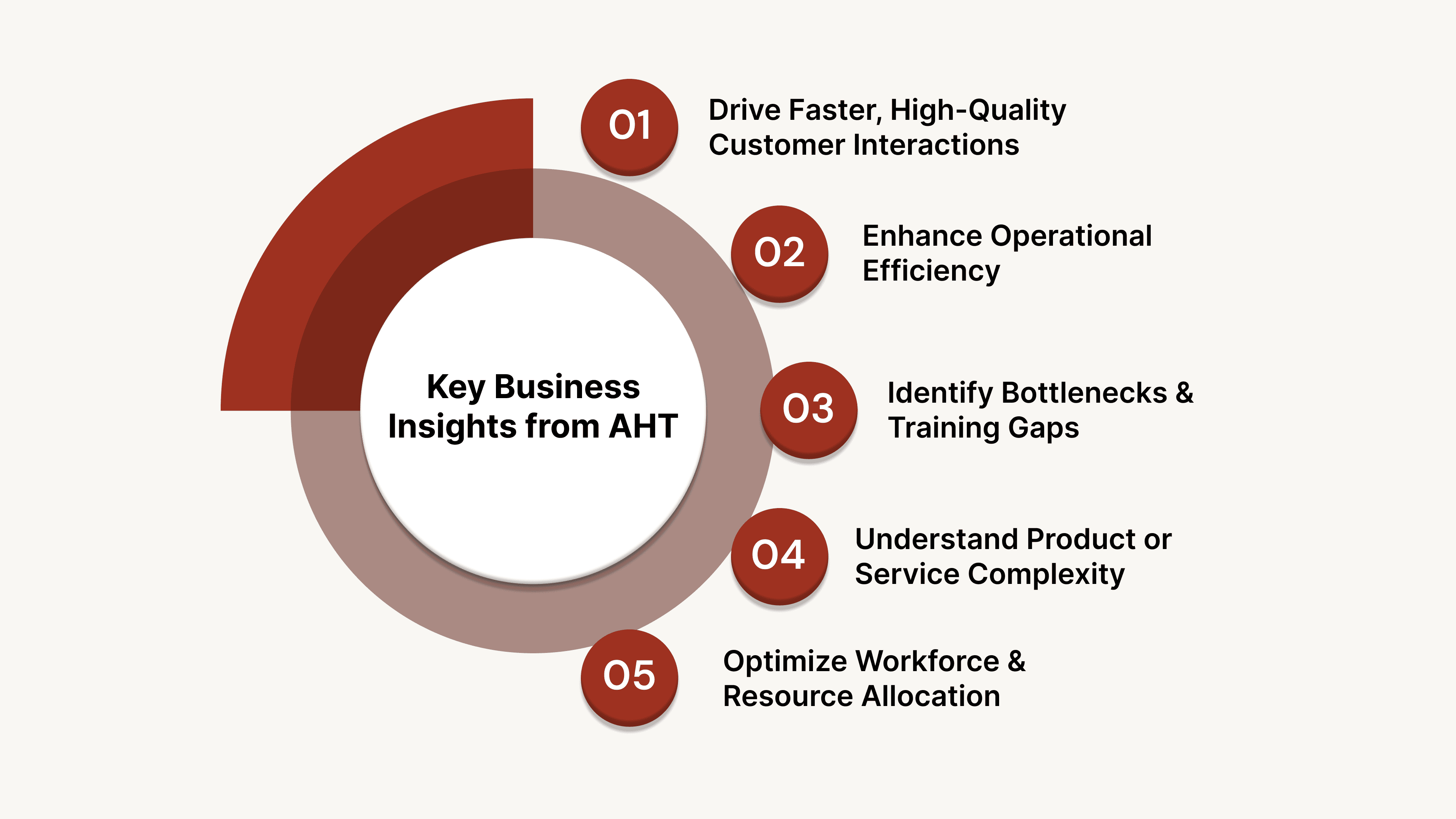
Drive Faster, High-Quality Customer Interactions
AHT reveals how efficiently your team resolves customer queries.
Insights help maintain first-call resolution, reduce wait times, and improve CX without overburdening agents.
Enhance Operational Efficiency and Cost Management
By identifying areas where calls run longer than necessary, enterprises can optimize workflows, redistribute tasks, and reduce unnecessary operational costs.
Efficient AHT management ensures a leaner operation while handling higher volumes.
Identify Bottlenecks and Training Gaps
High handle times can indicate process inefficiencies, knowledge gaps, or system limitations.
Leaders can prioritize training, process redesign, or automation to resolve these issues.
Understand Product or Service Complexity
Products or services that consistently generate longer calls may need better documentation, clearer instructions, or improved self-service tools.
AHT helps align support strategy with product complexity.
Optimize Workforce and Resource Allocation
AHT data enables smarter scheduling, workload distribution, and surge management during peak periods.
Enterprises can ensure consistent service quality while maintaining employee productivity and satisfaction.
AHT Benchmarks: What Top Enterprises Aim For
The “ideal” AHT varies by sector, complexity, and customer expectations. Benchmarks help leaders identify inefficiencies, allocate resources effectively, and prioritize automation.
Industry Benchmarks for AHT in India (2025 Estimates)
Sector | Benchmark AHT | Key Drivers |
Retail / eCommerce | 3–4 min | High-volume, low-complexity queries. |
Banking & Financial Services (BFSI) | 4–6 min | Regulatory disclosures, account queries. |
Telecommunications | 5–7 min | Multi-tier services and troubleshooting. |
Technical Support / SaaS | 8–10 min | Product complexity and troubleshooting. |
Healthcare | 6–8 min | Appointments, follow-ups, compliance. |
Travel & Hospitality | 3–5 min | Quick bookings, seasonal spikes. |
Utilities | 4–6 min | Billing queries, compliance steps. |
Insurance | 5–7 min | Policy clarifications, claim support. |
How Leaders Should Use These Benchmarks?
Contextualize for your business: Factor in call complexity, compliance, and customer expectations.
Balance efficiency with quality: Reduce handle time without compromising first-call resolution or CX.
Spot improvement areas: Significant deviations indicate process gaps, training needs, or tech opportunities.
Prioritize automation and staffing: Use benchmarks to plan AI, workflows, and agent allocation during peak volumes.
With benchmarks established, the next focus is on factors that influence AHT, from agent skills to call complexity and technology adoption.
Also Read: Everything You Need To Know About AI Assistants
What Drives AHT in Enterprise Operations?
Average Handle Time (AHT) is a pulse on operational efficiency, customer experience, and cost control. In Indian enterprises across BFSI, Retail, SaaS, D2C, EdTech, and Healthcare, reducing AHT strategically means faster resolutions, lower costs, and better first-call outcomes.
Top Drivers Leaders Should Focus On
Agent Capability & Workflow Tools: Skilled agents supported by guided workflows and real-time dashboards resolve queries faster and reduce handoffs, directly lowering handle times.
Call Complexity & Compliance Needs: High-complexity queries, like BFSI compliance checks or healthcare follow-ups, extend AHT. Streamlined scripts, AI-driven knowledge, and automation minimize unnecessary delays.
Technology & Process Efficiency: Predictive routing, AI voice agents, and integrated CRMs reduce repetitive tasks, hold times, and after-call work. Optimized processes ensure consistency even during peak demand.
Multilingual Support & Regulatory Adherence: Language diversity and strict compliance requirements add time. AI-driven multilingual assistants and pre-built compliance scripts maintain resolution speed without sacrificing quality.
With a clear understanding of what drives AHT, the next focus is practical strategies to optimize it across sectors, using AI, automation, and process improvements for measurable impact.
Strategies to Optimize AHT in Enterprise Operations
Reducing Average Handle Time (AHT) isn’t about rushing calls, it’s about streamlining processes, empowering agents, and leveraging technology to resolve queries efficiently while maintaining quality and compliance.
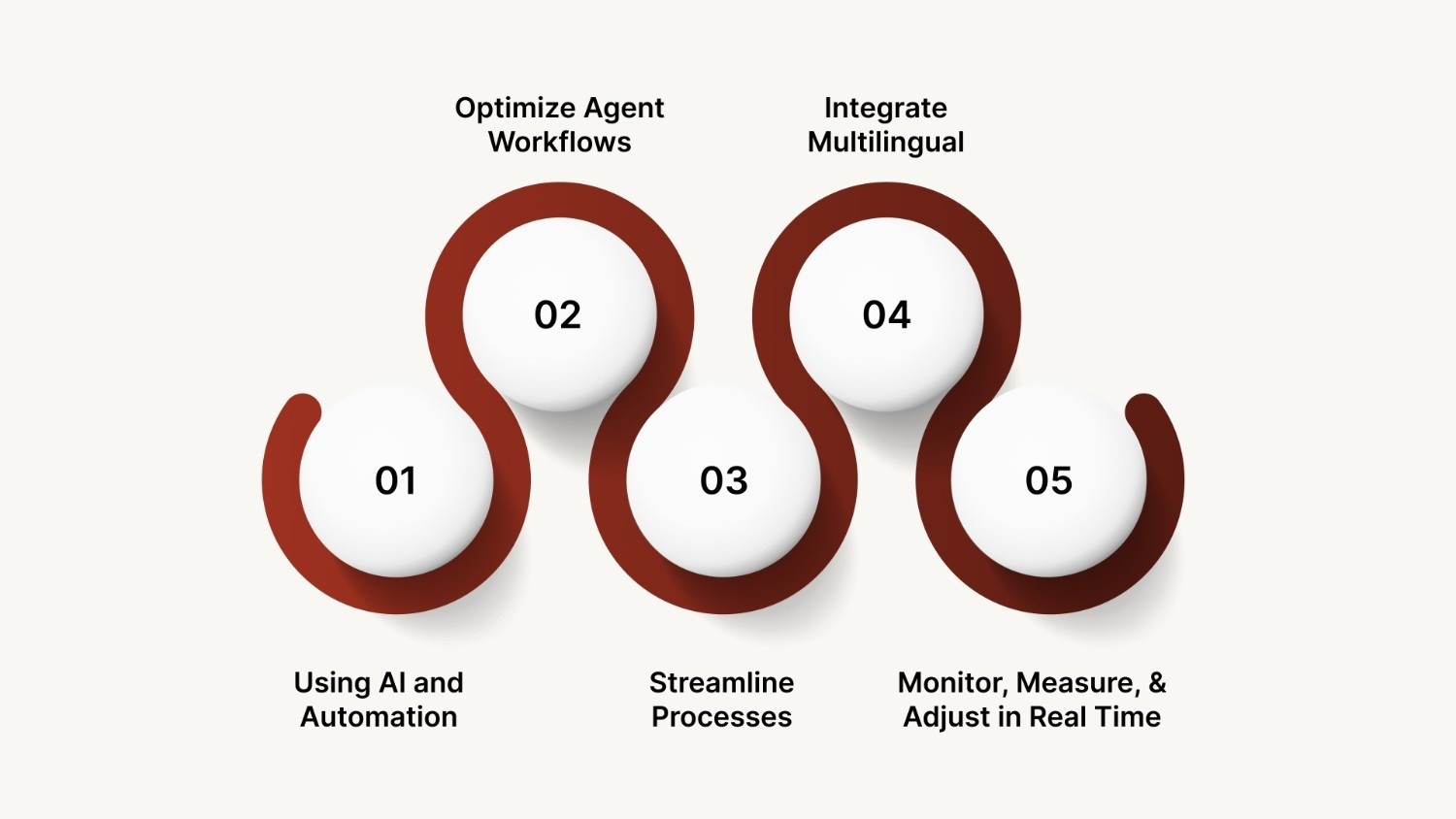
1. Using AI and Automation
Deploy AI voice agents for routine queries, reminders, and order updates.
Use chatbots and automation to reduce repetitive tasks and after-call work.
Outcome: frees human agents to focus on complex, high-value interactions while lowering average handle time.
2. Optimize Agent Workflows and Training
Provide guided workflows, real-time dashboards, and decision-support tools.
Conduct targeted training to close knowledge gaps and improve resolution speed.
Outcome: reduces handoffs, improves first-call resolution, and ensures compliance.
3. Streamline Processes and Call Routing
Implement skill-based routing and intelligent escalation paths.
Simplify internal workflows to minimize hold time and unnecessary transfers.
Outcome: consistent AHT even during peak volumes, with higher agent productivity.
4. Integrate Multilingual and Compliance Tools
Equip agents with AI-driven multilingual support and pre-built compliance scripts.
Outcome: maintains speed and quality across diverse customer bases while adhering to regulations.
5. Monitor, Measure, and Adjust in Real Time
Use dashboards and analytics to track AHT trends, peak demand, and agent performance.
Continuously refine staffing, routing, and automation strategies.
Outcome: data-driven optimization that keeps AHT within target ranges without compromising CX.
Next, we’ll explore how platforms like CubeRoot help enterprises optimize AHT at scale, delivering measurable impact across operations.
How CubeRoot Helps Enterprises Optimize AHT at Scale?
Enterprises are increasingly turning to AI-powered platforms like CubeRoot to manage high-volume customer interactions efficiently. CubeRoot goes beyond basic automation, providing multilingual, compliance-ready, and human-in-the-loop voice AI that reduces handle time while maintaining quality.
Automate Routine Queries:
AI voice agents handle repetitive calls—balance inquiries, order status updates, appointment confirmations—freeing human agents for complex issues.
Impact: Reduces AHT, improves first-call resolution, and lowers operational costs.Real-Time Agent Assistance:
Intelligent dashboards and AI-guided workflows provide agents with next steps, knowledge prompts, and compliance checks during calls.
Impact: Speeds up resolution, reduces handoffs, and ensures regulatory adherence.Multilingual Support at Scale:
CubeRoot supports multiple Indian languages, ensuring inclusivity and faster resolution across diverse markets.
Impact: Maintains consistent AHT across regions without compromising customer experience.Data-Driven Insights:
Real-time analytics monitor AHT trends, identify bottlenecks, and highlight areas for process improvement.
Impact: Enables leaders to make informed staffing, routing, and training decisions.
Conclusion
The average handle time (AHT) of a contact center is now a crucial benchmark for corporate success. Every encounter influences cost, compliance, and customer happiness across BFSI, Retail/eCommerce, SaaS, D2C, EdTech, and Healthcare.
Enterprises that optimize AHT intelligently, balancing speed with quality, using AI, and streamlining processes can reduce operational costs, improve first-call resolution, and scale efficiently without adding headcount.
Platforms like CubeRoot make this possible today. By combining AI-powered voice agents, multilingual support, and human-in-the-loop escalation, CubeRoot enables enterprises to resolve routine queries instantly, maintain compliance, and empower agents to focus on high-value tasks.
For Indian enterprises, the time to rethink handle time strategy and modernize operations is now. Reducing AHT isn’t just operational, it’s a competitive advantage.
Book a demo with CubeRoot today to resolve 70% of routine queries instantly, qualify 80% of leads in minutes, and cut support or collection costs by up to 50%—all while keeping human agents focused on what matters most. |
FAQs
Q: What is the full form of AHT?
A: AHT stands for Average Handle Time, the average duration an agent spends resolving a customer interaction, including talk time, hold time, and after-call work.
Q: How can AI reduce AHT?
A: AI voice agents and automation handle routine tasks, provide real-time agent guidance, and support multilingual interactions, reducing talk, hold, and after-call times.
Q: Does lowering AHT impact customer satisfaction?
A: Not if done strategically. Optimized AHT balances efficiency with quality, ensuring quick resolution without compromising first-call satisfaction or compliance.
Q: How can CubeRoot help optimize AHT?
A: CubeRoot delivers AI-powered, multilingual, compliance-ready voice automation. It resolves routine queries instantly, supports human escalation for complex cases, and provides real-time analytics for ongoing optimization.
Q: What factors influence AHT in enterprise operations?
A: Key drivers include agent expertise, call complexity, workflow efficiency, technology adoption, compliance requirements, multilingual support, and seasonal call volumes.