Dec 26, 2025
8 Best AI Voice Assistant Chatbot Apps to Enhance User Experience
Voice-AI is changing how people interact with technology. Instead of typing or tapping, users can now speak naturally and receive instant, accurate responses, making digital interactions faster and more intuitive.
Earlier chatbots were mainly text-based and limited to fixed scripts. Modern voice assistants understand natural speech, recognise intent, and respond conversationally, creating more human-like and efficient communication.
This trend is growing rapidly worldwide, including in India. The Indian voice-assistant market was valued at around USD 153.01 million in 2024 and is projected to exceed USD 957.61 million by 2030, driven by rising smartphone usage, support for regional languages, and increasing demand for faster digital services.
From customer support and sales automation to personal productivity and smart-home control, voice AI has evolved from a novel concept to an everyday tool that enhances convenience, speed, and user experience across various industries.
Key Takeaways
Voice-AI is transforming digital interaction, replacing typing with natural, conversational speech for faster, more human-like experiences.
Modern assistants go beyond basic commands, understanding emotion, context, and multilingual inputs while automating everyday and business tasks.
Leading platforms, such as CubeRoot Voice AI, Google Assistant, Siri, Alexa, ChatGPT Voice, Copilot, and Mycroft AI, enhance productivity and customer engagement.
Businesses see a real impact, including faster lead qualification, 24/7 support, and personalised, multilingual service that boosts efficiency and satisfaction.
The future is emotion-aware and immersive, as voice-AI integrates with AR/VR, wearables, and real-time translation for smarter, seamless experiences.
What Is an AI Voice Assistant Chatbot App?
An AI voice assistant chatbot app is a software application that enables users to communicate through voice commands instead of typing. It combines artificial intelligence, speech-to-text technology, and natural language processing to understand spoken language, interpret intent, and respond verbally or perform tasks automatically.
How It Works
Voice input → Speech recognition → AI processing & intent understanding → Voice response or action
This allows the system to not only hear what a user says but also understand context, tone, and meaning.
Core Capabilities
Modern AI voice assistants are equipped with advanced capabilities that extend far beyond simple commands, enabling seamless, human-like interactions.
Understand natural human speech, accents, and languages
Respond with context-aware, conversational replies
Complete tasks like placing calls, setting reminders, sending messages, or searching for information
Control and integrate with apps, software platforms, and smart devices
Save user preferences and personalise interactions over time
Provide real-time recommendations and guidance
Handle routine workflows in business environments such as booking appointments, updating CRM records, and managing customer calls
Advanced Abilities in Modern Voice AI
Today’s AI voice systems are evolving to understand emotions, context, and complex requests, making them more intuitive and adaptive than ever.
Recognise emotional tone or sentiment
Support multilingual and regional language conversations
Learn from historical interactions to improve accuracy
Handle complex queries beyond scripted commands
Work across devices, mobile apps, speakers, smart appliances, cars, and more
Key Benefits
The growing adoption of voice AI brings tangible benefits to both users and businesses, simplifying tasks and improving overall efficiency.
Hands-free convenience for daily tasks and business workflows
Faster and more natural communication than typing
Increased productivity for professionals and teams
Enhanced accessibility for visually-impaired or mobility-challenged users
Smooth multitasking, making it useful while driving, cooking, working, or travelling
Improves customer service efficiency in businesses by automating calls and responses
What Makes a Great Voice-AI Assistant? Key Features to Look For
When choosing a voice-AI assistant, certain capabilities define how smart, natural, and helpful the experience will be. The most effective platforms include the following features:
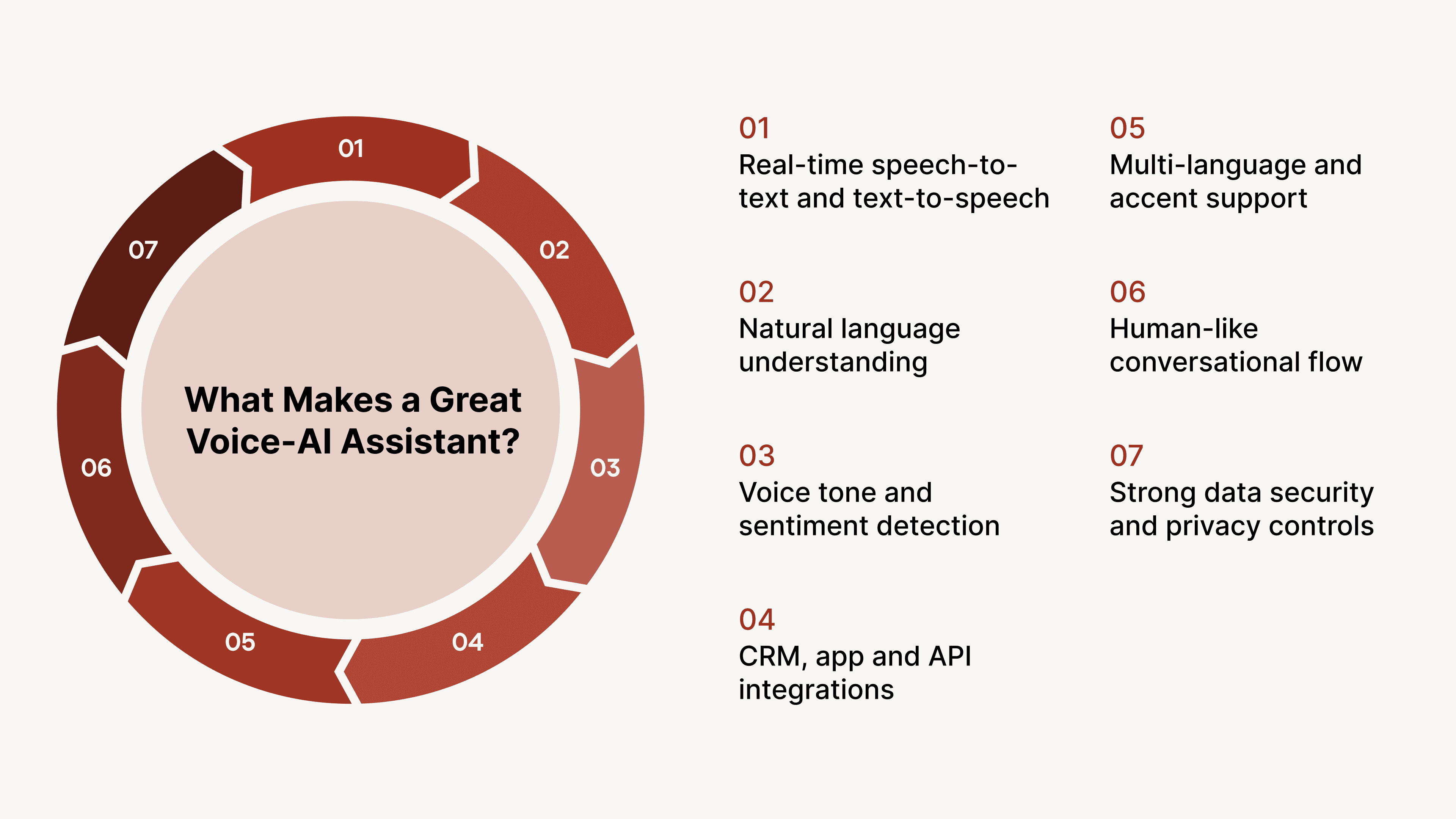
Real-time speech-to-text and text-to-speech: Instantly converts spoken words into accurate text and responds back in a natural voice, ensuring smooth, real-time interaction.
Natural language understanding: Interprets what users mean, not just what they say, enabling meaningful and context-aware conversations.
Voice tone and sentiment detection: Recognises emotions, tone, and speaking intent to respond more empathetically and support user needs effectively.
CRM, app and API integrations: Connects with business tools, mobile apps and software systems, allowing the assistant to perform practical tasks like updating records, booking appointments or fetching data.
Multi-language and accent support: Understands and communicates in regional languages and diverse accents, making it accessible to a wider audience.
Human-like conversational flow: Delivers responses that feel natural and conversational, rather than robotic or scripted, thereby improving user comfort and engagement.
Strong data security and privacy controls: Protect user conversations and sensitive information through secure processing and compliance standards, fostering trust and safety.
Also Read: Multilingual Voice Bots For Enhanced Customer Interaction
Top 8 Best AI Voice Assistant Chatbot Apps
AI voice assistant chatbot apps are transforming how users interact with technology by combining natural speech recognition and intelligent automation. These tools help businesses and individuals streamline communication, enhance productivity, and deliver personalized user experiences.
1. CubeRoot Voice AI

CubeRoot’s Voice AI platform enables enterprises to manage large-scale inbound and outbound voice communications using intelligent automation and multilingual capabilities. Designed for banks, NBFCs, consumer durables, and real estate enterprises, it empowers businesses to deliver human-like, scalable conversations powered by a proprietary tech stack.
Key Features
Real-Time Intelligence: Live transcription, analytics, and detailed performance dashboards for actionable insights.
Deep System Integration: Seamless connectivity with CRMs, dialers, and backend systems to streamline voice workflows.
Automation at Scale: Automates lead qualification, debt recovery, and service calls, achieving up to 65% faster lead qualification.
24/7 Customer Engagement: Scales effortlessly for high-volume voice interactions across support and sales functions.
Reimagine your customer touchpoints with AI-driven voice automation that speaks your brand’s language. Schedule a Live Demo and witness the difference.
2. Google Assistant

Google’s voice assistant is built into Android and other Google products, designed for everyday tasks, smart-home control, and seamless cross-device voice interaction.
Key Features
Voice control for tasks such as setting reminders, sending texts, and answering queries using natural language.
Smart-home and IoT device integration for controlling lights, music, and home appliances.
Integration with Google’s search and knowledge base for accurate, up-to-date responses.
Cross-platform support (Android, iOS, smart devices), enabling voice assistance everywhere.
Privacy controls that allow users to manage voice recordings and data.
3. Apple Siri
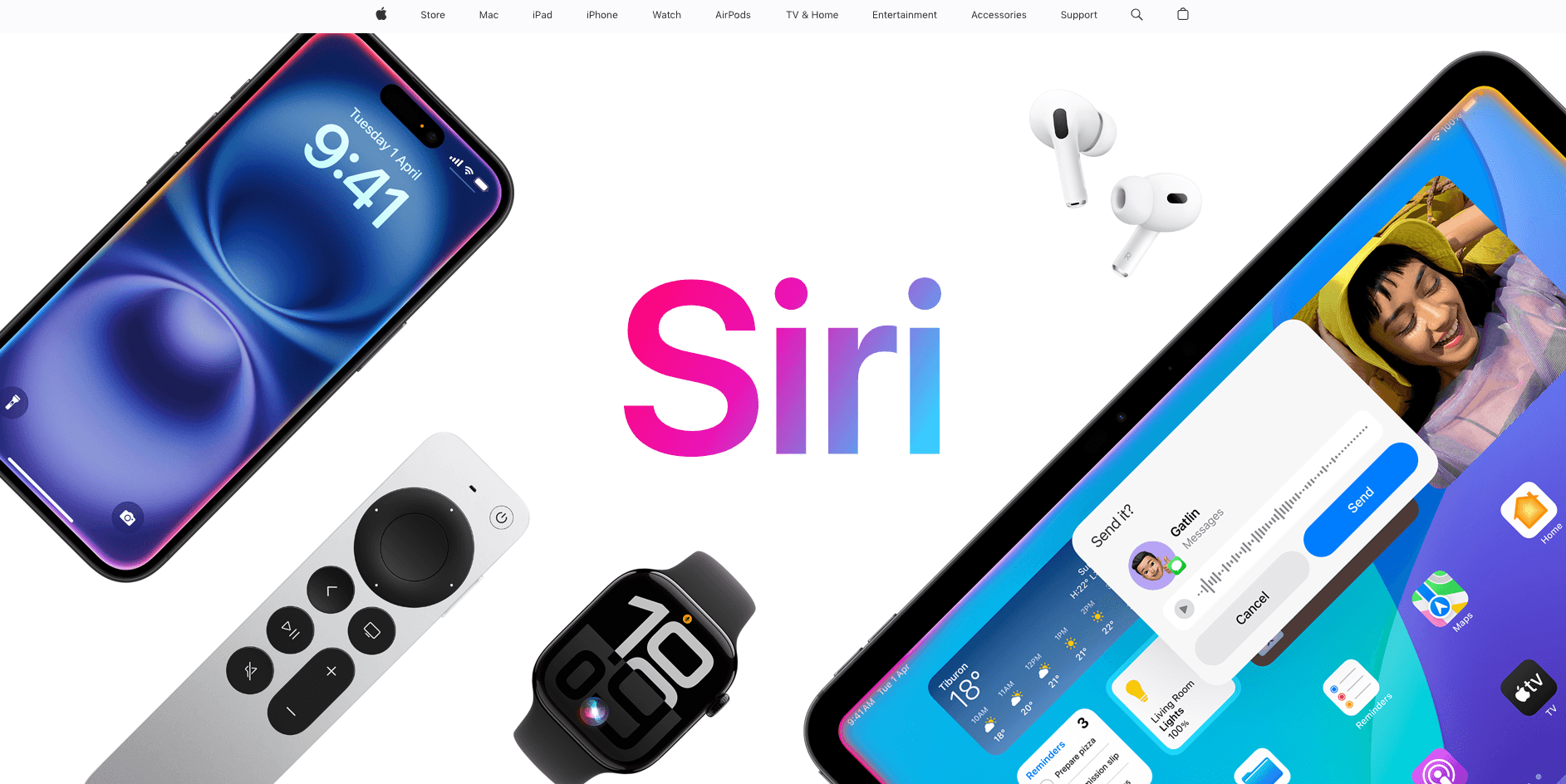
Apple’s built-in voice assistant across iPhone, iPad, Mac, Watch, and other devices, designed for hands-free voice commands, device automation, and smart workflows.
Key Features
Voice commands to make calls, send texts, launch apps, and get things done.
On-device intelligence keeps audio and commands private and secured.
Works seamlessly across all Apple devices for continuity and convenience.
Custom shortcuts and routines created by users to automate tasks.
Learns user preferences over time to provide personalised assistance.
4. Amazon Alexa
Amazon’s voice assistant that powers Echo devices, smart-home ecosystems, and thousands of “skills” for entertainment, home automation, and daily tasks.
Key Features
Smart-home device support across lighting, security, appliances, and entertainment.
A huge ecosystem of Alexa Skills created by developers and third-party services.
Voice-enabled shopping, audio content, media control, and routines.
Integration with Echo speakers, Fire TV, and other Amazon hardware.
Continuous improvement of voice recognition, language support, and home automation features.
5. ChatGPT Voice
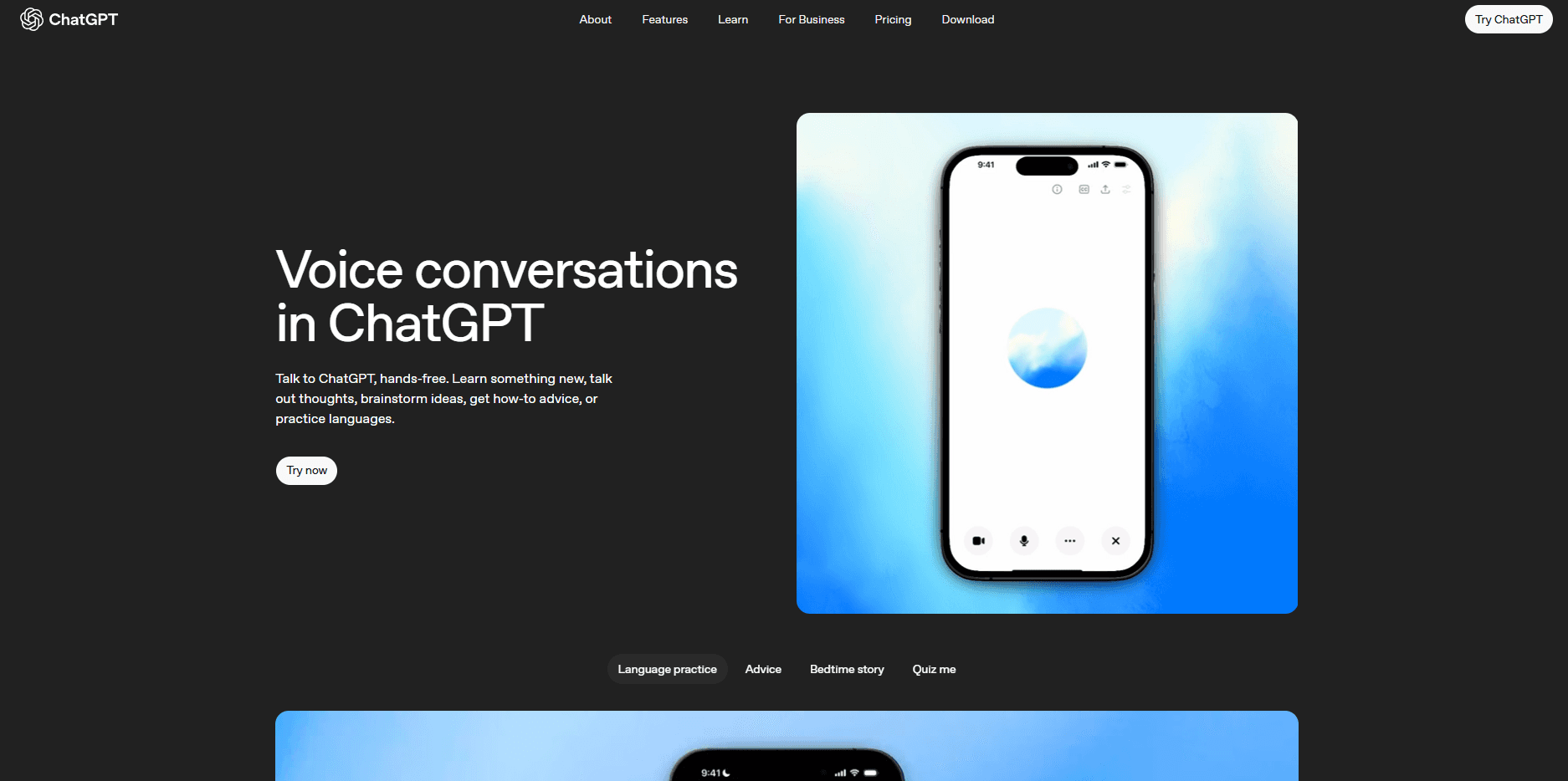
The voice-enabled version of ChatGPT allows conversations via voice input and voice output, designed for learning, productivity, and interactive voice-based assistance.
Key Features
Enables voice conversations: you can speak questions and receive spoken responses in the ChatGPT mobile or desktop app.
Works across mobile, desktop, and web platforms for flexible use.
Uses natural language voice input and provides natural voice output for a conversational experience.
Supports multiple voices and languages (in voice mode) for accessibility.
Ideal for brainstorming, interactive learning, and voice-based productivity workflows.
6. Microsoft Copilot Voice
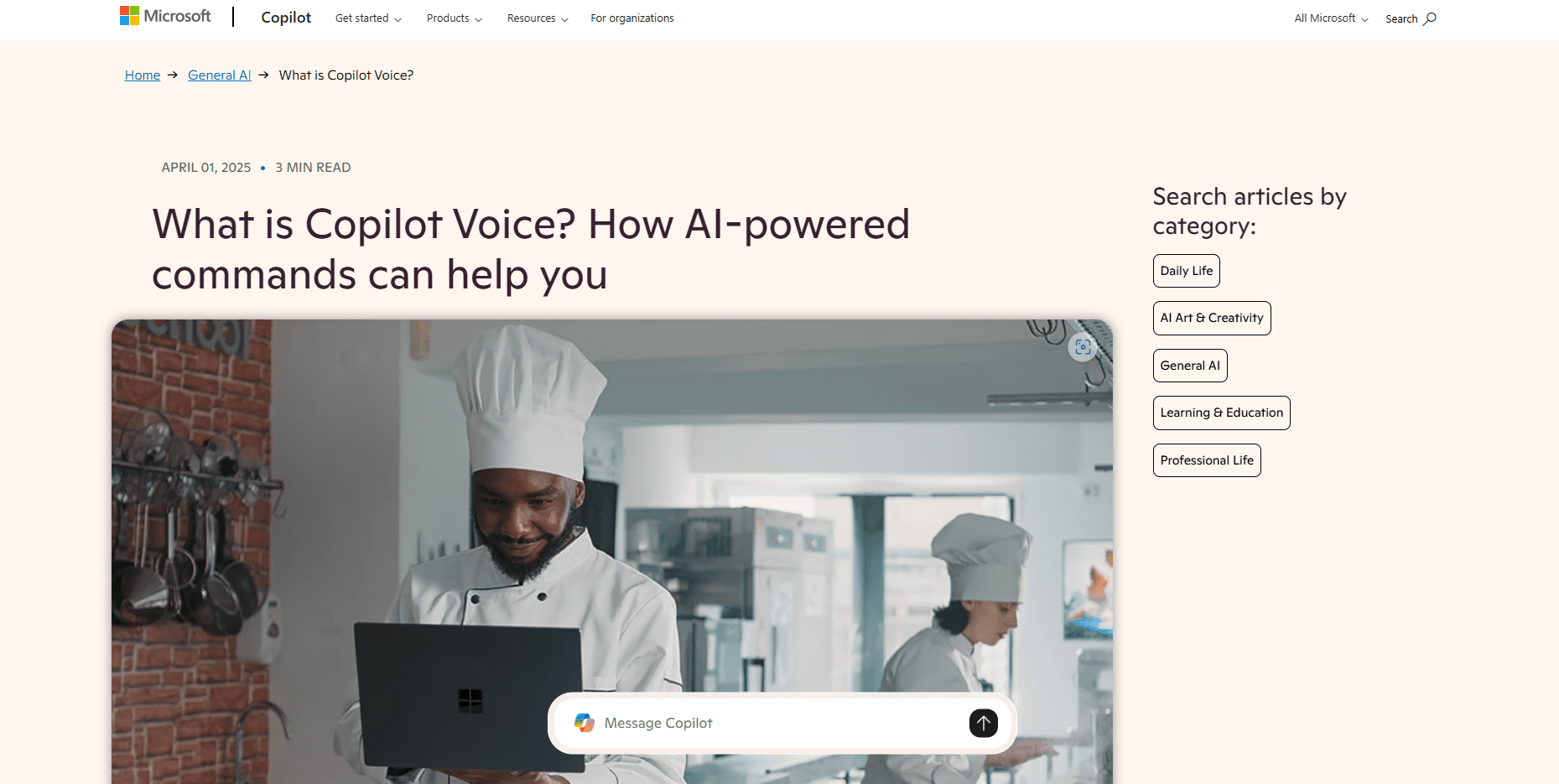
Voice mode in Microsoft Copilot is designed for conversational AI experiences across Windows, Office apps, and enterprise workflows, enabling voice commands and rich context.
Key Features
Supports voice interaction using natural language commands within Copilot.
Works across devices (PC, Mac, mobile) and integrates with Microsoft 365 apps.
Features interactive voice response (IVR) capabilities for enterprise / voice-enabled agents.
The “Voice mode” delivers conversations that feel more natural and continuous.
Supports multiple languages and voice options for global use.
7. Mycroft AI
An open-source voice assistant platform that enables customisation, self-hosting, and privacy-focused voice AI for developers, hobbyists, and organisations.
Key Features
Modular architecture: wake-word detection, speech-to-text (STT), intent parser, text-to-speech (TTS) built in.
Ability to install or develop custom “skills” expanding what the assistant can do.
Works on multiple platforms, including Linux and Raspberry Pi; supports customisation of wake-word and modules.
Privacy-friendly design, open source code, ability to self-host, and avoid data funnel to large cloud providers.
Suitable for developers, hobbyists, and organisations wanting full control over voice assistant behaviour and data.
Also Read: Automated Calling System For Businesses
Real-World Examples: How Voice-AI Improves User Experience
Voice-AI is redefining user interactions across industries. By enabling natural, hands-free communication, it enhances convenience, speeds up processes, and delivers more personalised, engaging user experiences in real-world applications.
1. Real Estate Customer Engagement & Lead Qualification
Voice-AI is reshaping the real-estate buying journey by making follow-ups faster and more personalised. Prospective buyers receive immediate attention, accurate property information, and guided assistance, all without waiting for an agent.
Impact
Up to 90% automation in lead-qualification calls
40% increase in site visits for property launches
How Voice-AI Improved Experience
Instant call-backs to new leads
Multilingual conversations for wider reach
Automated appointment booking and reminders
Quick access to property details and availability
User Benefit
Faster responses and seamless scheduling
Personalised support from the first inquiry to the site visit
2. Enterprise-Scale Customer Conversations
High-volume businesses are using voice-AI to manage large call loads smoothly, ensuring every customer receives timely support. With round-the-clock availability and multilingual capability, users get responses whenever they need them, without long wait times.
Impact
Handles 1+ million conversations per month
50+ CRM & dialer integrations for smooth deployment
How Voice-AI Improved Experience
24/7 automated customer query handling
Warranty, installation & service calls managed automatically
Consistent and accurate responses, even during peak hours
Assistance offered in multiple regional languages
User Benefit
Zero wait time and instant resolutions
Reliable service experience across all product support needs
Future Trends in Voice AI
Voice technology is evolving rapidly, and the next wave of innovation will make interactions even more human-like, intelligent, and immersive. Here are the key trends shaping the future of voice-AI:
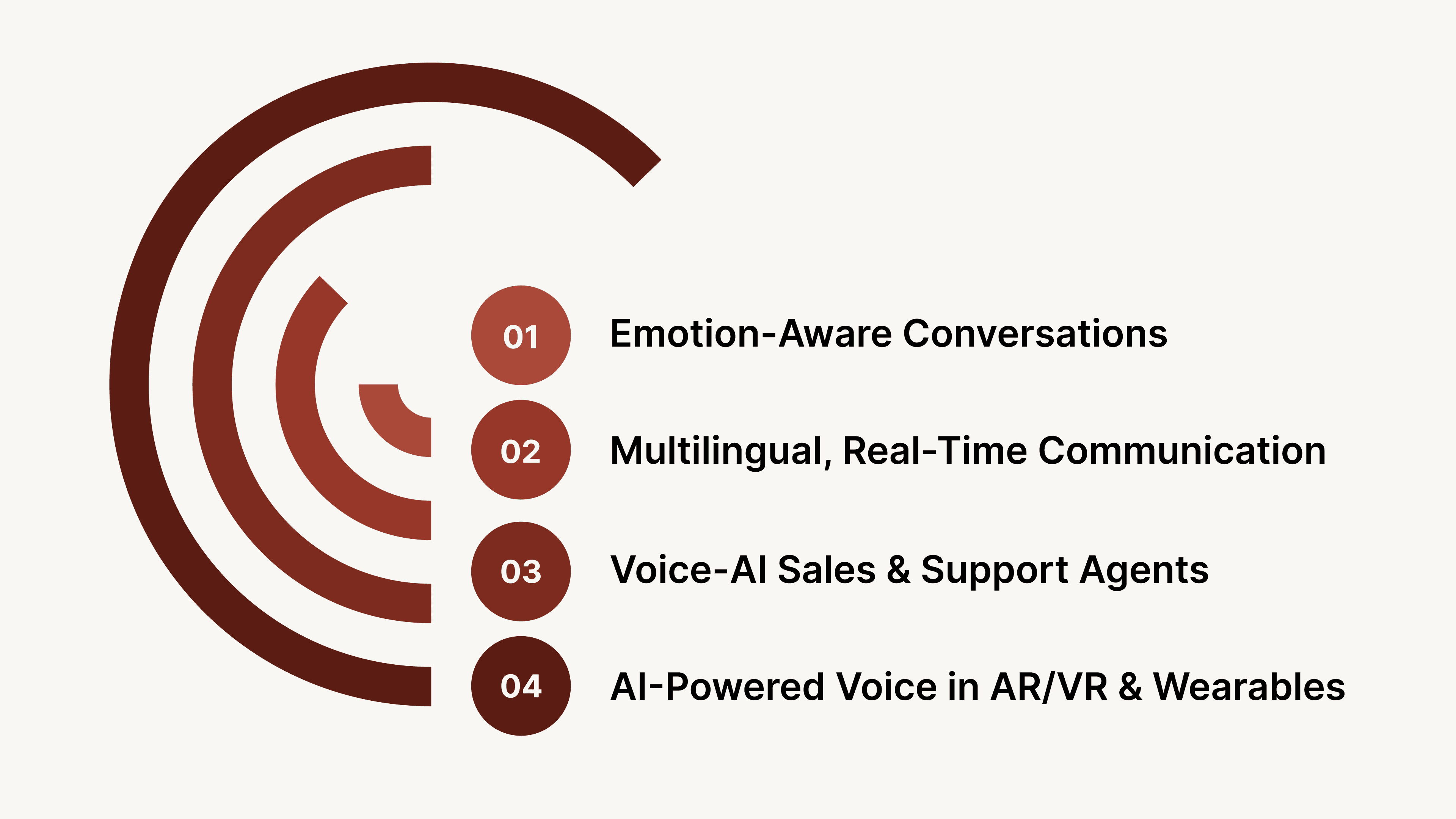
Emotion-Aware Conversations: Voice-AI is moving beyond understanding words to understanding feelings. Future systems will detect tone, emotion, and sentiment to respond with empathy and adjust communication style in real time.
Multilingual, Real-Time Communication: Voice-AI will be able to seamlessly switch languages, translate on the fly, and support regional accents with high accuracy.
Voice-AI Sales & Support Agents: From outbound sales calls to customer service and post-purchase follow-ups, voice-AI agents will handle end-to-end conversations, qualify leads, collect payments, troubleshoot issues, and even upsell or cross-sell..
AI-Powered Voice in AR/VR & Wearables: Voice assistants will play a key role in immersive tech, VR headsets, AR glasses, smart earbuds, and wearables. Users will interact with digital environments and devices hands-free using voice commands.
Conclusion
Voice-AI is rapidly changing how users interact with brands, making conversations faster, smarter, and more human-like. From instant multilingual responses to automated support and sales calls, voice technology is now a powerful driver of user satisfaction and business growth. Companies that adopt voice-AI today will lead the next wave of customer experience innovation.
Ready to see the future of customer conversations?
Request a CubeRoot demo and experience how AI voice automation can boost efficiency, engagement and conversions.
FAQ
1. Where are voice-AI assistants used?
They are used in customer service, sales calls, appointment booking, banking support, healthcare queries, education, personal assistance, smart homes and more.
2. Can voice-AI handle multiple languages?
Yes, advanced platforms support multilingual and regional languages. This ensures users can speak in their preferred language, improving accessibility and trust.
3. Are voice-AI assistants accurate?
Accuracy depends on the AI engine, language model and training. Modern systems are highly accurate and understand intent, tone and context better than ever.
4. Can voice-AI improve customer service?
Absolutely. Voice-AI provides instant responses, handles high call volumes, and operates 24/7, improving resolution times and user satisfaction while reducing support workload.
5. How does voice-AI support businesses?
It helps automate calls, qualify leads, improve follow-ups, assist with support queries, and reduce manual workload. Businesses save costs, scale faster and serve customers better.