Dec 31, 2025

AI Agents in Retail: The Ultimate Guide
Retail brands often struggle with massive customer call volumes during festive sales and high-frequency product launches. You likely find your support team overwhelmed by repetitive queries, leading to long wait times and abandoned carts.
Managing these spikes manually increases operational costs and often results in a poor experience for your loyal customers. With 75% of retailers saying AI agents will be essential to compete, a dedicated AI agent retail solution automates interactions while maintaining high service quality.
These systems handle routine tasks like order tracking and return processing, freeing your human staff for complex issues. By adopting this technology, you ensure every customer receives an immediate and helpful response regardless of the time.
In this guide, you will learn how voice-based AI agents function within the retail sector to drive efficiency and customer satisfaction. You will also find actionable steps to implement these agents and measure their impact on your bottom line.
Key Takeaways
Automating routine voice queries reduces support costs by up to 40% compared to traditional call centers.
AI agents support major Indian languages, allowing you to connect with a broader, more diverse customer base.
With a retail AI agent, you can handle huge call volumes during seasonal sales without the need to hire or train new staff.
Integration with your OMS ensures customers receive real-time updates on order status and delivery timelines.
Sophisticated systems ensure a fluid transition to live agents whenever the AI detects a complex or sensitive issue.
What Are AI Agents in Retail?
AI agents in retail are intelligent software programs designed to handle complex customer interactions through voice or text. Unlike basic chatbots that follow rigid scripts, these agents use advanced processing to understand customer intent and provide natural responses.
You can use them to manage order confirmations, process returns, and answer product questions across multiple languages. They integrate with your existing systems to provide accurate information and resolve issues without human help.
Retailers need a reliable way to manage customer inquiries across different regions and time zones without increasing their headcount.
Also Read: AI In Customer Service: A Complete Guide
Key Benefits of AI Agents in Retail
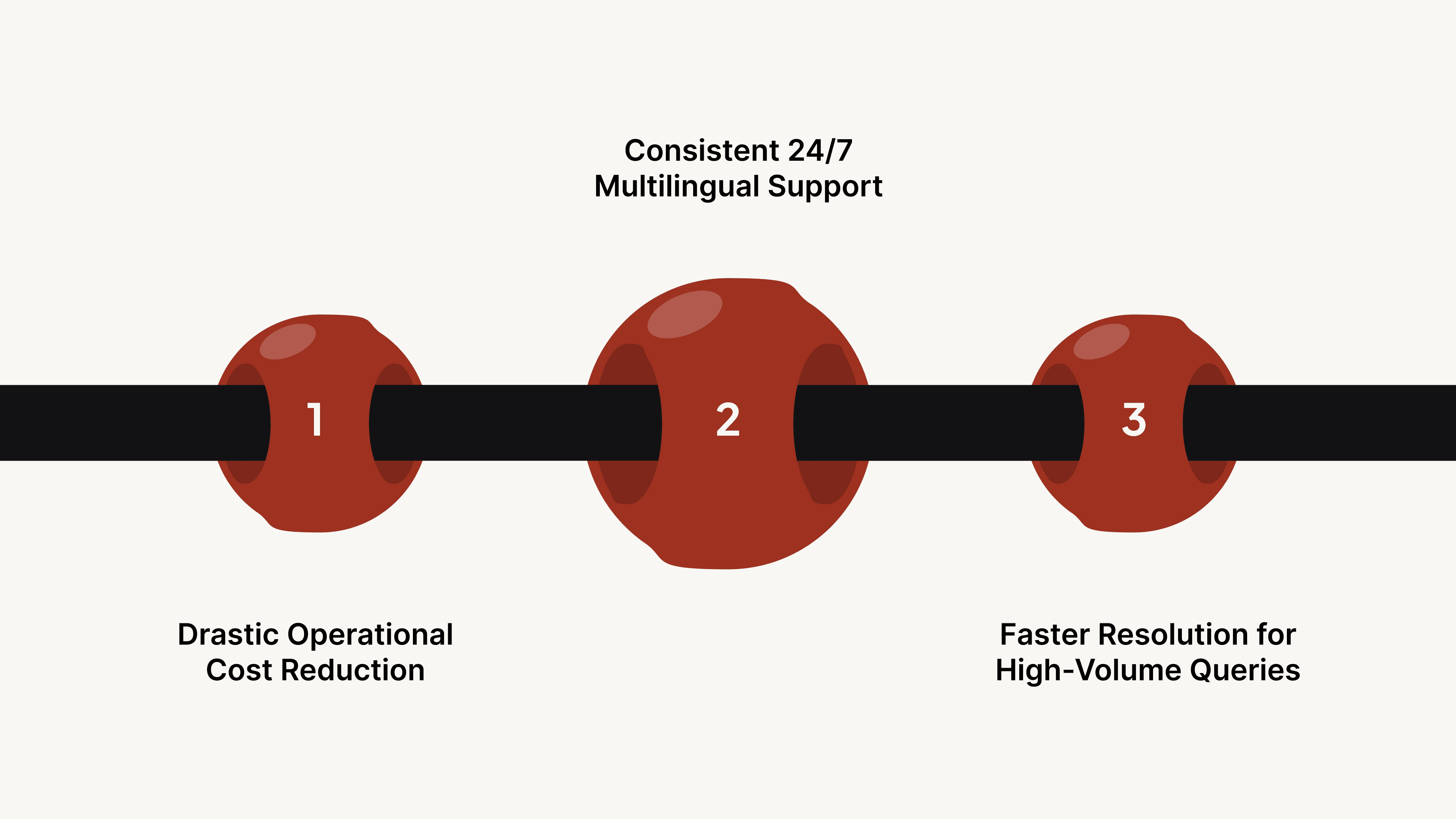
Implementing AI agents provides your business with a competitive edge by modernizing how you interact with your customers. These systems offer more than just speed; they provide a foundation for consistent and compliant communication across every single touchpoint.
For instance, 70% of shoppers we surveyed said they would use a personal AI agent to optimize their loyalty points, indicating strong customer readiness for AI-assisted engagement.
You can expect significant improvements in your internal efficiency and external customer perception by using these specialized tools:
1. Drastic Operational Cost Reduction
Traditional call centers require significant investment in recruitment, training, and physical infrastructure to maintain high levels of service. A retail AI agent handles thousands of calls simultaneously for a fraction of the price of a full human support team.
You only pay for the interactions processed, which makes your budget much more predictable and manageable.
2. Consistent 24/7 Multilingual Support
Your customers shop at all hours and expect immediate support regardless of when they encounter a problem or a question. AI agents never sleep and can communicate in English, along with various regional Indian languages, to serve your entire market.
This constant availability builds trust with your audience and ensures that no inquiry goes unanswered over the weekend.
3. Faster Resolution for High-Volume Queries
Most retail calls involve simple requests like tracking a package or confirming a Cash on Delivery (COD) order status. AI agents resolve these inquiries in seconds by accessing your database and providing the exact information the customer needs.
This speed reduces the total time customers spend on the phone and increases their overall satisfaction with your brand.
Understanding the benefits is the first step toward modernizing your customer service department through automated voice technology.
Ready to see these benefits in action for a retail business like yours? Request a personalized demo with our team today.
Also Read: What is a Voice Bot and How to Use It?
How AI Agents Work in Retail?
The functionality of retail AI agents depends on several layers of technology working together to mimic a natural human conversation. These systems do not just play recorded messages; they actively listen, process information, and respond based on live data from your business.
You can see how these agents manage complex workflows by looking at the core components of their operation:
1. Natural Language Understanding and Processing
The agent first converts the spoken words of the customer into digital data that the system can analyze and interpret. It identifies the intent behind the query, such as a request for a refund or a question about a product.
This allows the agent to formulate a response that sounds natural and addresses the specific needs of the caller.
2. Real-Time Integration with Enterprise Systems
To provide accurate answers, the AI agent connects to your Order Management System (OMS) and Customer Relationship Management (CRM) platform. It fetches the latest details about a specific order number or customer profile to ensure the information is always current.
This connection allows the agent to perform actions like updating a delivery address or initiating a return request.
3. Continuous Learning via Feedback Loops
Modern AI agents use Reinforcement Learning from Human Feedback (RLHF) to improve their performance over several weeks of active operation. When an agent encounters a phrase it does not understand, the system flags it for review by a human specialist.
This process ensures the agent becomes more accurate and helpful with every interaction it completes for your business.
Once you understand the mechanics of the technology, you must determine how to track its effectiveness within your organization.
Also Read: Top AI Voice Assistants in 2025
Key Metrics to Measure Retail AI Agent Success
Tracking the right data points is essential to ensure your AI investment delivers the expected returns for your retail operation. You should focus on metrics that reflect both the efficiency of the software and the satisfaction of your customers.
Use these specific indicators to evaluate how well your automated agents are performing against your original business goals:
1. First Call Resolution Rate
This metric tracks the percentage of customers who resolve their issues during their first interaction without needing further follow-up. High resolution rates indicate that your AI agent is accurately understanding queries and providing the correct information immediately.
You should aim for a steady increase in this number as the AI learns from previous customer interactions.
2. Average Handle Time Reduction
You measure how long it takes for the AI agent to complete a transaction compared to your human support representatives. AI agents typically process information faster, leading to shorter calls and less waiting time for the people on the other end.
Reducing this time improves the customer experience and allows the system to handle more calls during peak hours.
3. Cost Per Interaction
This is a direct calculation of the total cost of the AI platform divided by the number of calls it manages. You will likely see a significant drop in this figure when compared to the cost of maintaining a human agent.
Monitoring this metric helps you justify the investment and identify opportunities for further scaling within your retail business.
Metric | Definition | Business Impact |
First Call Resolution (FCR) | Calls resolved without escalation. | Higher customer satisfaction and loyalty. |
Average Handle Time (AHT) | Duration of a single interaction. | Improved operational efficiency and speed. |
CSAT Score | Customer satisfaction survey results. | Better brand reputation and trust. |
Cost Per Interaction | Total expense per customer call. | Increased profitability and lower overhead. |
Setting clear metrics allows you to move into the implementation phase with a data-driven strategy for your retail brand.
Step-by-Step AI Retail Agent Implementation Workflow
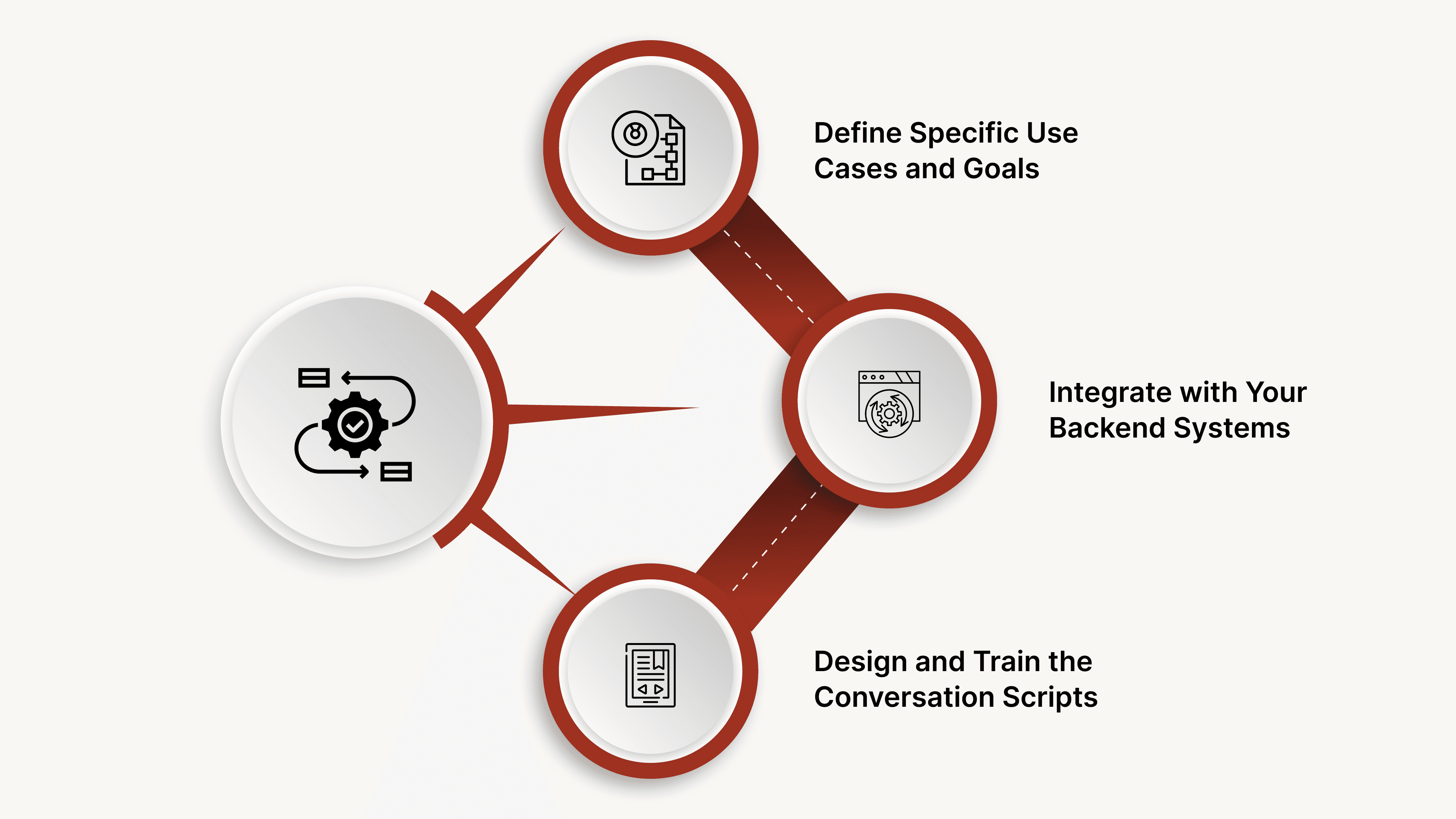
Implementing a voice AI agent requires a structured approach to ensure the technology aligns with your specific operational needs and goals. You cannot simply turn on the software; you must guide it through a series of setup phases to ensure accuracy.
Follow this workflow to launch your automated voice agents effectively and minimize any potential disruptions to your current service:
1. Define Specific Use Cases and Goals
Start by identifying the most common and repetitive queries that your human support team currently handles on a daily basis. You should focus on high-volume tasks like order status checks or return requests that follow a predictable and clear logic.
Setting specific goals for these tasks helps you measure the success of the implementation during the initial pilot phase.
Key Actions:
Analyze your last three months of support call logs.
Rank the most frequent customer inquiries by volume.
Select two or three simple workflows for the initial launch.
2. Integrate with Your Backend Systems
The AI agent needs access to your customer data and order history to provide helpful and accurate responses to callers. You must connect the AI platform to your existing CRM and OMS through secure and reliable API integrations.
This step ensures that the agent can provide real-time updates without requiring any manual data entry from your staff.
Key Actions:
Audit your current API documentation for compatibility.
Set up secure data sharing protocols with the AI provider.
Test the connection to ensure data refreshes instantly.
3. Design and Train the Conversation Scripts
You need to create natural conversation flows that guide the customer toward a resolution while sounding professional and helpful. The retail AI agent must be trained to handle different variations of the same question and understand regional accents or slang.
This training involves providing the system with examples of successful interactions to help it learn the desired tone and style.
Key Actions:
Write scripts for every possible turn in the conversation.
Upload historical call recordings to train the AI model.
Conduct internal testing to identify any gaps in the logic.
Planning your implementation carefully helps you avoid the frequent errors that many businesses make when adopting new AI technology.
Also Read: What Is A Conversational UI? A Simple Guide
Common Mistakes and How to Avoid Them
Many retailers face challenges when they rush the adoption of AI without considering the nuances of customer interaction and data. You can save time and resources by learning from the errors of others and building a more resilient system from the start.
Address these common pitfalls early in your planning process to ensure a smoother transition for your customers and employees:
1. Lack of a Clear Human Escalation Path
One of the biggest mistakes is failing to provide a way for customers to speak with a human agent. If the AI cannot solve a complex problem, the customer will become frustrated and may abandon your brand entirely.
You must ensure that the system can detect when a caller is unhappy and transfer them immediately.
Solution: Implement a "Human-in-the-loop" feature that triggers an automatic transfer when the AI reaches a predefined limit.
2. Using Overly Robotic or Scripted Voices
Customers often react negatively to voices that sound artificial or lack the natural cadence of a real human being. Using poor-quality text-to-speech technology can make your brand appear cheap and out of touch with modern consumer expectations.
You should prioritize high-fidelity voice models that sound warm and professional to maintain a positive brand image.
Solution: Choose a platform that offers domain-trained voice models with natural intonation and multilingual capabilities.
3. Ignoring Data Privacy and Compliance
Retailers handle sensitive customer information like phone numbers and delivery addresses that must be protected at all costs. Failing to follow industry-standard security protocols can lead to data breaches and significant legal trouble for your company.
You need to ensure your AI provider meets all regulatory requirements and provides secure voice logging for auditing.
Solution: Use an enterprise-grade platform that offers end-to-end encryption and complies with local Indian data protection laws.
Steering clear of these mistakes allows you to focus on the most valuable ways to apply AI agents within your retail business.
Avoid these pitfalls with guided implementation. Book a demo with our experts to see our best-practice framework.
Also Read: How AI Cold Calling Transforms Sales Strategies in 2025
Top Use Cases for Retail AI Agents
AI agents are versatile tools that you can apply to various stages of the customer journey, from pre-purchase to post-delivery. By targeting specific pain points, you can maximize the value of the technology and provide a superior shopping experience for everyone.
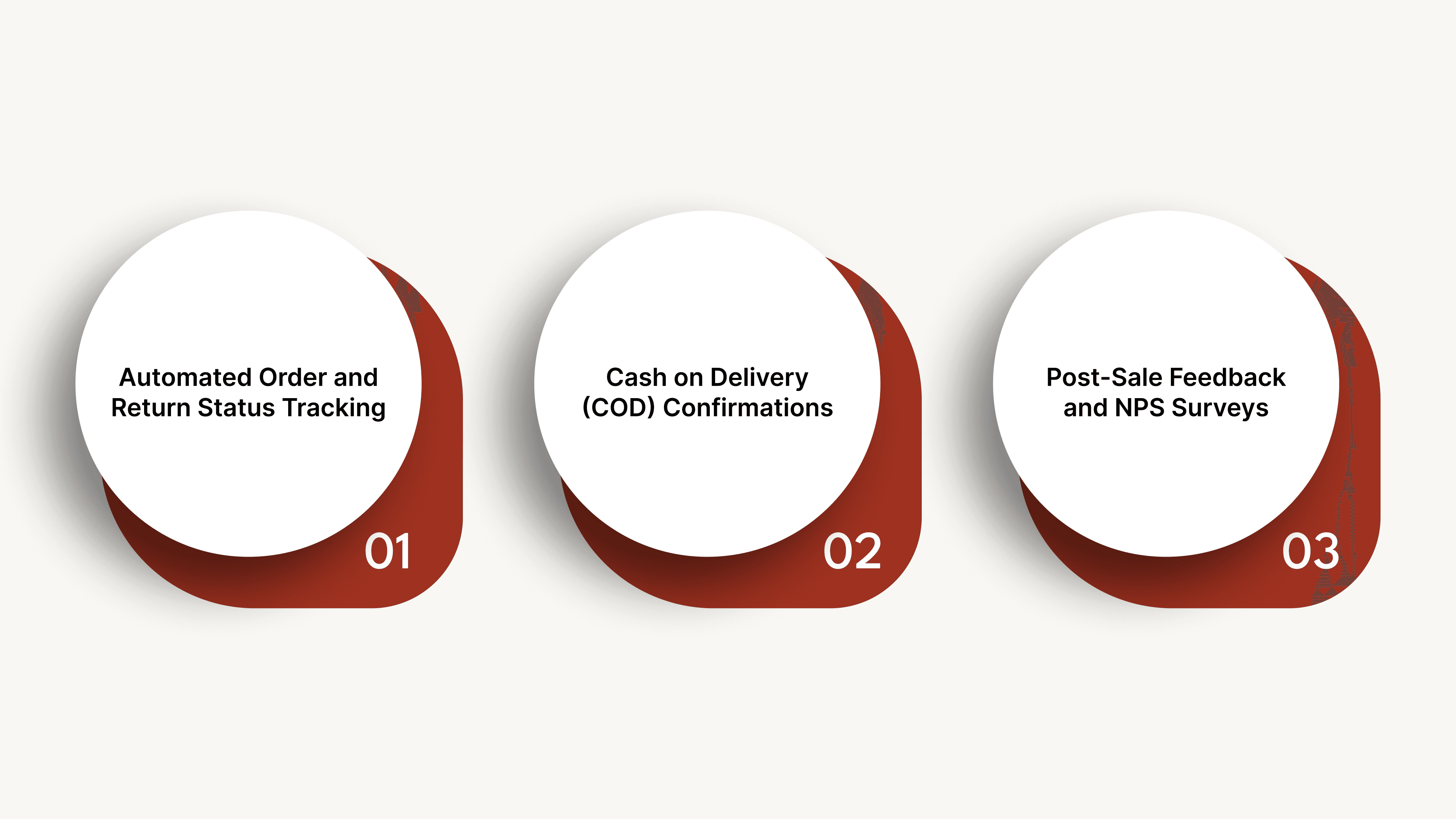
These use cases represent the most effective ways to deploy voice AI in the current Indian retail market:
1. Automated Order and Return Status Tracking
This is the most frequent request in retail, especially during high-traffic periods like the holiday shopping season. An AI agent can verify a customer's identity and provide the exact location of their package in just a few seconds.
It can also initiate a return request and schedule a pickup time without requiring any human intervention.
2. Cash on Delivery (COD) Confirmations
High RTO (Return to Origin) rates are a major problem for Indian eCommerce brands, often caused by unconfirmed COD orders. You can use AI agents to call customers automatically and confirm their intent to purchase before shipping the product.
This simple step significantly reduces your shipping losses and ensures that your inventory is not tied up in transit.
3. Post-Sale Feedback and NPS Surveys
Collecting customer feedback is essential for improving your products, but many people ignore traditional email or SMS surveys. A friendly voice AI agent can call customers after a delivery to ask about their experience and record their verbal feedback.
This method results in much higher response rates and provides you with richer data to improve your operations.
Also Read: Top Use Cases of E-commerce Voice Bots
CubeRoot provides a specialized platform designed to handle these specific retail challenges with high-scale voice automation technology.
How CubeRoot AI Agent Works for Retail
Indian retailers face unique challenges: multilingual customer bases, massive seasonal volume spikes, and the need for cost-effective scalability without compromising service. Generic global solutions often fail to address these local complexities.
CubeRoot’s enterprise-grade Voice AI platform is engineered specifically for these high-scale, high-growth environments. We provide prebuilt, domain-trained AI voice agents that integrate seamlessly into your retail operations, delivering human-like conversations at machine scale.
Multilingual Voice Support: Engage with customers across India using natural-sounding agents that speak English and major regional languages.
Rapid OMS/CRM Integration: Connect the AI to your backend systems within days to provide real-time order and inventory updates.
Regulatory Compliance: Maintain secure voice logs and audit trails to meet all industry standards for data protection and privacy.
Intelligent Escalation: Ensure complex queries are moved to live agents through a frictionless handover process when the AI cannot resolve the issue.
The CubeRoot platform is built to help your retail business grow by making every customer interaction smarter and more efficient.
Conclusion
Adopting a retail AI agentis no longer just an option for brands looking to stay competitive in the Indian market. These systems allow you to reduce costs, scale your operations instantly, and provide a consistent experience for your customers 24/7.
By focusing on key metrics and avoiding common implementation mistakes, you can modernize your support department and drive significant business growth. CubeRoot provides the infrastructure you need to deploy enterprise-grade voice AI that understands the unique needs of the retail sector.
Our platform is designed to handle high-volume interactions with the speed and accuracy that modern consumers expect from top-tier brands. You can rely on our technology to manage your support spikes and improve your overall operational efficiency throughout the year.
Ready to see how CubeRoot can help you automate your retail customer interactions? Request a demo now to go from Implementation to go-live in 14 Days.
FAQs
Q. How do AI agents handle regional Indian languages?
Advanced platforms like CubeRoot use models trained specifically on Indian language datasets, including Hindi, Tamil, Bengali, and Hinglish. They understand accents and colloquial terms for natural customer conversations.
Q. Can AI voice agents integrate with our existing e-commerce platform?
Yes. Reputable AI platforms offer API-based integration and pre-built connectors for common OMS and CRM systems. They fetch and update data in real time.
Q. What is the typical implementation timeline for a use case like order tracking?
With prebuilt industry workflows, a focused use case can be piloted in 2-4 weeks. This includes integration, customization, and testing before a controlled launch.
Q. How do you ensure the AI agent's performance improves over time?
Platforms use Reinforcement Learning from Human Feedback (RLHF). Escalated calls and resolved interactions provide data to continuously refine dialogue, accuracy, and handling of edge cases.
Q. Can AI agents handle complex refund disputes in retail?
AI agents are best at handling routine tasks, but they can collect all the necessary information for a dispute before handing it over to a human. This pre-triaging saves your staff time and ensures they have everything they need to resolve the case quickly.